
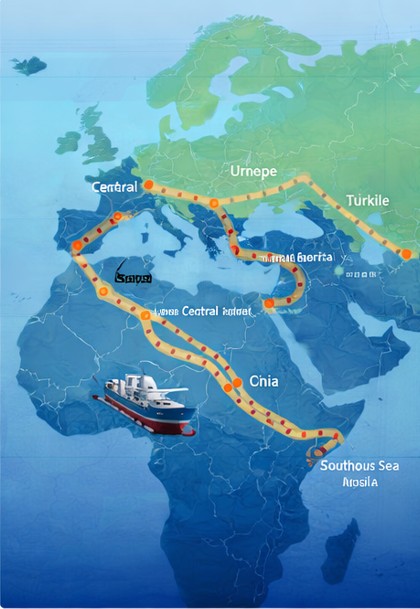





The Middle Corridor: A Strategic Route
The Middle Corridor, a vital trade route connecting Asia and Europe through the Caspian Sea, has gained renewed attention as countries look to bolster their economic ties and improve infrastructure. This corridor, officially known as the Trans-Caspian International Transport Route (TITR), facilitates trade between China, Central Asia, the Caucasus, and Europe.
As global supply chains continue to evolve, the Middle Corridor presents an alternative to traditional maritime routes, particularly amid geopolitical tensions and disruptions. By relying on a combination of rail, road, and maritime transportation, the corridor offers a more diversified approach to logistics.
Countries along the route are increasingly recognizing the importance of this corridor. For instance, nations like Kazakhstan, Azerbaijan, and Georgia are not only improving their own infrastructure but also enhancing connectivity to attract international investments. The collaborative efforts among these nations reflect a shared understanding of the corridor's potential to facilitate trade and economic growth.
Infrastructure Developments
Infrastructure development is synonymous with the Middle Corridor's growth. Significant investments are underway to upgrade rail networks, ports, and logistics hubs. For example, the Baku International Sea Trade Port in Azerbaijan has undergone considerable expansion to accommodate larger vessels and increase cargo capacity.
Kazakhstan's rail network is also undergoing modernization to ensure efficient transit times. The government has invested in new rail lines and improved existing ones, which will enhance the movement of goods from China to Europe. These infrastructure upgrades are critical, as they not only reduce transportation costs but also improve the reliability of the supply chain.
Furthermore, initiatives like China's Belt and Road Initiative (BRI) have played a substantial role in funding and supporting infrastructure projects along the Middle Corridor. By aligning their strategies, participating countries are setting the stage for a more integrated economic landscape.
Trade Opportunities and Challenges
The Middle Corridor offers numerous trade opportunities, particularly for landlocked countries in Central Asia. By providing direct access to European markets, these nations can diversify their economies and reduce dependency on traditional trade routes. This shift is expected to foster regional cooperation and stimulate local industries.
However, challenges remain. Political instability in certain regions, varying customs regulations, and infrastructural bottlenecks can hinder the corridor's full potential. Effective governance and coordination among stakeholders are essential to address these issues and ensure smooth trade flows.
Moreover, the corridor's success hinges on the ability to maintain competitive logistics. While the Middle Corridor offers a faster alternative to maritime routes, it must continually adapt to the evolving demands of global trade. This includes leveraging technology for tracking shipments and streamlining customs processes.
Conclusion
The Middle Corridor stands as a pivotal element in unlocking Eurasia's trade potential. Through collaborative infrastructure development and strategic investments, the countries along this route are poised to enhance their economic connectivity. While challenges persist, the continued focus on improving logistics and trade facilitation can lead to a more integrated and prosperous Eurasian economy. As nations work together to harness the benefits of this corridor, the potential for growth and collaboration remains significant.
Silk Road Economic Belt Map
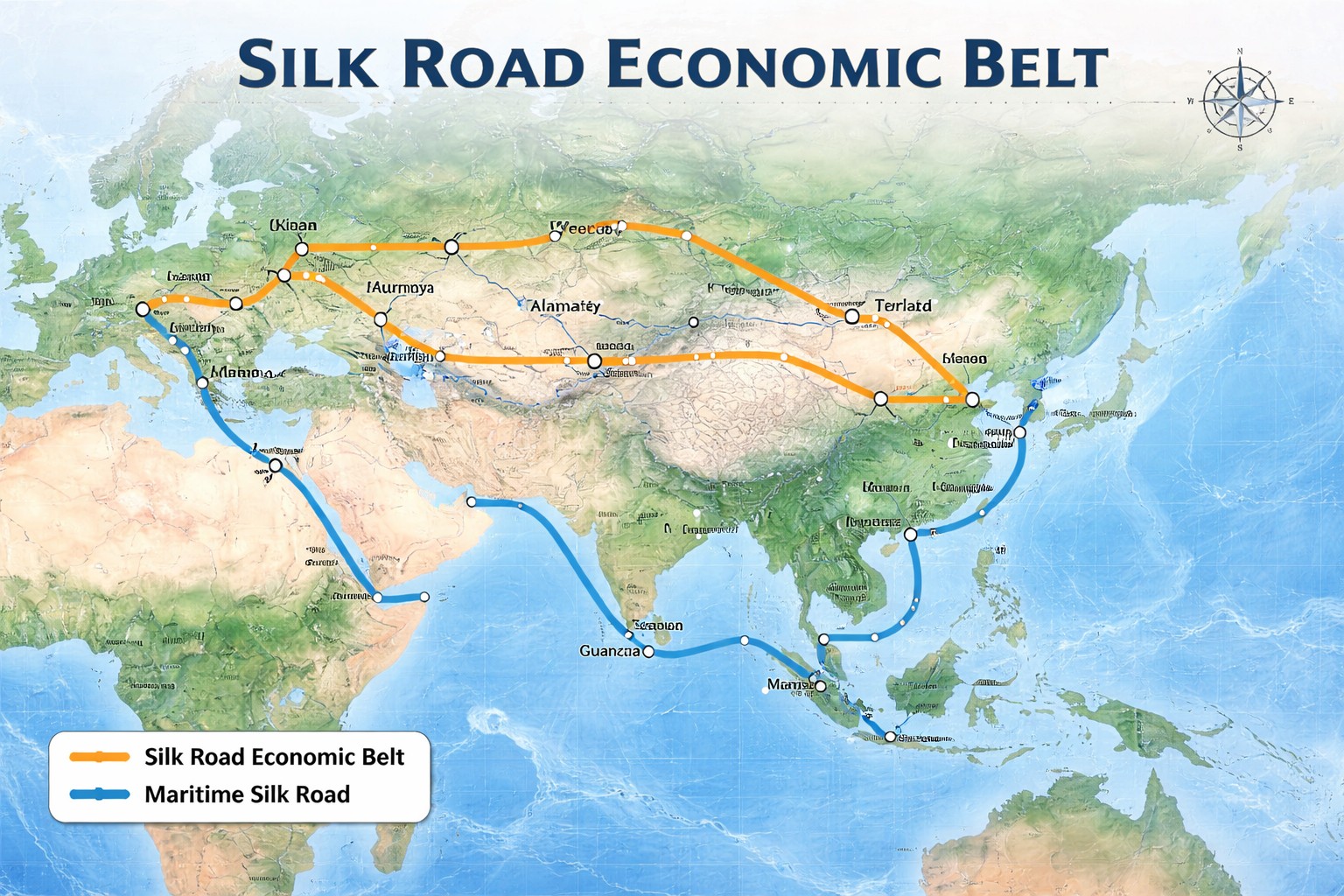
Map overview of Eurasian corridors and trade routes.
Recommended Resources
This page may contain affiliate links. If you buy through these links, we may earn a commission at no extra cost to you.
Logistics & Supply Chain Book
Useful background reading for transport corridors, trade routes, and supply chains.
View ResourceTrade Data Platform
A platform for researching trade flows, customs data, and freight trends.
Open PlatformBusiness Travel Insurance
Optional partner offer for readers traveling across Eurasia for business.
Check Offer