
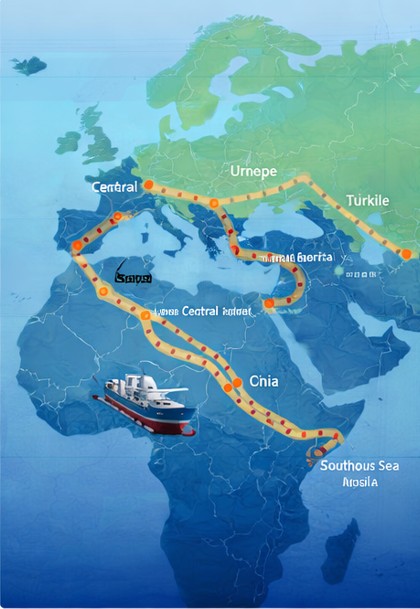
Pakistan and Kazakhstan have announced a new agreement to create a trade corridor that will pass through Afghanistan. This initiative aims to improve trade connectivity and bolster economic ties between the two countries while also enhancing regional trade dynamics.
Infrastructure Development
The trade corridor is expected to facilitate the movement of goods between Pakistan and Kazakhstan, capitalizing on Afghanistan's strategic location. Both countries are keen on utilizing this route to improve logistics and infrastructure, which are vital for efficient trade operations.
Discussions between the officials of Pakistan and Kazakhstan highlighted the need for robust infrastructure to support this corridor. This includes investments in transportation networks, border facilities, and customs processing capabilities. Such developments are essential for streamlining trade operations and ensuring that goods can move swiftly and safely across borders.
The corridor is part of broader efforts to enhance trade relationships among countries in the Eurasian region. With Afghanistan serving as a key transit point, the partnership could open up new markets and create opportunities for businesses in both Pakistan and Kazakhstan.
Economic Opportunities
The agreement is expected to yield significant economic benefits for both nations. For Pakistan, access to Kazakhstan's markets could provide a boost for various sectors, including textiles, agriculture, and manufacturing. Kazakhstan, on the other hand, may find opportunities to export its natural resources and agricultural products to Pakistan, which has a growing demand for diverse goods.
Furthermore, the trade corridor may encourage investment in related sectors such as logistics and transportation services. By enhancing trade routes and infrastructure, both countries could attract foreign investment aimed at supporting this initiative.
The collaboration aligns with regional efforts to foster economic integration. As countries seek to diversify their trade partnerships, the creation of this corridor could serve as a model for similar agreements in the future.
Regional Stability Concerns
While the trade corridor presents various economic opportunities, it also raises certain concerns regarding regional stability. Afghanistan's ongoing challenges with security and governance are critical factors that need to be addressed to ensure the corridor's success. Both Pakistan and Kazakhstan are aware of these issues and have expressed a commitment to work collaboratively to mitigate potential risks.
Ensuring safe passage for goods through Afghanistan will require coordinated efforts in security and infrastructure management. This will likely involve engaging with local stakeholders and possibly international partners to foster a stable environment conducive to trade.
The commitment to developing this corridor underscores the importance of stability in the region as a prerequisite for successful economic initiatives. Both countries are optimistic that by working together, they can contribute to a more stable and prosperous Eurasian trade landscape.
In conclusion, the agreement between Pakistan and Kazakhstan to establish a trade corridor through Afghanistan marks a significant step towards enhancing trade connectivity in the region. While the potential economic benefits are considerable, careful attention must be given to the complexities of regional stability and infrastructure development to ensure the initiative's success.
Silk Road Economic Belt Map
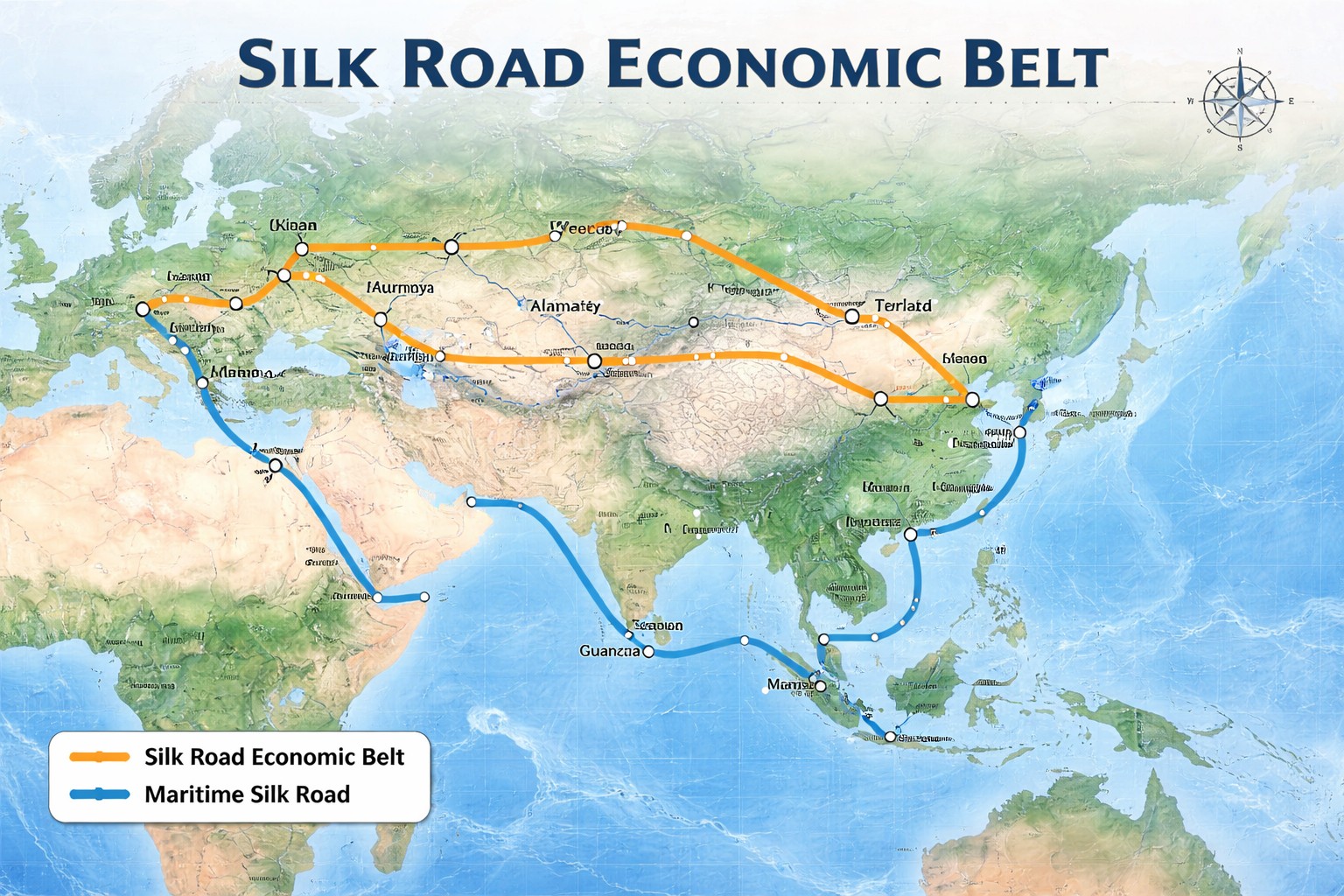
Map overview of Eurasian corridors and trade routes.
Recommended Resources
This page may contain affiliate links. If you buy through these links, we may earn a commission at no extra cost to you.
Logistics & Supply Chain Book
Useful background reading for transport corridors, trade routes, and supply chains.
View ResourceTrade Data Platform
A platform for researching trade flows, customs data, and freight trends.
Open PlatformBusiness Travel Insurance
Optional partner offer for readers traveling across Eurasia for business.
Check Offer