
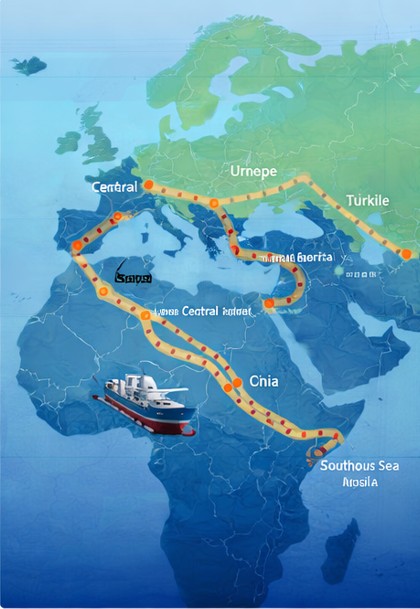
The governments of Kazakhstan, Iran, Turkmenistan, and Russia have announced plans to jointly develop the North-South Transport Corridor, a significant logistical route aimed at enhancing trade connectivity across the region. This initiative is expected to facilitate smoother transportation of goods between the northern and southern parts of Eurasia, potentially transforming trade dynamics in Central Asia.
Strengthening Trade Links
The North-South Transport Corridor is envisioned as a vital artery that will connect major markets in the region, linking the northern territories of Russia to the southern regions of Iran. By fostering collaboration among these four countries, the project is set to improve trade efficiency while reducing transit times and costs for businesses operating within the corridor.
Kazakhstan, strategically located at the heart of Eurasia, plays an essential role in this initiative. By serving as a transit hub, Kazakhstan aims to strengthen its position as a key player in regional trade. The country’s existing infrastructure, including railways and highways, will be pivotal in facilitating the seamless movement of goods.
Iran, with its access to the Persian Gulf, also stands to benefit significantly from this corridor. The development of this route is expected to enhance Iran’s connectivity with Central Asian markets, providing a new outlet for its exports.
Infrastructure Development Initiatives
The success of the North-South Transport Corridor will largely depend on the enhancement and expansion of existing infrastructure. Each participating country has committed to investing in upgrades to roads, railways, and ports to ensure that they meet the demands of increased traffic.
Turkmenistan, for instance, has been active in modernizing its transport networks and is expected to contribute significantly to the corridor’s development. The country’s focus on infrastructure improvement aligns with its broader economic strategy to diversify its economy and enhance trade links with neighboring states.
Russia, with its extensive network of railways, brings substantial logistics expertise to the table. The integration of Russian transport capabilities is anticipated to streamline operations along the corridor, making it a more attractive option for international trade.
Economic Implications for the Region
The establishment of the North-South Transport Corridor holds considerable economic implications for all involved nations. By improving transport links, the project is expected to boost trade volumes and attract foreign investment. Businesses will likely find new opportunities as they gain access to broader markets.
Moreover, this initiative aligns with broader regional economic strategies, including China’s Belt and Road Initiative, which emphasizes the importance of infrastructure development in facilitating trade. As countries invest in interconnected transport systems, they not only enhance their own economies but also contribute to regional stability and cooperation.
While the details of the project’s timeline and specific funding mechanisms are still being finalized, the commitment from Kazakhstan, Iran, Turkmenistan, and Russia marks an important step forward in regional collaboration. Stakeholders from various sectors will need to work closely to ensure that the corridor is developed efficiently and effectively.
In conclusion, the North-South Transport Corridor represents a significant opportunity for Kazakhstan, Iran, Turkmenistan, and Russia to enhance their trade relationships and improve logistical efficiency. As these nations work together to develop this critical infrastructure, they are poised to make meaningful strides in economic integration and cooperation within the Eurasian landscape.
Silk Road Economic Belt Map
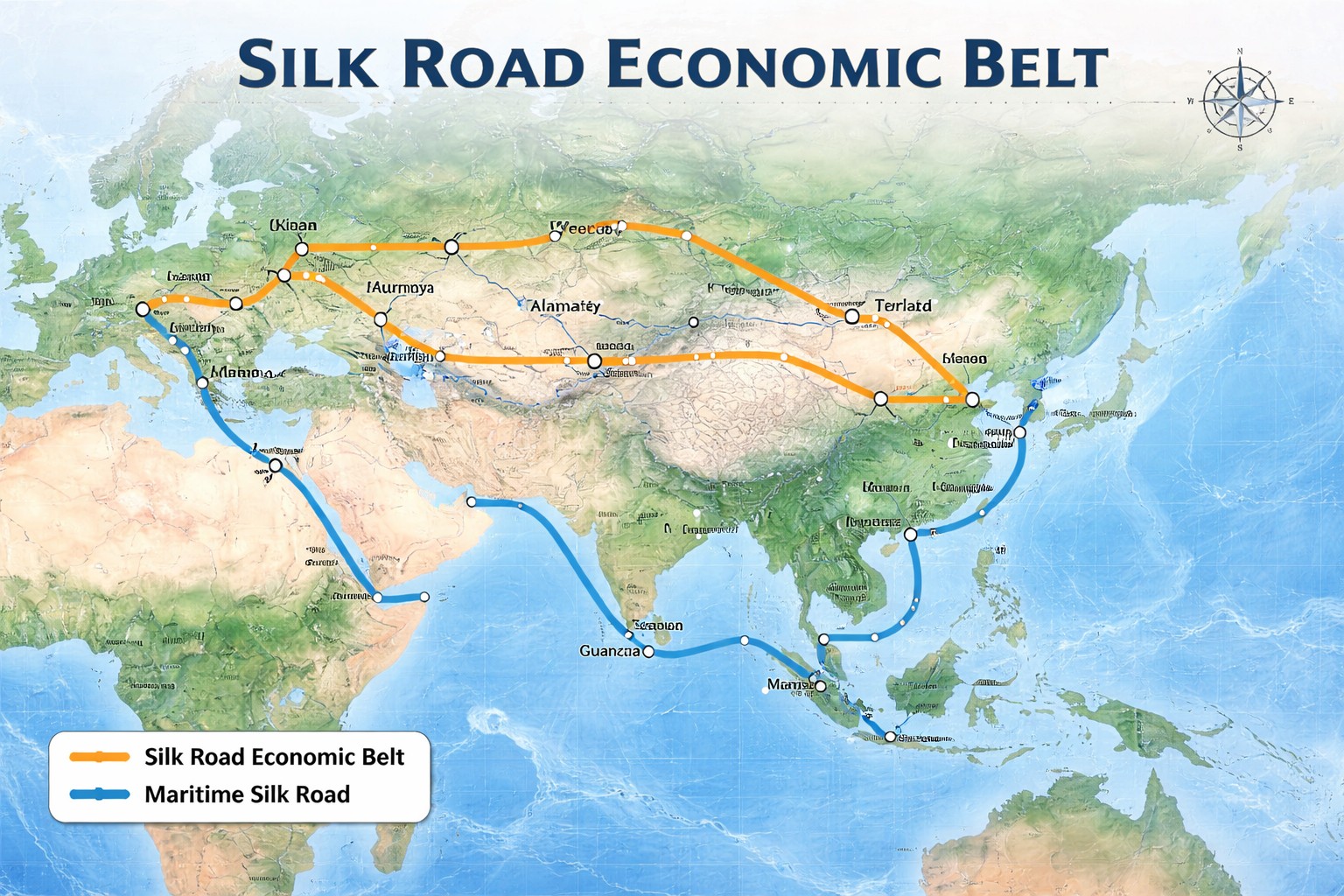
Map overview of Eurasian corridors and trade routes.
Recommended Resources
This page may contain affiliate links. If you buy through these links, we may earn a commission at no extra cost to you.
Logistics & Supply Chain Book
Useful background reading for transport corridors, trade routes, and supply chains.
View ResourceTrade Data Platform
A platform for researching trade flows, customs data, and freight trends.
Open PlatformBusiness Travel Insurance
Optional partner offer for readers traveling across Eurasia for business.
Check Offer