
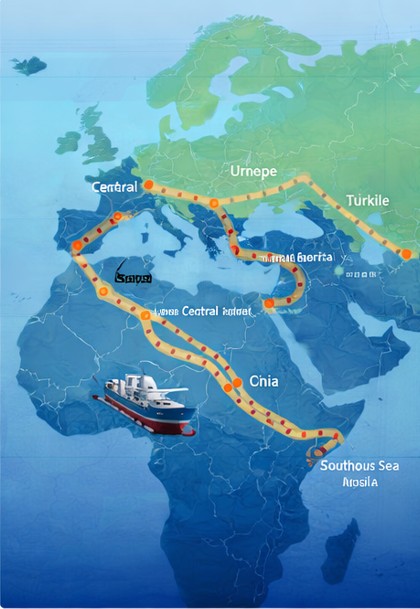
Kazakhstan is increasingly emerging as a crucial hub for trade in Eurasia, particularly with the development of the Trans-Caspian Corridor. This strategic pathway connects Central Asia with Europe via the Caspian Sea, providing a vital link for the transportation of goods and fostering economic growth in the region.
Strategic Importance of the Trans-Caspian Corridor
The Trans-Caspian Corridor is positioned to play an essential role in the greater Eurasian logistics network. By linking Kazakhstan with Azerbaijan, Georgia, and Turkey, the corridor offers a more efficient route for transporting goods between Asia and Europe. This is particularly significant as global trade dynamics shift, with increasing demand for alternative routes that bypass traditional passages.
Kazakhstan's geographical location is a distinct advantage. Sharing borders with Russia and China, the country has become a central player in initiatives aimed at enhancing connectivity across the continent. The corridor not only facilitates trade but also provides a platform for Kazakhstan to strengthen its economic ties with neighboring countries.
Infrastructure Development Initiatives
Kazakhstan’s commitment to developing infrastructure to support the Trans-Caspian Corridor is evident in various ongoing projects. Investments in railways, ports, and logistics centers are underway to enhance the capacity and efficiency of this trade route. The establishment of the Aktau Sea Port, for instance, has been pivotal. It serves as a key transshipment point, allowing for the seamless transfer of goods from land to sea.
Additionally, the government has prioritized the modernization of rail links to connect with European networks. These improvements aim to reduce transit times and increase the volume of cargo that can be handled. By investing in infrastructure, Kazakhstan seeks to position itself as a logistics leader in the region.
Economic Impact and Regional Cooperation
The economic implications of the Trans-Caspian Corridor extend beyond Kazakhstan. As trade volumes increase, there is potential for significant benefits to neighboring countries involved in the corridor. Enhanced cooperation between Kazakhstan, Azerbaijan, and other regional partners can lead to a more integrated economic landscape, promoting stability and growth.
Kazakhstan’s initiatives align with broader efforts to foster regional trade agreements and partnerships. By participating in these collaborative projects, Kazakhstan is not only improving its own economic prospects but also contributing to the overall development of Eurasian trade.
In conclusion, the Trans-Caspian Corridor represents a strategic opportunity for Kazakhstan to enhance its role in Eurasian trade. Through focused infrastructure development and regional cooperation, the country is poised to drive economic growth and strengthen its position as a pivotal trade hub in the region.
Silk Road Economic Belt Map
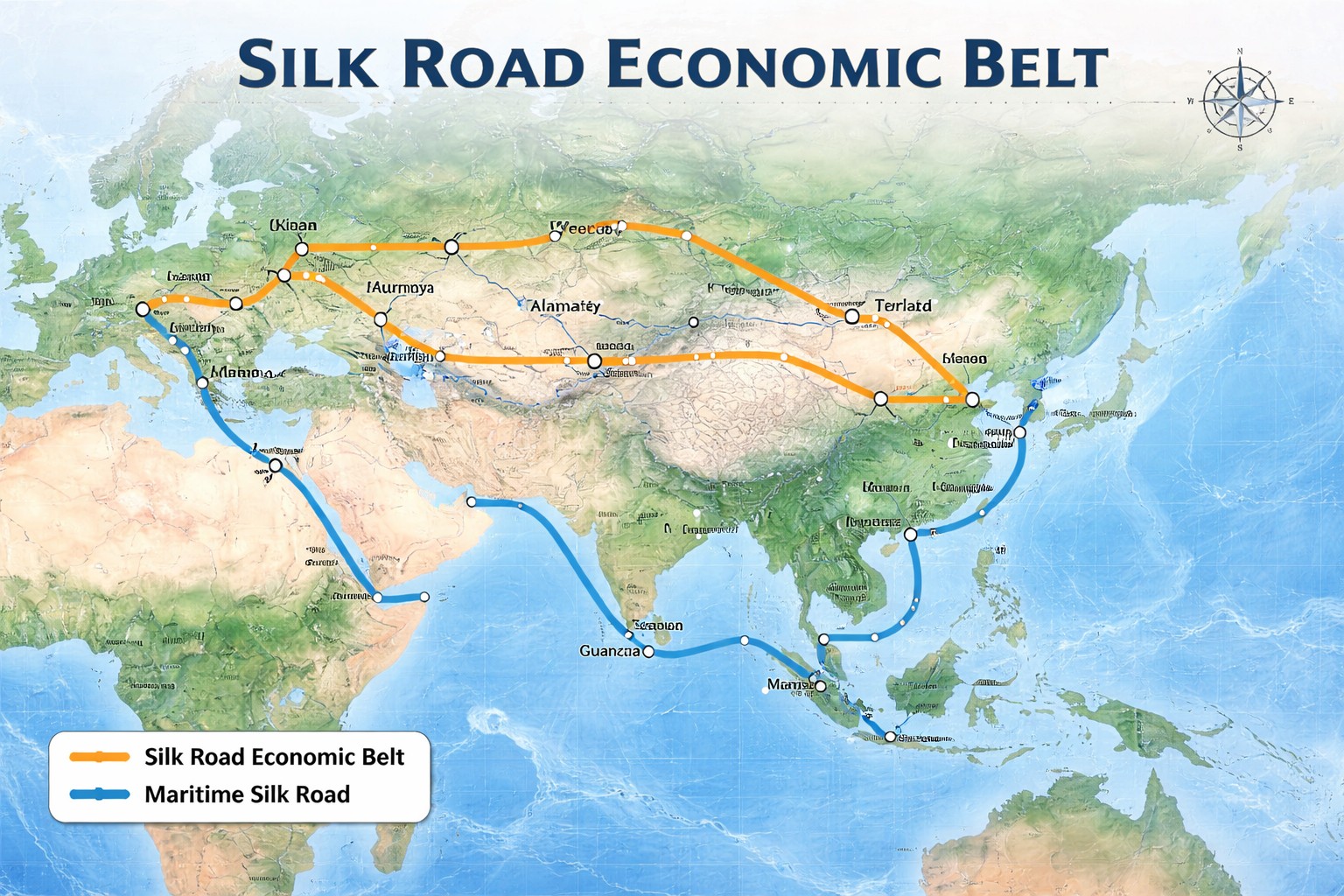
Map overview of Eurasian corridors and trade routes.
Recommended Resources
This page may contain affiliate links. If you buy through these links, we may earn a commission at no extra cost to you.
Logistics & Supply Chain Book
Useful background reading for transport corridors, trade routes, and supply chains.
View ResourceTrade Data Platform
A platform for researching trade flows, customs data, and freight trends.
Open PlatformBusiness Travel Insurance
Optional partner offer for readers traveling across Eurasia for business.
Check Offer