
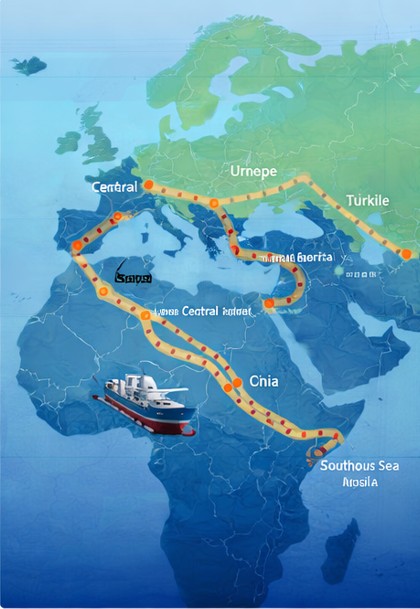
Kazakhstan and China have taken significant steps to bolster their trade relations through the recent signing of a Middle Corridor Agreement. This initiative aims to enhance connectivity and logistics between the two nations, facilitating smoother trade routes that are vital for economic growth in the region.
Enhancing Infrastructure Connectivity
The agreement was signed during a high-level meeting aimed at fostering cooperation between Kazakhstan and China. The Middle Corridor, which runs from China through Kazakhstan to Europe, is increasingly becoming a focal point for countries looking to enhance their trade networks.
Kazakhstan's strategic position as a land bridge between Asia and Europe makes it an essential player in this initiative. The country boasts extensive rail and road networks that can support increased freight traffic. By enhancing infrastructure along this corridor, both nations are looking to streamline logistics and reduce transit times for goods.
The agreement encompasses various aspects of infrastructure development, including investment in transportation hubs, upgrades to existing rail lines, and the construction of new roadways. These improvements are expected to facilitate smoother and more efficient trade routes, which could lead to increased economic activity in both nations.
Boosting Trade Volume
The Middle Corridor Agreement is expected to significantly boost the volume of trade between Kazakhstan and China. As both countries seek to expand their markets, a streamlined logistics framework will enable businesses to operate more effectively across borders.
China has been one of Kazakhstan's largest trading partners, with bilateral trade reaching substantial figures in recent years. The new agreement aims to build on this foundation by expanding the range of goods exchanged between the two nations. This could include everything from agricultural products to industrial machinery, further diversifying trade portfolios.
Additionally, the agreement aligns with China's Belt and Road Initiative (BRI), which focuses on improving connectivity and trade across Eurasia. By reinforcing the Middle Corridor, Kazakhstan and China are positioning themselves as key players in this broader economic strategy.
Future Prospects for Investment
The Middle Corridor Agreement also opens up new avenues for investment in both Kazakhstan and China. With enhanced infrastructure, the region is likely to attract more foreign investments aimed at capitalizing on improved trade routes. This could lead to job creation and economic development, particularly in regions along the corridor.
Kazakhstan has been actively seeking foreign investments to modernize its economy and improve its logistics capabilities. The agreement with China provides a framework for attracting Chinese investment in key sectors such as transportation, logistics, and manufacturing.
Furthermore, the focus on infrastructure development can create opportunities for local businesses to engage in trade with Chinese counterparts, fostering a more dynamic economic environment. As both nations work together to implement this agreement, the potential for economic growth and development is substantial.
In conclusion, the Middle Corridor Agreement between Kazakhstan and China represents a pivotal step in enhancing trade relations and infrastructure connectivity. By streamlining logistics and boosting trade volume, both countries are likely to see significant economic benefits, further solidifying their positions in the Eurasian trade landscape. As the agreement unfolds, it will be crucial to monitor its implementation and the impact it has on regional economic dynamics.