
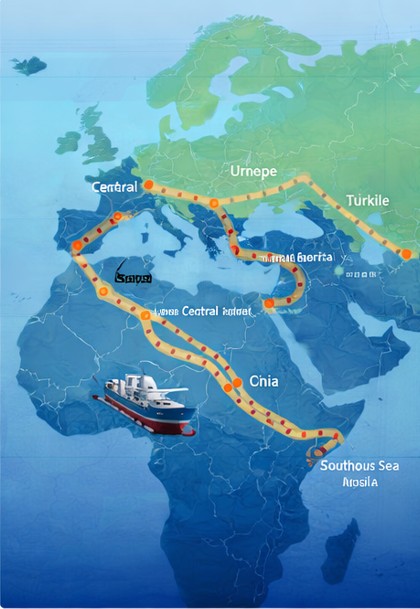





Introduction to the Middle Corridor
The Middle Corridor, also known as the Trans-Caspian International Transport Route, is reshaping the landscape of trade and connectivity across Eurasia. By linking China, Central Asia, the Caucasus, and Europe, it is not only facilitating trade but also redefining the geopolitical significance of Central Asia. With its focus on infrastructure, logistics, and trade routes, the Middle Corridor is central to the region’s integration into the global economy.
Central Asia, historically positioned at the crossroads of major trade routes, is witnessing renewed interest from various stakeholders. This revival is largely attributed to the strategic investments in infrastructure that bolster connectivity through the Middle Corridor. The initiative aims to provide an alternative route for goods moving between Asia and Europe, especially in light of ongoing global supply chain disruptions.
Infrastructure Developments
A series of infrastructure projects has been initiated to enhance the efficiency of the Middle Corridor. These include upgrades to railways, ports, and logistics hubs that facilitate smoother transit of goods across borders. Notable investment has come from both regional and international actors, aiming to create a cohesive transportation network that can support increased trade volumes.
For instance, the port facilities on the Caspian Sea are undergoing significant enhancements to accommodate larger cargo ships and improve loading and unloading times. Additionally, rail connections from Central Asia to Europe are being modernized to ensure faster transit. The integration of digital technologies in logistics is also being prioritized to streamline operations and reduce delays.
The involvement of countries such as Azerbaijan, Georgia, and Kazakhstan is crucial in this development. Each nation plays a pivotal role in ensuring that the corridor is not only operational but also efficient and competitive compared to other trade routes.
Trade and Economic Implications
The implications of the Middle Corridor extend beyond mere logistics; they encompass broader economic growth and trade diversification for Central Asian countries. With the ability to connect to European markets, Central Asia is poised to become a key player in global trade dynamics. This enhanced connectivity is expected to attract foreign direct investment and stimulate local economies, offering new opportunities for businesses in the region.
Moreover, the Middle Corridor provides Central Asian countries with the chance to diversify their trade partners. Instead of relying solely on traditional markets, they can engage with a broader range of nations, thus mitigating risks associated with economic dependency. This diversification is particularly important given the fluctuations in global demand and supply chains.
However, challenges remain. Political stability, regulatory harmonization, and the need for sustainable practices in infrastructure development are critical to the long-term success of these initiatives. Stakeholder cooperation will be essential to overcome these barriers and maximize the potential benefits of the Middle Corridor.
Conclusion
As the Middle Corridor continues to develop, its impact on Central Asia's role in Eurasian connectivity becomes increasingly evident. The combination of infrastructure improvements, enhanced trade opportunities, and strategic partnerships positions Central Asia as a vital link in the global trade network. While challenges remain, the ongoing efforts to bolster this route signify a promising future for the region, providing a platform for economic growth and collaboration in the heart of Eurasia.
Silk Road Economic Belt Map
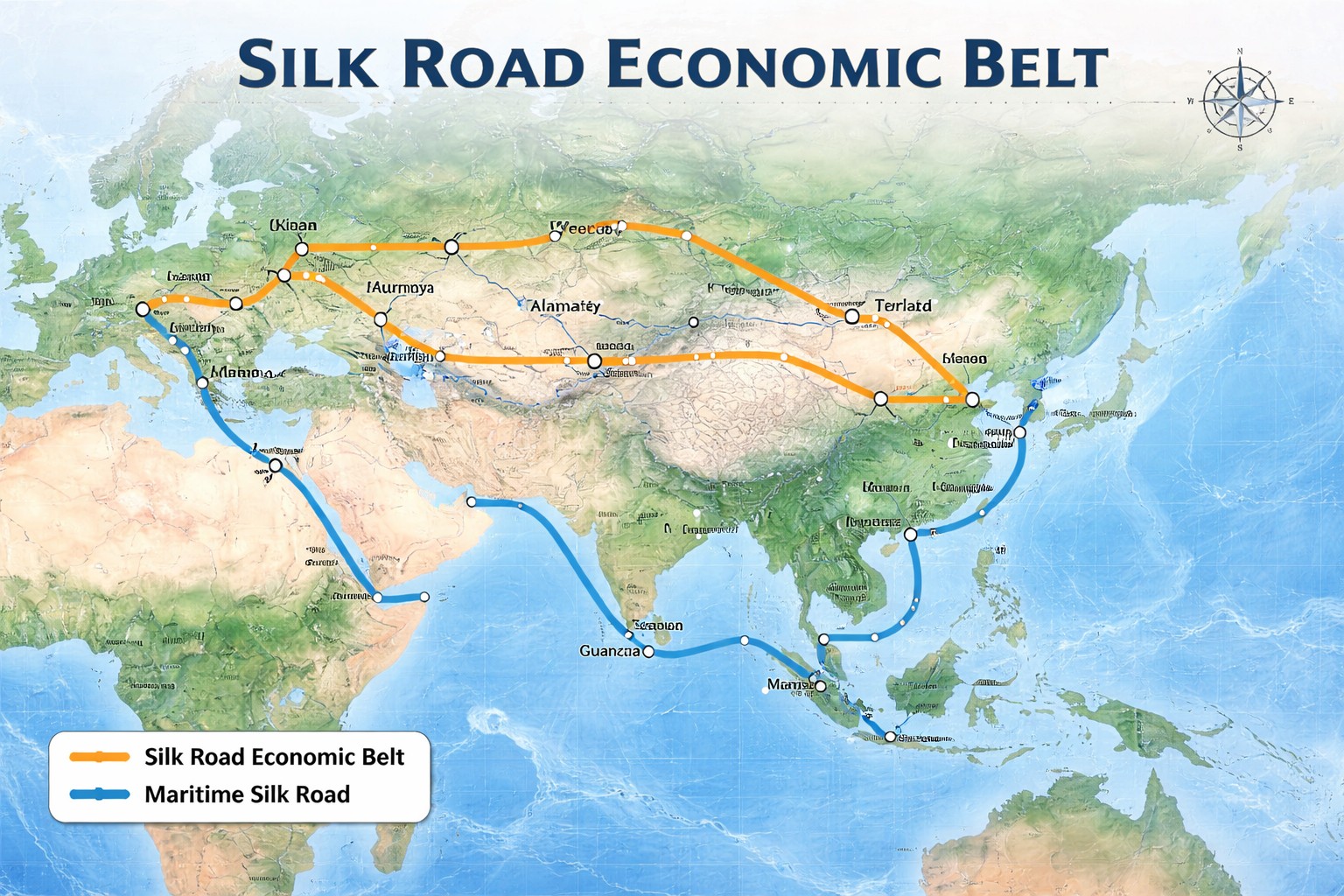
Map overview of Eurasian corridors and trade routes.
Recommended Resources
This page may contain affiliate links. If you buy through these links, we may earn a commission at no extra cost to you.
Logistics & Supply Chain Book
Useful background reading for transport corridors, trade routes, and supply chains.
View ResourceTrade Data Platform
A platform for researching trade flows, customs data, and freight trends.
Open PlatformBusiness Travel Insurance
Optional partner offer for readers traveling across Eurasia for business.
Check Offer