
---
The geopolitical landscape of Central Asia is undergoing significant changes as energy corridors become increasingly vital to regional and global markets. A recent assessment highlights the intricate balance of sovereign security, infrastructure integrity, and the shifting power dynamics across Eurasia, particularly in the context of energy resources. By 2026, understanding these corridors will be essential for stakeholders involved in infrastructure, logistics, and trade.
Sovereign Security and Energy Dependencies
Central Asia's energy corridors play a crucial role in connecting suppliers to consumers, influencing both regional stability and economic growth. The countries within this area, rich in oil and gas reserves, find themselves at the intersection of major geopolitical interests. Sovereign security is paramount, as these nations navigate relationships with larger powers, including Russia, China, and the European Union.
As energy demands continue to rise, the dependency on Central Asian resources could lead to heightened tensions. Countries like Kazakhstan and Turkmenistan have strategic assets that are pivotal for global energy supplies, raising concerns about the potential for external influences to disrupt domestic policies. This delicate balance of power necessitates robust infrastructure that can withstand both physical and political challenges.
Infrastructure Forensics: Assessing Vulnerabilities
The infrastructure supporting Central Asian energy corridors is critical for ensuring reliable energy transit. However, vulnerabilities exist within this network that could be exploited. An assessment of infrastructure forensics reveals that many pipelines and transport systems require significant investment to enhance resilience against potential disruptions, whether from natural disasters or geopolitical conflicts.
Modernization of existing infrastructure is imperative. Investments in technology and maintenance can help ensure that energy corridors remain operational and secure. Furthermore, the integration of smart technologies can facilitate better monitoring and management, ultimately increasing responsiveness to threats. Stakeholders must prioritize these upgrades to safeguard the flow of energy, which is vital for the economies of Central Asia and their partners.
Trans-Eurasian Power Dynamics
The energy corridors of Central Asia are not merely regional assets; they are integral components of the broader Trans-Eurasian power dynamics. The competition for influence among major powers shapes policies and investment decisions across the region. China's Belt and Road Initiative (BRI) and Russia's Eurasian Economic Union (EEU) are two frameworks that significantly impact trade and infrastructure development.
These initiatives create opportunities for collaboration but also risk exacerbating tensions. For instance, the alignment of interests between China and Central Asian countries can lead to beneficial investments, yet it may also provoke concerns from Russia and the West about growing Chinese influence. As these dynamics evolve, the potential for conflict or cooperation will largely depend on how countries manage their sovereignty while engaging with external powers.
The upcoming years will be crucial for determining how Central Asian nations position themselves within these competing frameworks. Their ability to navigate the geopolitical landscape will significantly influence not only their energy security but also their economic futures.
In conclusion, the energy corridors of Central Asia present both opportunities and challenges in the context of geopolitical risks. Sovereign security, infrastructure resilience, and the interplay of Trans-Eurasian power dynamics will shape the region's trajectory leading up to 2026. As stakeholders engage with these complexities, a cautious and informed approach will be essential to foster stability and growth in this pivotal area of the world.
Silk Road Economic Belt Map
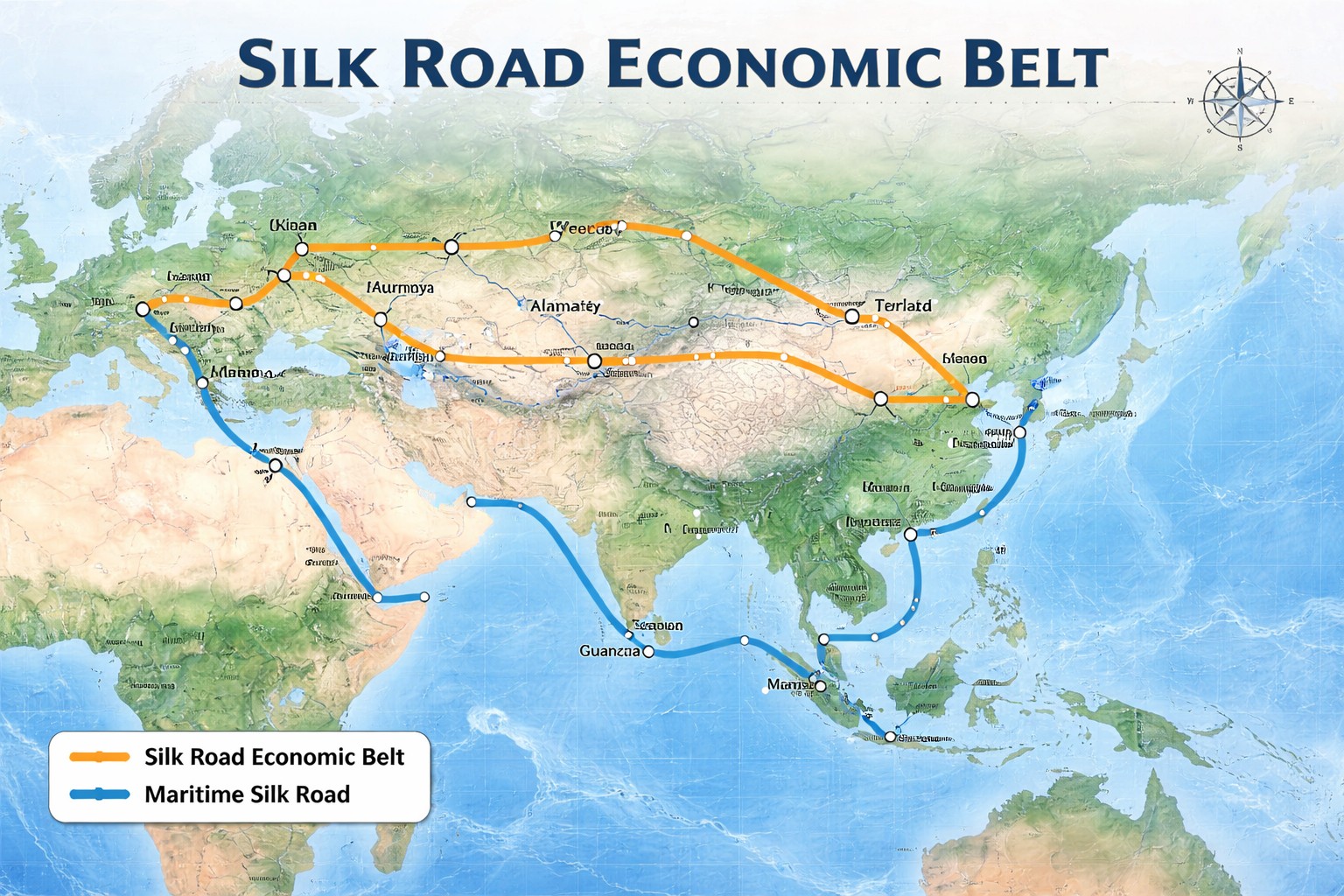
Map overview of Eurasian corridors and trade routes.
Recommended Resources
This page may contain affiliate links. If you buy through these links, we may earn a commission at no extra cost to you.
Logistics & Supply Chain Book
Useful background reading for transport corridors, trade routes, and supply chains.
View ResourceTrade Data Platform
A platform for researching trade flows, customs data, and freight trends.
Open PlatformBusiness Travel Insurance
Optional partner offer for readers traveling across Eurasia for business.
Check Offer