
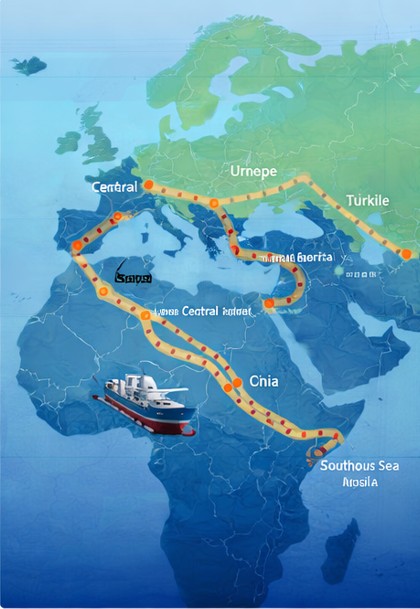





China’s Middle Corridor(s) And East-West Connectivity: An Analytical Overview
As global trade patterns evolve, the significance of East-West connectivity through China’s Middle Corridor is becoming increasingly apparent. The Middle Corridor is part of China's Belt and Road Initiative (BRI), which aims to enhance trade and logistics across Eurasia. This analysis examines the implications of this corridor on infrastructure, logistics, and investment in the region.
The Middle Corridor and Its Strategic Importance
The Middle Corridor encompasses a network of railways, highways, and maritime routes that connect China to Europe via Central Asia. This route runs through countries like Kazakhstan, Azerbaijan, Georgia, and Turkey, providing an alternative to traditional maritime shipping routes. The strategic importance of this corridor lies in its ability to facilitate faster transit times, reduce shipping costs, and diversify supply chains.
Central Asia serves as a crucial juncture in this network, with numerous projects underway to develop infrastructure that supports increased connectivity. For instance, rail links have been upgraded, and new logistics hubs are being established to enhance trade efficiency. The Middle Corridor is not only about physical infrastructure; it also involves the harmonization of customs procedures and trade regulations among participating countries, which is essential for seamless transit.
Challenges and Opportunities in Logistics
While the potential benefits of the Middle Corridor are substantial, several challenges remain. Geopolitical tensions in the region can complicate logistics and hinder cooperation among countries. Additionally, the lack of adequate infrastructure in some areas can lead to delays and inefficiencies in transportation.
Investments in logistics are crucial for overcoming these challenges. For example, China has been actively investing in rail and road construction projects in Central Asia to improve connectivity. These investments not only enhance the functionality of the Middle Corridor but also provide economic opportunities for local communities.
Moreover, the development of logistics centers along the corridor can stimulate trade by offering services such as warehousing and distribution. As more businesses seek to participate in the Eurasian trade network, the demand for efficient logistics solutions will likely increase.
Trade Growth and Economic Integration
The Middle Corridor is expected to bolster trade between Asia and Europe significantly. By providing a reliable and efficient route for goods, it facilitates economic integration among participating countries. Increased trade flows can lead to economic growth and development in Central Asia, which has historically struggled with economic diversification.
Countries like Kazakhstan and Azerbaijan stand to benefit from enhanced access to European markets. This connectivity could attract foreign investment and promote regional economic collaboration. Additionally, improved trade relations can foster better diplomatic ties, contributing to regional stability.
However, achieving the full potential of the Middle Corridor requires sustained commitment from all stakeholders involved. Governments, businesses, and international organizations must work together to address infrastructure gaps, streamline trade processes, and ensure that the benefits of increased connectivity are equitably distributed.
In conclusion, China’s Middle Corridor represents a significant step toward enhancing East-West connectivity in Eurasia. While challenges exist, the potential benefits for trade, logistics, and economic integration are substantial. Continued investment and collaboration among nations will be critical to realizing the corridor's full potential and fostering a more interconnected and economically vibrant Eurasian landscape.
Silk Road Economic Belt Map
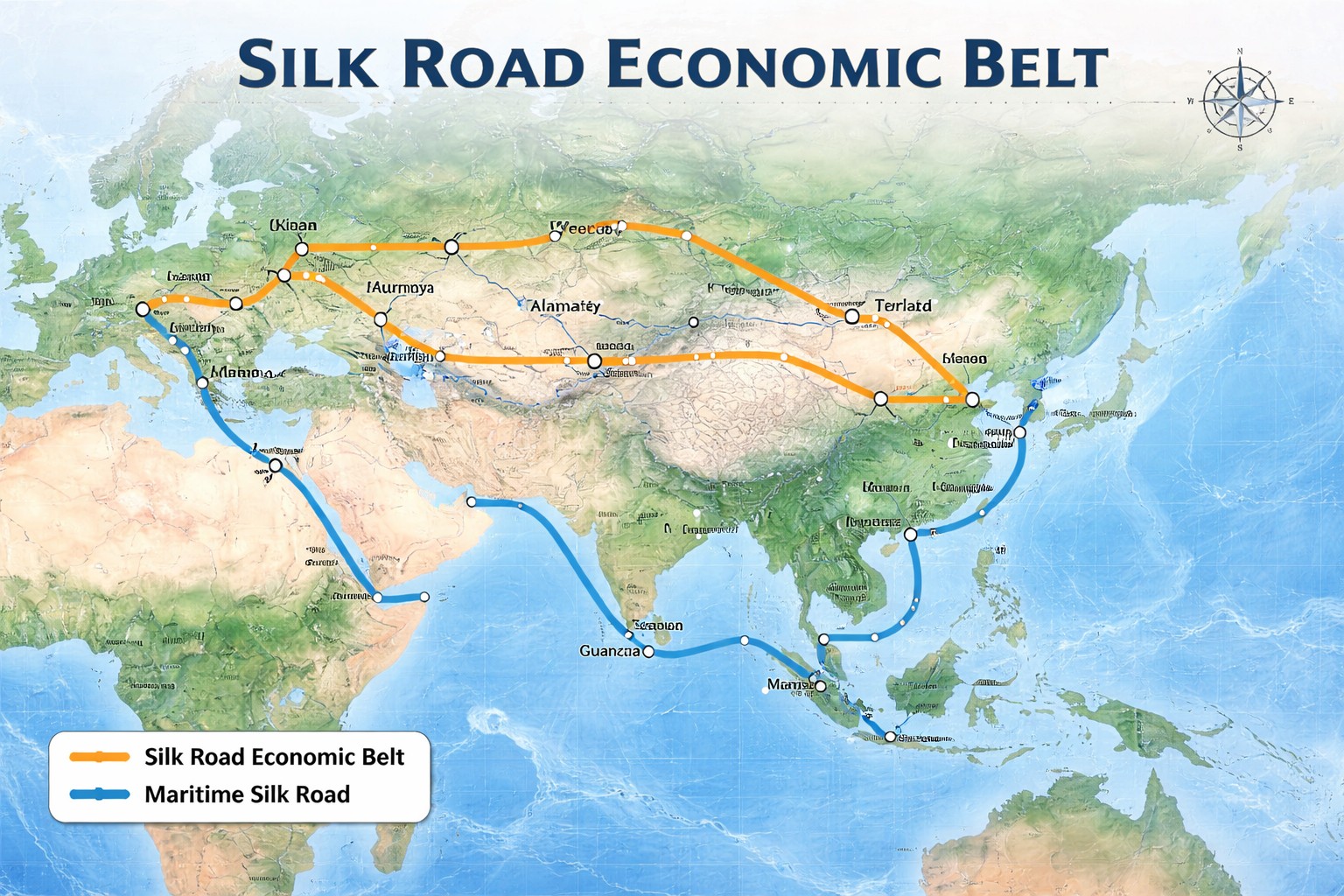
Map overview of Eurasian corridors and trade routes.
Recommended Resources
This page may contain affiliate links. If you buy through these links, we may earn a commission at no extra cost to you.
Logistics & Supply Chain Book
Useful background reading for transport corridors, trade routes, and supply chains.
View ResourceTrade Data Platform
A platform for researching trade flows, customs data, and freight trends.
Open PlatformBusiness Travel Insurance
Optional partner offer for readers traveling across Eurasia for business.
Check Offer