






Infrastructure Investments on the Rise
Recent reports indicate that China is poised to enhance its Belt and Road Initiative (BRI) by 2025, despite ongoing trade tensions with the United States. The BRI, launched in 2013, aims to connect Asia with Africa and Europe via land and maritime networks, fostering economic collaboration and infrastructure development.
In recent years, the initiative has seen a notable surge in investment and project agreements. Various countries across Eurasia have been engaging with Chinese firms, tapping into funding for roads, railways, ports, and energy projects. As the world watches the evolution of global trade dynamics, China appears committed to solidifying its role as a key player in infrastructure development.
The growing number of agreements suggests that nations are increasingly looking to China for financial support and expertise in building critical infrastructure that can drive economic growth. The Chinese government has emphasized its intention to expand the BRI, viewing it as a strategic priority that extends beyond immediate economic benefits.
Strategic Partnerships and Economic Goals
As the BRI progresses, strategic partnerships between China and participating countries are becoming more prominent. These relationships are shaped not only by financial incentives but also by a shared vision for regional connectivity and economic development.
Countries across Central Asia, Southeast Asia, and even parts of Europe are recognizing the potential benefits of collaborating with China on infrastructure projects. The focus is often on enhancing trade routes that can facilitate the movement of goods and services. Investments in logistics hubs and transportation networks are seen as crucial for boosting competitiveness and fostering economic resilience.
Furthermore, China's engagement in these partnerships includes a comprehensive approach that encompasses technological transfer and skill development. This is expected to enhance local capacities and create job opportunities in the regions involved. Such collaboration could lead to a more sustainable economic environment as nations work together towards common goals.
The Broader Impact Amid Trade Tensions
The ongoing trade war between the United States and China has introduced a layer of complexity to global trade relations. While tariffs and sanctions have affected various sectors, China's focus on the BRI appears to remain steadfast. The initiative serves as a counterbalance to the pressures exerted by US trade policies.
China's willingness to invest in infrastructure projects abroad may also be seen as a strategic maneuver to strengthen its economic influence in regions traditionally dominated by Western powers. By fostering economic interdependence through infrastructure development, China is not only securing trade routes but also solidifying its geopolitical presence.
The implications of this approach are significant, as enhanced infrastructure can lead to increased trade volumes and improved economic stability for participating nations. However, it is essential to acknowledge that challenges remain, including concerns over debt sustainability and the political implications of increased Chinese involvement in foreign economies.
As the BRI evolves, its impact on global trade dynamics and international relations will continue to be scrutinized. Stakeholders from various sectors will be watching closely to assess how these developments will shape the future of trade and investment in Eurasia.
In conclusion, China's Belt and Road Initiative is gaining momentum as it moves towards its 2025 goals amidst ongoing US-China trade tensions. The focus on infrastructure investment and strategic partnerships suggests a commitment to fostering regional connectivity and economic growth. As the initiative unfolds, its broader implications for global trade and economic policies will be an important area of observation for policymakers and analysts alike.
Silk Road Economic Belt Map
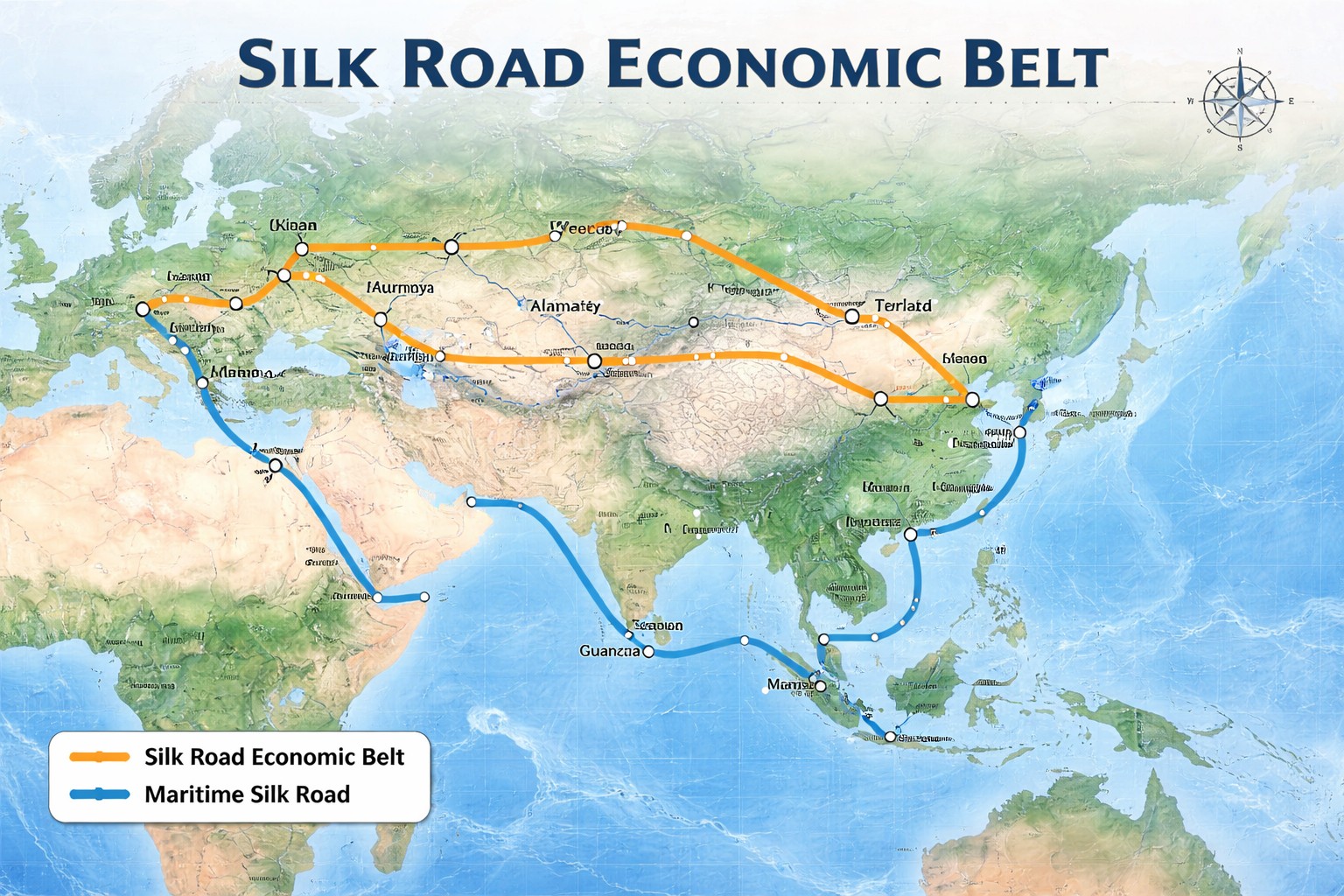
Map overview of Eurasian corridors and trade routes.
Recommended Resources
This page may contain affiliate links. If you buy through these links, we may earn a commission at no extra cost to you.
Logistics & Supply Chain Book
Useful background reading for transport corridors, trade routes, and supply chains.
View ResourceTrade Data Platform
A platform for researching trade flows, customs data, and freight trends.
Open PlatformBusiness Travel Insurance
Optional partner offer for readers traveling across Eurasia for business.
Check Offer