
---
China's Belt and Road Initiative (BRI) continues to reshape the economic landscape of Central Asia, evidenced by the recent announcement that the region has attracted $25 billion in investments in the first half of the year. This influx marks a record for the initiative, highlighting the growing significance of Central Asia in global trade and infrastructure development.
Record Investments in Infrastructure
The investments primarily focus on infrastructure projects, which are vital for enhancing connectivity and trade routes across the region. Key areas of development include transportation networks, energy projects, and digital infrastructure. These investments aim to facilitate smoother logistics and improve trade efficiency between China and Central Asian countries.
China's engagement in Central Asia is part of its broader strategy to strengthen economic ties and establish trade routes that connect Asia with Europe and beyond. The investments are expected to enhance the region's role as a critical hub in the Silk Road Economic Belt, further integrating it into the global economy.
Strategic Partnerships and Economic Growth
Central Asian countries, including Kazakhstan, Kyrgyzstan, and Uzbekistan, have actively sought to attract Chinese investments as they pursue their own economic development goals. The Chinese government's commitment to the BRI has provided these nations with access to much-needed capital for their infrastructure projects.
The partnership has led to significant job creation and economic growth in the region. Local economies benefit from improved infrastructure, which enhances trade capabilities and attracts further investments from other nations. The collaborative efforts have fostered a conducive environment for various sectors, including transport, energy, and technology.
Challenges and Future Outlook
While the record investments signify positive momentum, challenges remain. Regional political dynamics, economic fluctuations, and concerns about debt sustainability are potential hurdles that could impact future projects. Additionally, some observers have raised questions about the long-term benefits of such investments, particularly regarding the balance of power between China and Central Asian nations.
Moving forward, it will be crucial for Central Asian countries to navigate these challenges while capitalizing on the opportunities presented by the BRI. Transparency in agreements and a focus on sustainable development will be essential in ensuring that the benefits of Chinese investments are maximized for local populations.
In conclusion, the $25 billion in investments within Central Asia marks a significant milestone for China’s Belt and Road Initiative. As the region continues to grow in importance as a trade hub, the focus will likely remain on infrastructure development and strategic partnerships, shaping the future economic landscape of Eurasia.
Silk Road Economic Belt Map
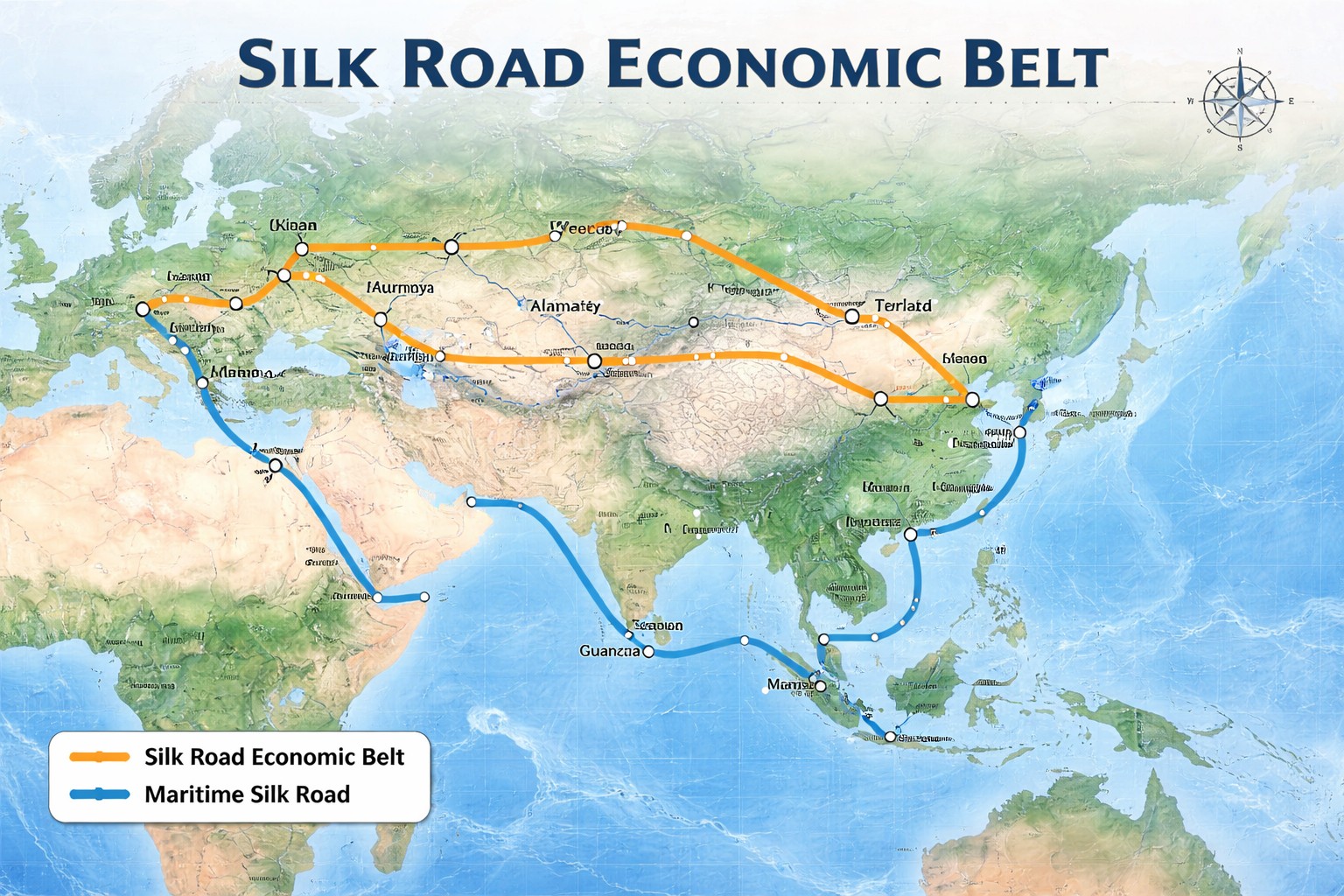
Map overview of Eurasian corridors and trade routes.
Recommended Resources
This page may contain affiliate links. If you buy through these links, we may earn a commission at no extra cost to you.
Logistics & Supply Chain Book
Useful background reading for transport corridors, trade routes, and supply chains.
View ResourceTrade Data Platform
A platform for researching trade flows, customs data, and freight trends.
Open PlatformBusiness Travel Insurance
Optional partner offer for readers traveling across Eurasia for business.
Check Offer