
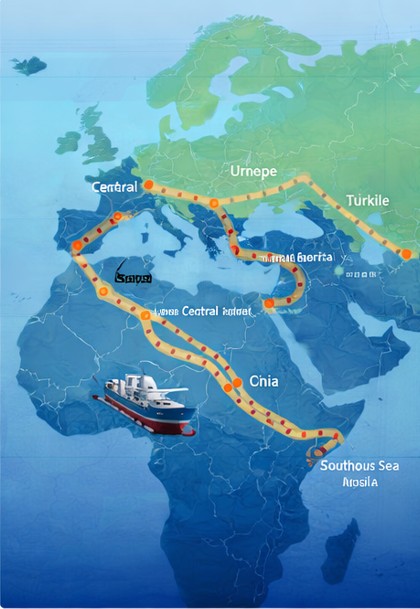





Infrastructure Developments
Turkmenistan is increasingly positioning itself to connect with the Middle Corridor, a critical trade route that links Europe to Asia via the Caspian Sea and beyond. The government is prioritizing infrastructure projects that enhance transport and logistics capabilities, which are vital for integrating into this emerging trade network.
Key initiatives include the expansion of rail and road networks, aimed at facilitating smoother transit of goods. Improvements to the Turkmenbashi seaport are also underway, which is expected to play a pivotal role in increasing maritime trade capacity. The port is strategically located on the eastern shore of the Caspian Sea, making it a crucial hub for cargo movement between Central Asia and Europe.
Additionally, Turkmenistan has been investing in building modern customs facilities designed to streamline processes and reduce delays for incoming and outgoing goods. This focus on infrastructure is seen as essential for the nation to take advantage of its geographical location and to better serve as a transit country in the broader context of regional trade.
Trade Partnerships
To solidify its role in the Middle Corridor, Turkmenistan is actively seeking to forge partnerships with neighboring countries and international stakeholders. The government has engaged in discussions with Azerbaijan, Kazakhstan, and Turkey, among others, to enhance logistical cooperation and facilitate trade.
These partnerships aim to create a more interconnected trade environment across the Caspian region. By collaborating on transport projects and sharing resources, Turkmenistan hopes to strengthen its position as a key player in the Middle Corridor, which is increasingly recognized for its potential to facilitate trade between Asia and Europe.
Moreover, trade agreements are being explored to boost economic exchanges. The focus is on sectors such as energy, agriculture, and textiles, which are vital to Turkmenistan’s economy and offer potential for export growth. The government is keen on leveraging these partnerships to attract foreign investment, which is critical for funding infrastructure projects and expanding trade capabilities.
Challenges Ahead
Despite the positive steps towards integration, Turkmenistan faces several challenges that could hinder its ambitions within the Middle Corridor framework. One significant concern is the competition from other trade routes, particularly those emerging from China and Russia. As these nations invest heavily in their own infrastructure, Turkmenistan must ensure that its offerings are competitive and appealing to international trade partners.
Additionally, the political landscape in Central Asia can be unpredictable, which may affect trade relations and logistical agreements. Regional stability will be crucial for Turkmenistan as it seeks to establish itself as a reliable transit country.
Administrative hurdles and bureaucratic inefficiencies could also pose risks to successful integration into the Middle Corridor. Streamlining processes and improving governance will be essential for ensuring that trade routes are effective and that they meet the needs of businesses.
In conclusion, Turkmenistan's efforts to integrate into the Middle Corridor trade routes mark an important step for the nation as it seeks to enhance its economic positioning within Eurasia. With ongoing investments in infrastructure and strategic partnerships with neighboring countries, Turkmenistan is laying the groundwork for increased trade and connectivity. However, addressing the challenges ahead will be critical to realizing its ambitions as a key player in regional trade dynamics.
Silk Road Economic Belt Map
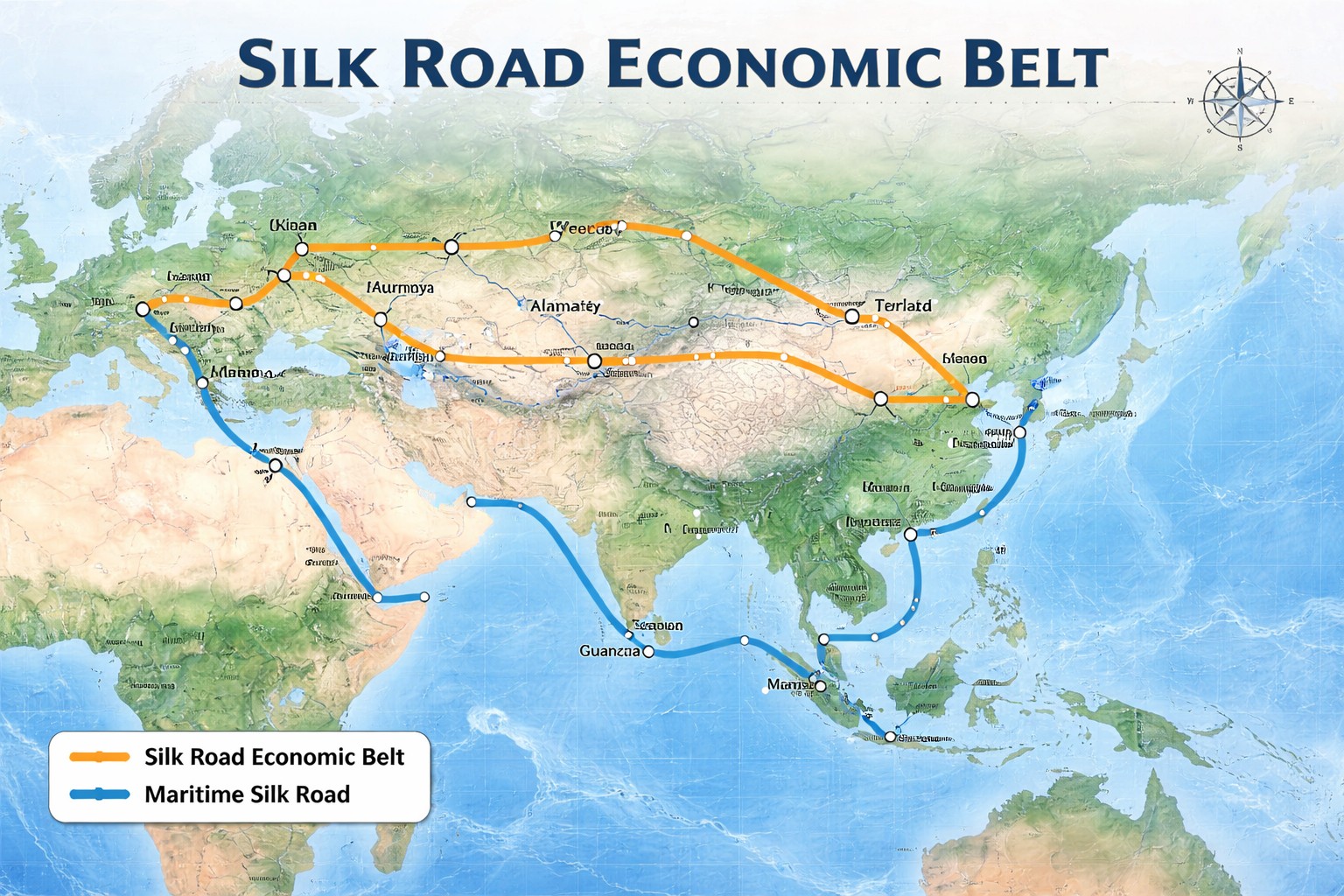
Map overview of Eurasian corridors and trade routes.
Recommended Resources
This page may contain affiliate links. If you buy through these links, we may earn a commission at no extra cost to you.
Logistics & Supply Chain Book
Useful background reading for transport corridors, trade routes, and supply chains.
View ResourceTrade Data Platform
A platform for researching trade flows, customs data, and freight trends.
Open PlatformBusiness Travel Insurance
Optional partner offer for readers traveling across Eurasia for business.
Check Offer