





---
Turkmenistan is actively pursuing initiatives to bolster its integration into the Middle Corridor trade routes, a significant logistical pathway connecting Asia and Europe. This move is part of a broader strategy to enhance trade opportunities and improve infrastructure connectivity in the region.
Strategic Importance of the Middle Corridor
The Middle Corridor, officially known as the Trans-Caspian International Transport Route, has gained traction as a vital trade route that links China, Central Asia, and Europe. As global trade patterns shift, this corridor offers a critical alternative to traditional maritime routes, especially in the context of rising geopolitical tensions.
Turkmenistan's geographical location positions it as a crucial connector within the corridor. By advancing its integration into this trade network, the country aims to facilitate smoother trade flows and attract foreign investment. Enhanced connectivity is expected to bolster Turkmenistan's economy and create new opportunities for local businesses.
Infrastructure Developments Underway
To support its integration efforts, Turkmenistan is undertaking significant infrastructure projects aimed at enhancing transport and logistics capabilities. This includes the modernization of existing rail networks and the improvement of roadways that link to key trade hubs within the Middle Corridor.
Recent reports indicate that Turkmenistan is investing in its railway infrastructure, aiming to increase capacity and reduce transit times. Upgrades to railway stations and logistics centers are also part of the plan, ensuring that the country can handle increased freight volumes as trade activity grows.
Additionally, the government has expressed a commitment to enhancing its ports along the Caspian Sea, which serve as essential gateways for cargo moving to and from Europe. These infrastructural improvements are expected to facilitate more efficient cargo handling and strengthen Turkmenistan's role as a transit country.
Collaborations and Regional Partnerships
Turkmenistan's integration into the Middle Corridor is not solely about domestic infrastructure but also involves forging partnerships with neighboring countries and regional stakeholders. The government has been proactive in engaging with other nations along the corridor, recognizing that collaboration is crucial for maximizing trade potential.
Recent meetings and initiatives have focused on developing a coordinated approach to logistics and customs procedures. By streamlining these processes, Turkmenistan aims to reduce delays and costs for businesses involved in cross-border trade.
Furthermore, discussions around joint investment projects and infrastructure development with countries such as Azerbaijan and Kazakhstan are gaining momentum. These partnerships are designed to create a cohesive trade environment that benefits all parties involved.
While specific details regarding investment figures and timelines remain somewhat unclear, the overarching goal is to establish Turkmenistan as an integral player within the Middle Corridor framework.
Conclusion
As Turkmenistan makes strides to integrate into the Middle Corridor trade routes, it is positioning itself as a pivotal hub in Eurasian trade. Through significant infrastructure investments and regional collaborations, the country aims to enhance its logistics capabilities and attract more trade opportunities. While challenges remain, the ongoing developments signal Turkmenistan's commitment to playing a vital role in the evolving landscape of regional commerce.
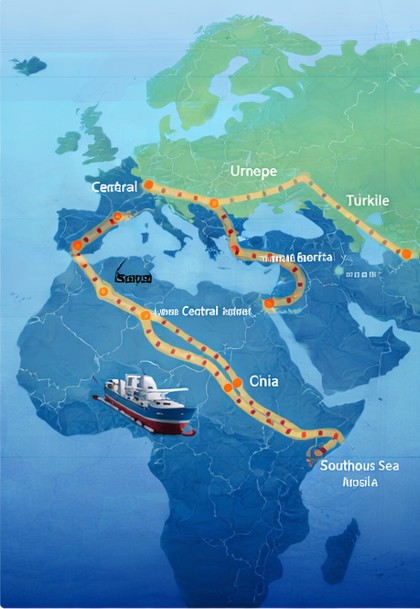
Silk Road Economic Belt Map

Map overview of Eurasian corridors and trade routes.
Recommended Resources
This page may contain affiliate links. If you buy through these links, we may earn a commission at no extra cost to you.
Logistics & Supply Chain Book
Useful background reading for transport corridors, trade routes, and supply chains.
View ResourceTrade Data Platform
A platform for researching trade flows, customs data, and freight trends.
Open PlatformBusiness Travel Insurance
Optional partner offer for readers traveling across Eurasia for business.
Check Offer