
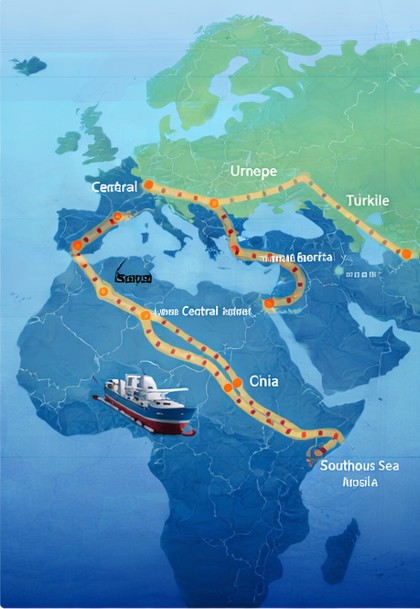





Overview of the Middle Corridor
The Middle Corridor, stretching through Central Asia, serves as a critical link in the broader context of Eurasian trade routes. This corridor, which connects Asia to Europe, is gaining increased attention as countries within the region look to enhance their economic ties and infrastructure investments. The importance of this route has been underscored by geopolitical shifts and a growing demand for alternative trade pathways amid global supply chain disruptions.
Central Asia, comprising nations like Kazakhstan, Kyrgyzstan, Uzbekistan, and beyond, acts as a strategic hub for transporting goods between the East and West. The initiative aims not only to boost trade volumes but also to foster closer political and economic relationships among participating countries. As nations seek to diversify their trade options, the Middle Corridor's significance continues to grow.
Infrastructure Development Efforts
Significant investments in infrastructure are essential for the success of the Middle Corridor. Various projects aimed at enhancing transportation networks, railways, and logistics hubs are underway. Key initiatives include the construction of rail lines that connect Central Asian nations to Turkey and beyond, as well as improvements in road networks that facilitate smoother transit of goods.
Additionally, the development of dry ports and logistics centers is becoming increasingly vital. These facilities aim to streamline customs processes and reduce transit times, making the corridor more appealing for international trade. The establishment of effective intermodal transport options—where goods can be transferred between different modes of transport—will also play a crucial role in ensuring the corridor's efficiency.
Countries are collaborating to create a more integrated transportation system. For instance, Kazakhstan has been at the forefront of these developments, leveraging its geographical position to enhance connectivity. Investments in digital infrastructure are also being prioritized to improve trade facilitation, with an emphasis on transparency and efficiency.
Geopolitical Dynamics and Trade Relations
The Middle Corridor is not solely about economics; it also plays a significant role in shaping geopolitical dynamics in Eurasia. As countries in Central Asia enhance their ties with both Western and Eastern powers, the corridor becomes a strategic asset in the broader context of international relations.
China's Belt and Road Initiative (BRI) has prompted Central Asian countries to increase their engagement with Chinese investment. However, there is a cautious approach to ensuring that these relationships do not diminish their sovereignty or lead to over-dependence on any single country. The Middle Corridor presents an opportunity for these nations to diversify their partnerships, attracting interest from Turkey, the European Union, and other global players.
Moreover, the corridor's potential to facilitate energy transport is noteworthy. Central Asian countries are rich in natural resources and are looking to export energy products to Europe via this route. This aspect not only enhances economic viability but also aligns with broader energy security goals for Europe, which seeks to reduce dependency on specific suppliers.
As trade flows increase, Central Asian nations are also keen to ensure that they can manage the influx of goods and services effectively. Developing policies that address customs regulations, tariffs, and trade agreements will be crucial in maximizing the benefits of the Middle Corridor.
Conclusion
The Middle Corridor through Central Asia is emerging as a pivotal trade route with significant implications for infrastructure development, economic growth, and geopolitical relations. As countries invest in necessary infrastructure and navigate the complexities of international partnerships, the corridor has the potential to reshape trade dynamics in Eurasia. The ongoing developments within this framework will require continued attention as nations seek to capitalize on the opportunities it presents while balancing the intricacies of regional and global politics.
Silk Road Economic Belt Map

Map overview of Eurasian corridors and trade routes.
Recommended Resources
This page may contain affiliate links. If you buy through these links, we may earn a commission at no extra cost to you.
Logistics & Supply Chain Book
Useful background reading for transport corridors, trade routes, and supply chains.
View ResourceTrade Data Platform
A platform for researching trade flows, customs data, and freight trends.
Open PlatformBusiness Travel Insurance
Optional partner offer for readers traveling across Eurasia for business.
Check Offer