






The Silk Road Economic Belt concept is steadily transforming trade and investment dynamics between China and Central Asia. As part of China’s ambitious Belt and Road Initiative (BRI), this framework aims to enhance connectivity and cooperation across the region, facilitating economic growth and development.
Infrastructure Development as a Catalyst
Infrastructure projects have taken center stage in the effort to strengthen ties between China and Central Asian countries. Investments in transportation networks, including railways and highways, are critical components of this initiative. Improved infrastructure not only facilitates the movement of goods but also reduces logistical costs for businesses operating in the region.
For instance, the construction of the China-Kyrgyzstan-Uzbekistan railway has been a significant milestone. Once completed, this project is expected to considerably shorten transit times for goods traveling between China and Central Asia. Such developments are viewed as crucial for enhancing regional trade routes and improving access to markets.
In addition, other infrastructure projects, such as highway upgrades and border facilities, are also underway. These investments are anticipated to create a more efficient logistics environment, thereby attracting further foreign investment and stimulating local economies.
Trade Expansion in Diverse Sectors
The Silk Road Economic Belt not only emphasizes infrastructure but also focuses on expanding trade across various sectors. Industries such as agriculture, energy, and technology stand to benefit significantly from this increased cooperation.
Chinese companies have shown interest in Central Asian agricultural products, particularly in Kazakhstan and Uzbekistan, where fertile land and favorable climatic conditions exist. Collaborative efforts in agricultural technology and practices could lead to improved yields and sustainability in these sectors.
Moreover, energy cooperation is another focal point. Central Asia is rich in natural resources, including oil and gas. Chinese investments in energy infrastructure and exploration projects are expected to enhance energy security for both China and Central Asian countries. This synergy is likely to drive economic growth and create jobs, contributing to overall regional stability.
Investment Climate and Economic Cooperation
The Silk Road Economic Belt concept promotes a favorable investment climate by fostering economic cooperation and simplifying regulations. Various bilateral agreements have been established to encourage Chinese investment in Central Asia, addressing issues such as trade tariffs and customs procedures.
Central Asian governments are keen to attract foreign investment to diversify their economies and reduce reliance on a few key sectors. By aligning with the Silk Road initiative, these countries aim to enhance their economic resilience and competitiveness in the global market.
China, being one of the largest investors in the region, is actively engaging in projects that align with its economic interests while supporting local development. This dual approach is intended to forge stronger ties and mutual benefits, fostering long-term partnerships.
In addition, the establishment of trade hubs and free trade zones is also under consideration. These initiatives aim to facilitate smoother trade flows and create an enabling environment for businesses from both regions.
In conclusion, the Silk Road Economic Belt is playing a pivotal role in shaping trade and investment relations between China and Central Asia. Through strategic infrastructure development, expanding trade across multiple sectors, and fostering a conducive investment climate, this initiative aims to unlock the economic potential of the region while promoting mutual growth and cooperation. As these efforts continue to evolve, the long-term impact on the economic landscape of both China and Central Asia remains to be seen.
Silk Road Economic Belt Map
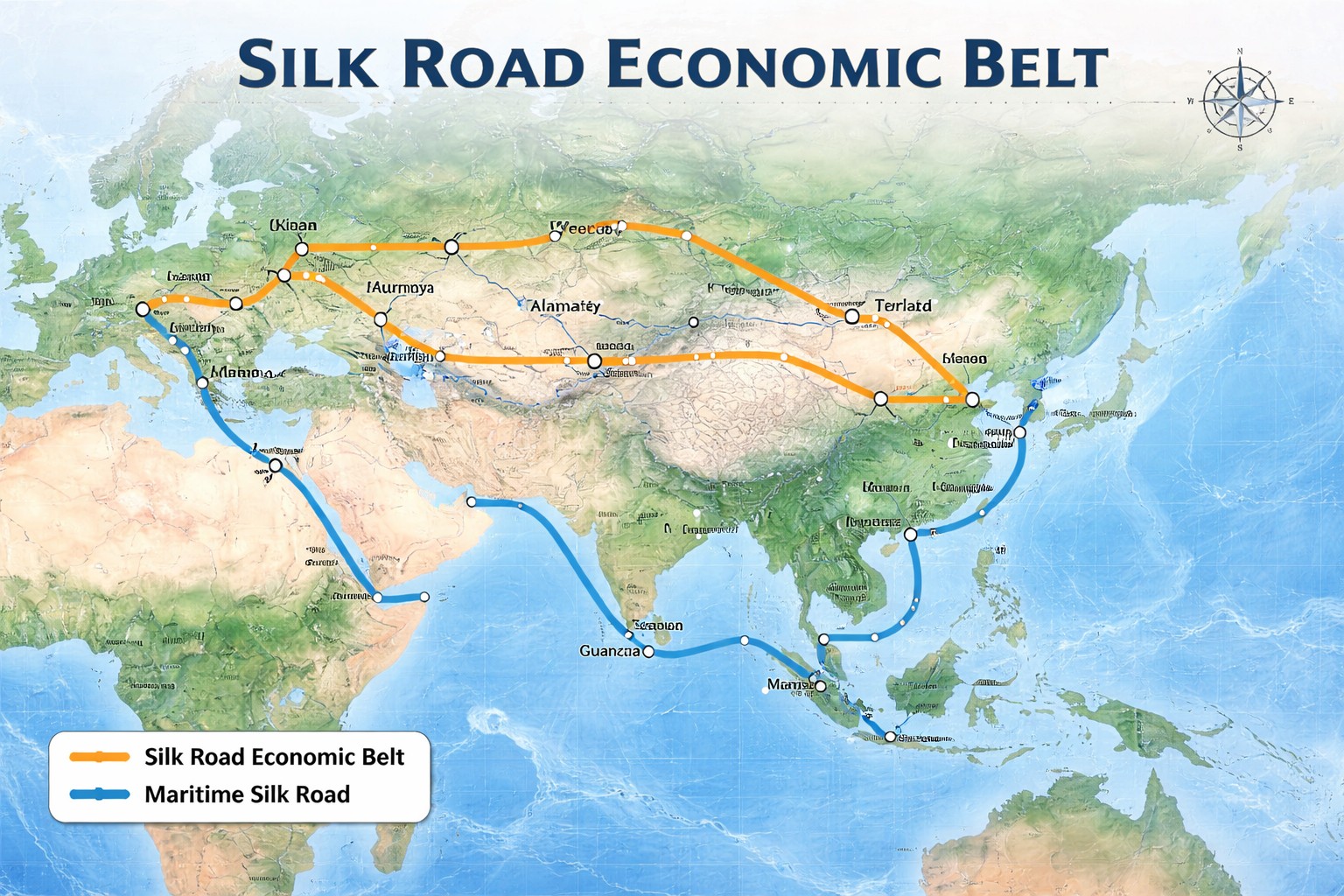
Map overview of Eurasian corridors and trade routes.
Recommended Resources
This page may contain affiliate links. If you buy through these links, we may earn a commission at no extra cost to you.
Logistics & Supply Chain Book
Useful background reading for transport corridors, trade routes, and supply chains.
View ResourceTrade Data Platform
A platform for researching trade flows, customs data, and freight trends.
Open PlatformBusiness Travel Insurance
Optional partner offer for readers traveling across Eurasia for business.
Check Offer