





---
The logistics and telecommunications company SES has announced its strategic focus on the Middle Corridor and Central Asia, coinciding with the European Union's recent commitment of €623 million towards infrastructure development in the region. This investment aims to bolster trade routes, improve connectivity, and enhance economic cooperation among participating countries.
Enhancing Connectivity through Infrastructure
The Middle Corridor, often referred to as the Trans-Caspian International Transport Route, is poised to become a critical link in the Eurasian supply chain. The recent EU investment is expected to enhance rail and road networks, facilitating smoother transit between Asia and Europe. This corridor serves as a vital alternative to traditional shipping routes, particularly in light of geopolitical tensions that have affected global trade flows.
SES's interest in this corridor aligns with broader regional goals to foster trade and economic development. By targeting Central Asia, SES aims to leverage its expertise in satellite communications to enhance digital connectivity. Improved infrastructure in this area could lead to a significant increase in trade volumes, benefiting both local economies and international businesses.
Strategic Investment in Central Asia
The EU's substantial financial contribution underscores the importance of Central Asia within the global economic landscape. The region has been historically characterized by its strategic position as a crossroads for trade between Europe and Asia. This investment is not merely a financial commitment; it is a strategic initiative aimed at reinforcing economic ties and stability in a region that has often been overlooked in global discussions.
Central Asian nations, including Kazakhstan, Uzbekistan, and Turkmenistan, are set to benefit significantly from enhanced infrastructure. The EU's focus on developing transport links will facilitate not only the movement of goods but also the exchange of ideas and technology across borders. This initiative is anticipated to lay the groundwork for more robust economic partnerships in the future.
Implications for Trade and Economic Development
The implications of SES's focus and the EU's investment extend beyond mere infrastructure improvements. Enhanced logistics capabilities can lead to reduced transportation costs and improved delivery times, making Central Asia a more attractive destination for foreign investment. As trade routes become more efficient, businesses may find new opportunities for expansion in this emerging market.
Furthermore, the initiative aligns with the EU's broader objectives of promoting sustainable development and economic resilience in the region. By investing in infrastructure, the EU not only aims to foster economic growth but also to ensure that development is inclusive and environmentally sustainable. This holistic approach could serve as a model for future international collaborations in regions facing similar challenges.
In conclusion, SES's strategic focus on the Middle Corridor and the EU's commitment of €623 million to infrastructure development in Central Asia represent significant steps towards enhancing trade and connectivity in the region. As investments in infrastructure continue to unfold, the potential for economic growth and increased collaboration among Eurasian nations remains promising.
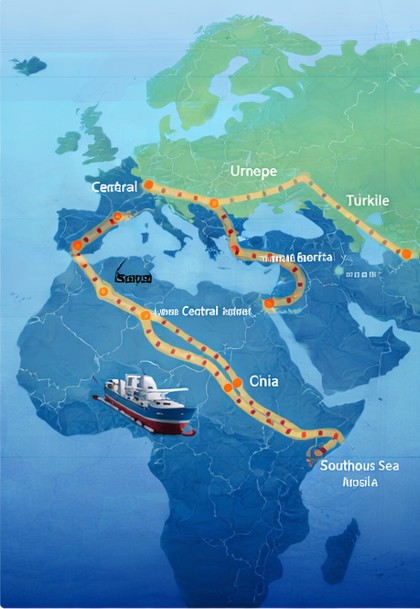
Silk Road Economic Belt Map

Map overview of Eurasian corridors and trade routes.
Recommended Resources
This page may contain affiliate links. If you buy through these links, we may earn a commission at no extra cost to you.
Logistics & Supply Chain Book
Useful background reading for transport corridors, trade routes, and supply chains.
View ResourceTrade Data Platform
A platform for researching trade flows, customs data, and freight trends.
Open PlatformBusiness Travel Insurance
Optional partner offer for readers traveling across Eurasia for business.
Check Offer