





---
Central Asia stands at a pivotal juncture in its economic development, with the Middle Corridor emerging as a significant player in reshaping trade routes. Recent discussions highlighted in The Astana Times underscore the importance of infrastructure, logistics, and investment strategies in the region.
The Middle Corridor: A Strategic Link
The Middle Corridor, which connects China with Europe through Central Asia, is increasingly recognized as a vital trade artery. It serves as an alternative to traditional routes and is expected to enhance connectivity across the region.
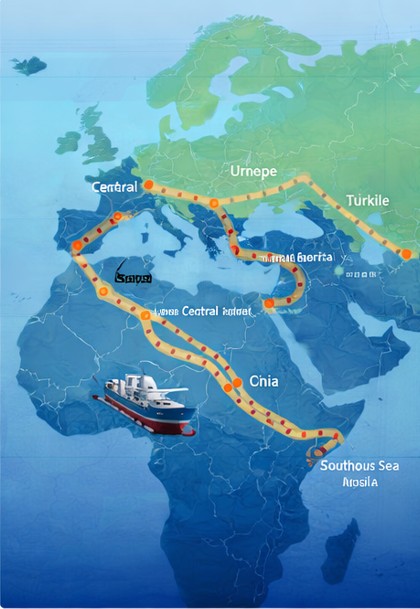
As global trade patterns shift, Central Asia is strategically positioned to serve as a transit hub. The corridor runs from China through Kazakhstan, the Caspian Sea, and onward to Georgia and Turkey. This route not only reduces transportation times but also diversifies trade partnerships, making it essential for regional economies.
The Astana Times reports on various initiatives aimed at strengthening this corridor. Investments in rail and road infrastructure are crucial as they facilitate smoother logistics. Improved connectivity can lead to increased trade volumes, benefiting not just Central Asian states but also countries in Europe and Asia.
Infrastructure Investments: Key to Growth
Infrastructure development remains a cornerstone of Central Asia’s economic strategy. Recent investments have focused on modernizing transport networks and enhancing ports along the Caspian Sea. The region is witnessing a surge in projects aimed at upgrading facilities to handle growing cargo traffic.
Kazakhstan, in particular, has taken significant steps to enhance its logistics capabilities. The establishment of dry ports and expansion of railway networks are part of a broader strategy to position the country as a logistical hub. These developments are expected to improve trade efficiency and attract foreign investment.
Moreover, regional cooperation is vital. Central Asian nations are increasingly working together to streamline customs procedures and harmonize regulations. Such collaborations can significantly reduce trade barriers, making the Middle Corridor more attractive for businesses.
Trade Dynamics and Future Prospects
The evolving trade dynamics in Central Asia are driven by changing economic landscapes and geopolitical considerations. Countries in the region are exploring new markets and seeking to increase exports. The Middle Corridor plays a crucial role in this context, presenting opportunities for diversification.
With the rise of e-commerce and digital trade, logistics companies are adapting to meet new demands. The development of digital platforms for trade facilitation is gaining momentum, allowing businesses to navigate the complexities of cross-border trade more efficiently.
While challenges remain, such as political stability and infrastructure gaps, the potential for growth is significant. Central Asia’s strategic location, combined with ongoing investments in infrastructure, positions it favorably in the global market.
In conclusion, the Middle Corridor is more than just a trade route; it represents a transformative opportunity for Central Asia. With the right investments and collaborative efforts, the region can reshape its economic trajectory, enhancing its role in global trade networks. As these developments unfold, stakeholders are keenly watching how Central Asia will adapt to the changing economic landscape.
Silk Road Economic Belt Map
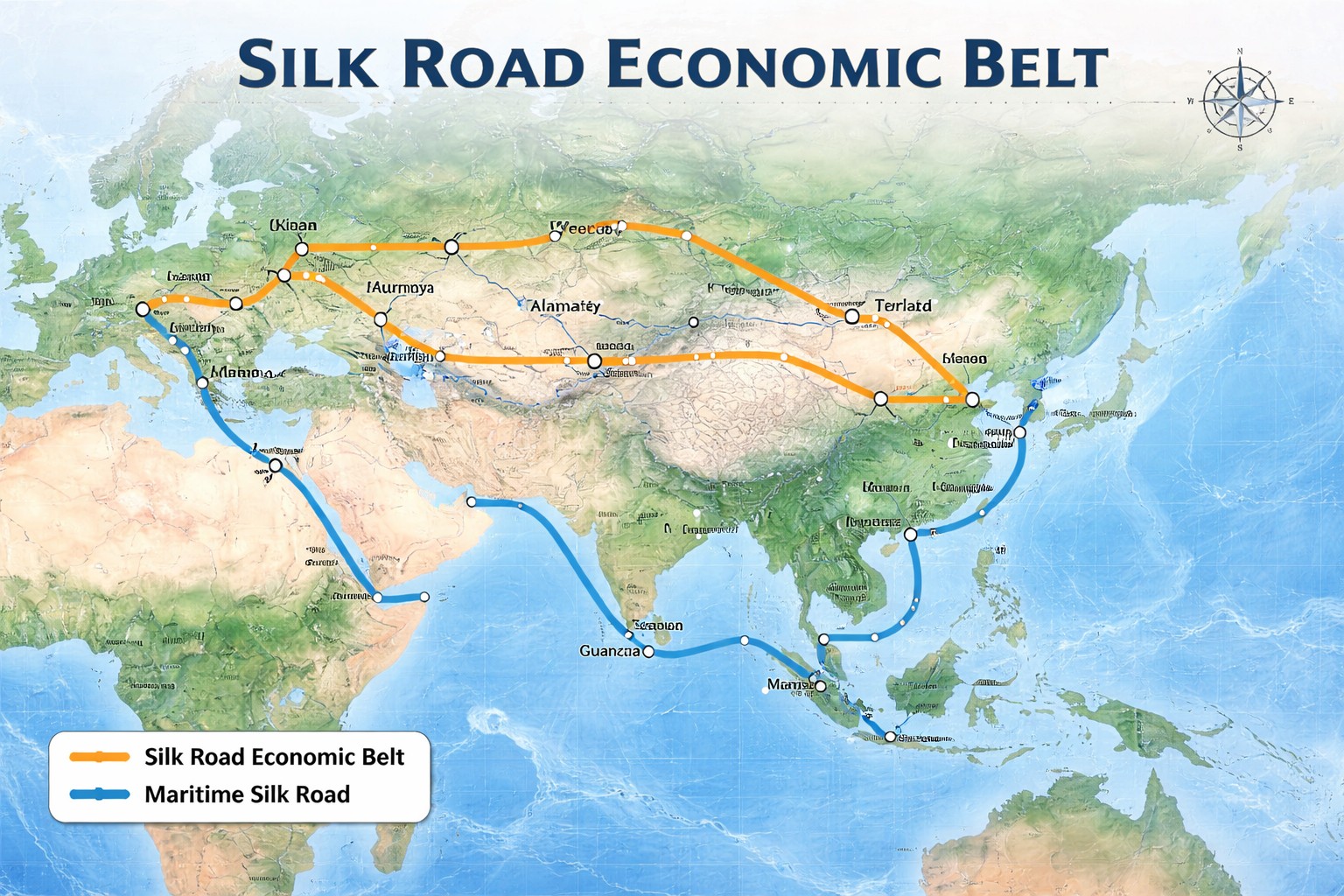
Map overview of Eurasian corridors and trade routes.
Recommended Resources
This page may contain affiliate links. If you buy through these links, we may earn a commission at no extra cost to you.
Logistics & Supply Chain Book
Useful background reading for transport corridors, trade routes, and supply chains.
View ResourceTrade Data Platform
A platform for researching trade flows, customs data, and freight trends.
Open PlatformBusiness Travel Insurance
Optional partner offer for readers traveling across Eurasia for business.
Check Offer