





---
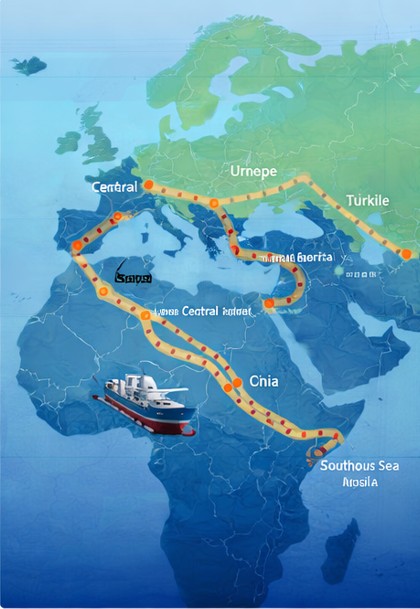
The landscape of trade in Eurasia is undergoing a notable transformation, largely driven by shifting geopolitical dynamics and the increasing demand for efficient logistics routes. Central to this evolution is the Middle Corridor, a key trade route that connects Asia to Europe through the Caucasus and the Caspian Sea. Recent developments highlight the corridor's expansion, which could have lasting impacts on regional trade and infrastructure investment.
The Middle Corridor's Strategic Significance
The Middle Corridor has gained prominence as an alternative to traditional trade routes, particularly in light of recent global events that have disrupted established supply chains. Spanning from China through Kazakhstan, Azerbaijan, and Georgia, the corridor provides a vital link between Asia and Europe.
This route is increasingly viewed as a strategic asset for countries looking to diversify their trade options. The expansion of the Middle Corridor is not merely a response to disruptions but a proactive measure to enhance connectivity and foster economic collaboration among nations within the region.
Authorities in participating countries have noted the corridor's potential to facilitate smoother trade flows. Investment in infrastructure, such as railways and ports, is being prioritized to accommodate rising freight volumes. Enhancements in logistics capabilities are expected to improve transit times and reduce costs, making the Middle Corridor an attractive option for businesses.
Infrastructure Investments on the Rise
Significant investments are being made in infrastructure to support the Middle Corridor's expansion. Governments and private entities are collaborating on various projects aimed at modernizing existing facilities and building new ones.
Recent reports indicate that Azerbaijan is focused on upgrading its rail networks and port facilities in Baku, enabling better access for goods passing through the corridor. Similarly, Kazakhstan is investing in its railway system to improve connectivity with China and Europe.
These infrastructure projects are essential for accommodating the expected increase in cargo traffic. By enhancing transport capabilities, the Middle Corridor is becoming more competitive compared to other routes, which could ultimately lead to a shift in trade patterns across Eurasia.
Moreover, logistics companies are exploring innovative solutions to streamline operations along the Middle Corridor. The adoption of advanced technologies, such as digital tracking systems and automated customs processes, is being prioritized to enhance efficiency in cargo handling.
Evolving Trade Dynamics and Future Prospects
The changing trade dynamics in Eurasia are prompting countries to reconsider their economic strategies. With the Middle Corridor at the forefront, nations are looking to capitalize on new opportunities for trade and investment.
As the corridor expands, it is likely to attract increased participation from various stakeholders, including governments, businesses, and international organizations. This collaborative approach could foster a more integrated regional economy, enhancing trade relations among participating countries.
While the immediate focus is on infrastructure and logistics, there is also a growing recognition of the importance of regulatory frameworks that support trade. Efforts to harmonize customs procedures and reduce bureaucratic barriers are underway, aiming to create a more conducive environment for trade along the corridor.
However, challenges remain. Political tensions and economic uncertainties in certain areas could impact the corridor's development. Stakeholders are aware of these risks and are working cautiously to navigate the complexities of regional politics while promoting trade.
In conclusion, the ongoing expansion of the Middle Corridor reflects a broader shift in Eurasian trade dynamics. As countries invest in infrastructure and logistics, the corridor is poised to become a critical component of the region's economic landscape. Continued collaboration and innovation will be key to realizing its full potential, ensuring that it remains a viable trade route for the foreseeable future.
Silk Road Economic Belt Map
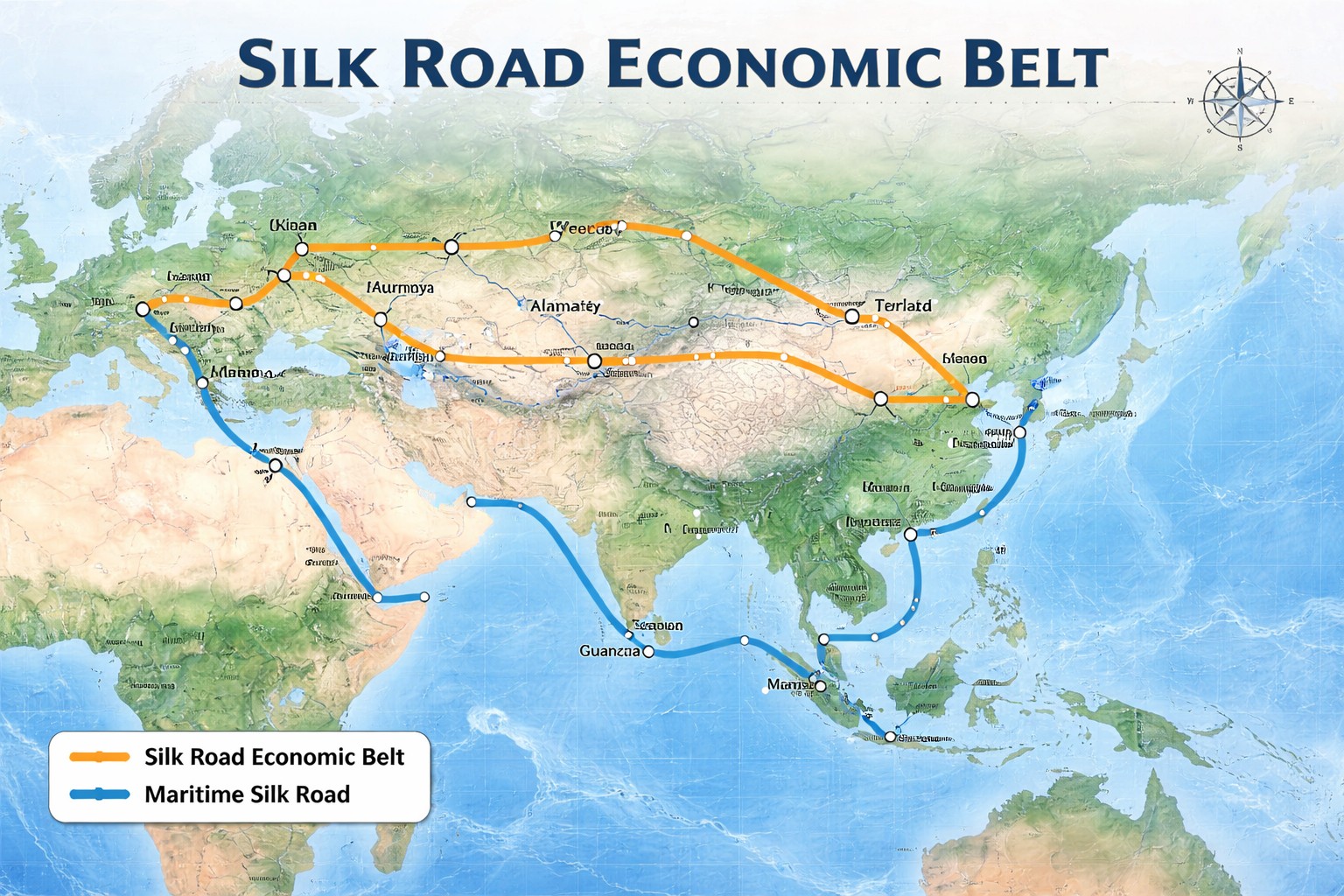
Map overview of Eurasian corridors and trade routes.
Recommended Resources
This page may contain affiliate links. If you buy through these links, we may earn a commission at no extra cost to you.
Logistics & Supply Chain Book
Useful background reading for transport corridors, trade routes, and supply chains.
View ResourceTrade Data Platform
A platform for researching trade flows, customs data, and freight trends.
Open PlatformBusiness Travel Insurance
Optional partner offer for readers traveling across Eurasia for business.
Check Offer