
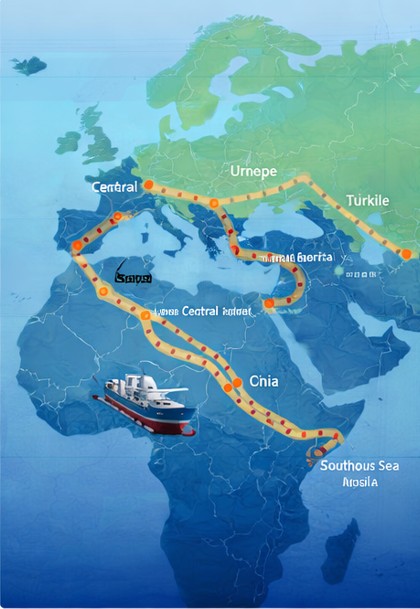





Shift in Trade Patterns
The recent shifts in global trade dynamics have prompted increased attention towards the Middle Corridor, a critical transit route connecting Asia and Europe through the Caucasus and Central Asia. As countries seek alternatives to traditional maritime shipping routes, the Middle Corridor is emerging as a viable option, bolstered by investments in infrastructure and logistics.
The Middle Corridor, officially known as the Trans-Caspian International Transport Route, has gained traction as a response to disruptions in global supply chains and geopolitical tensions. This route allows for a more direct connection between major markets, facilitating the movement of goods across borders with reduced transit times.
Infrastructure Investments
Governments and private stakeholders are recognizing the potential of the Middle Corridor and are channeling resources into its development. Recent reports indicate significant investments in rail, road, and port infrastructure along this route. Azerbaijan, in particular, is enhancing its logistics capabilities to support increased traffic flows.
Baku, as a central hub, is expanding its port facilities on the Caspian Sea, focusing on increasing capacity for container handling and improving operational efficiency. The government has also prioritized the modernization of railway lines to ensure seamless connectivity with neighboring countries, including Kazakhstan and Georgia. These enhancements are expected to facilitate the accelerated movement of goods, providing a competitive edge in the burgeoning Eurasian trade landscape.
Trade Opportunities and Challenges
The Middle Corridor presents various opportunities for trade, particularly for landlocked countries in Central Asia seeking access to international markets. By providing an efficient overland route to Europe, this corridor could significantly reduce logistics costs and transit times for exporters in the region.
However, challenges remain. Political stability, regulatory frameworks, and customs procedures across different countries involved in the corridor are critical factors that influence its effectiveness. Ensuring interoperability among various transport systems and maintaining consistent quality standards are also essential to the corridor's success.
Collaboration between countries along the Middle Corridor is vital for addressing these challenges. Bilateral and multilateral agreements aimed at streamlining customs processes and enhancing logistical cooperation will be necessary to maximize the corridor's potential.
Conclusion
The evolving trade reality in Eurasia is catalyzing the expansion of the Middle Corridor, a vital link between Asia and Europe. With substantial investments in infrastructure and a focus on improving logistics, this route is poised to play a key role in global trade networks. As stakeholders navigate the associated challenges, the future of the Middle Corridor appears promising, potentially reshaping trade patterns across the region.
Silk Road Economic Belt Map
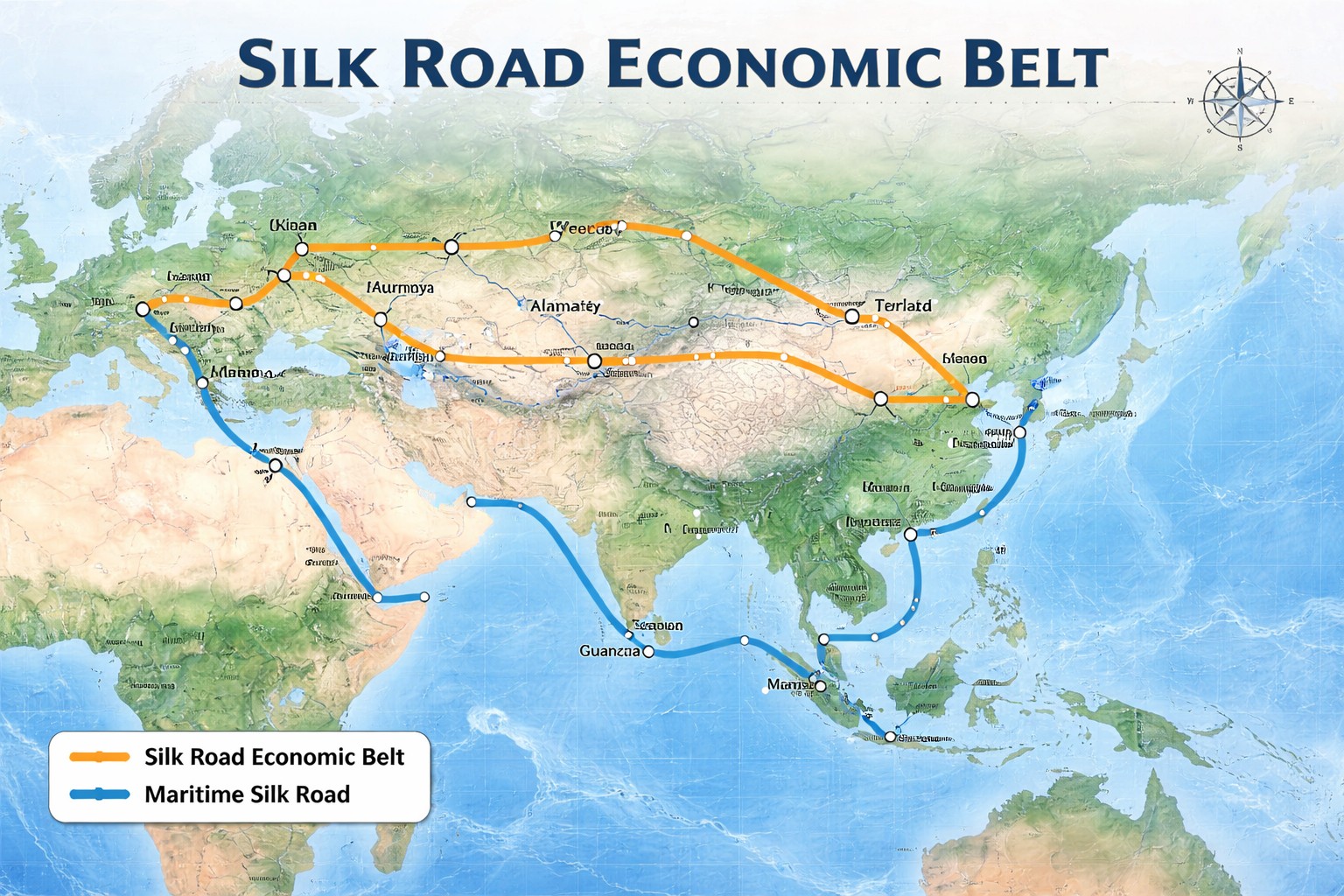
Map overview of Eurasian corridors and trade routes.
Recommended Resources
This page may contain affiliate links. If you buy through these links, we may earn a commission at no extra cost to you.
Logistics & Supply Chain Book
Useful background reading for transport corridors, trade routes, and supply chains.
View ResourceTrade Data Platform
A platform for researching trade flows, customs data, and freight trends.
Open PlatformBusiness Travel Insurance
Optional partner offer for readers traveling across Eurasia for business.
Check Offer