






Strategic Importance of the Port of Bar
Montenegro’s Port of Bar is gaining attention as a critical point for trade and logistics in the context of the Middle Corridor initiative. This development is particularly timely as discussions unfold regarding Kazakhstan's role in enhancing trade routes, coupled with growing European Union investments in rail infrastructure.
Located on the Adriatic Sea, the Port of Bar serves as a natural gateway for goods moving between Europe and Asia. Its strategic position could facilitate increased trade flows, providing access to the Mediterranean and connecting various regions of Southern and Central Europe. The port’s modernization efforts are aimed at accommodating larger vessels and improving cargo handling capabilities, thus making it a competitive alternative for international shipping routes.
Implications of Kazakhstan's Engagement
Kazakhstan's involvement in the Middle Corridor is particularly significant. The country has been actively promoting its logistical capabilities to strengthen trade links with Europe and beyond. As part of this initiative, officials from Kazakhstan have been in talks with Montenegrin representatives to explore potential collaboration opportunities.
By integrating the Port of Bar into the Middle Corridor framework, Kazakhstan aims to enhance its connectivity with European markets. This could lead to a more efficient transfer of goods, with a focus on reducing transit times and costs associated with shipping. As Kazakhstan continues to diversify its economy, the prospect of utilizing the Port of Bar aligns with its objectives to boost trade and investment.
EU Rail Investments and Regional Connectivity
In addition to discussions with Kazakhstan, the EU's commitment to improving rail infrastructure is poised to further benefit the Port of Bar. European officials have emphasized the importance of developing transport links that bolster connectivity across the continent. Investments aimed at enhancing rail networks can lead to improved access to the port, enabling smoother logistics for both freight and passenger transport.
The integration of rail services with maritime transport at the Port of Bar can create a seamless supply chain that connects various regions in Southern and Central Europe. This holistic approach to logistics is crucial for supporting trade growth and ensuring that the port can effectively serve as a hub for international commerce.
Conclusion
The Port of Bar's emergence as a potential gateway for the Middle Corridor reflects the growing importance of regional connectivity in Eurasia. With ongoing discussions involving Kazakhstan and significant EU rail investments, the port is well-positioned to enhance trade and travel links between Europe and Asia. While developments are still unfolding, the cooperative efforts among these stakeholders indicate a promising future for the Port of Bar as a key player in the region's logistics landscape.
Silk Road Economic Belt Map
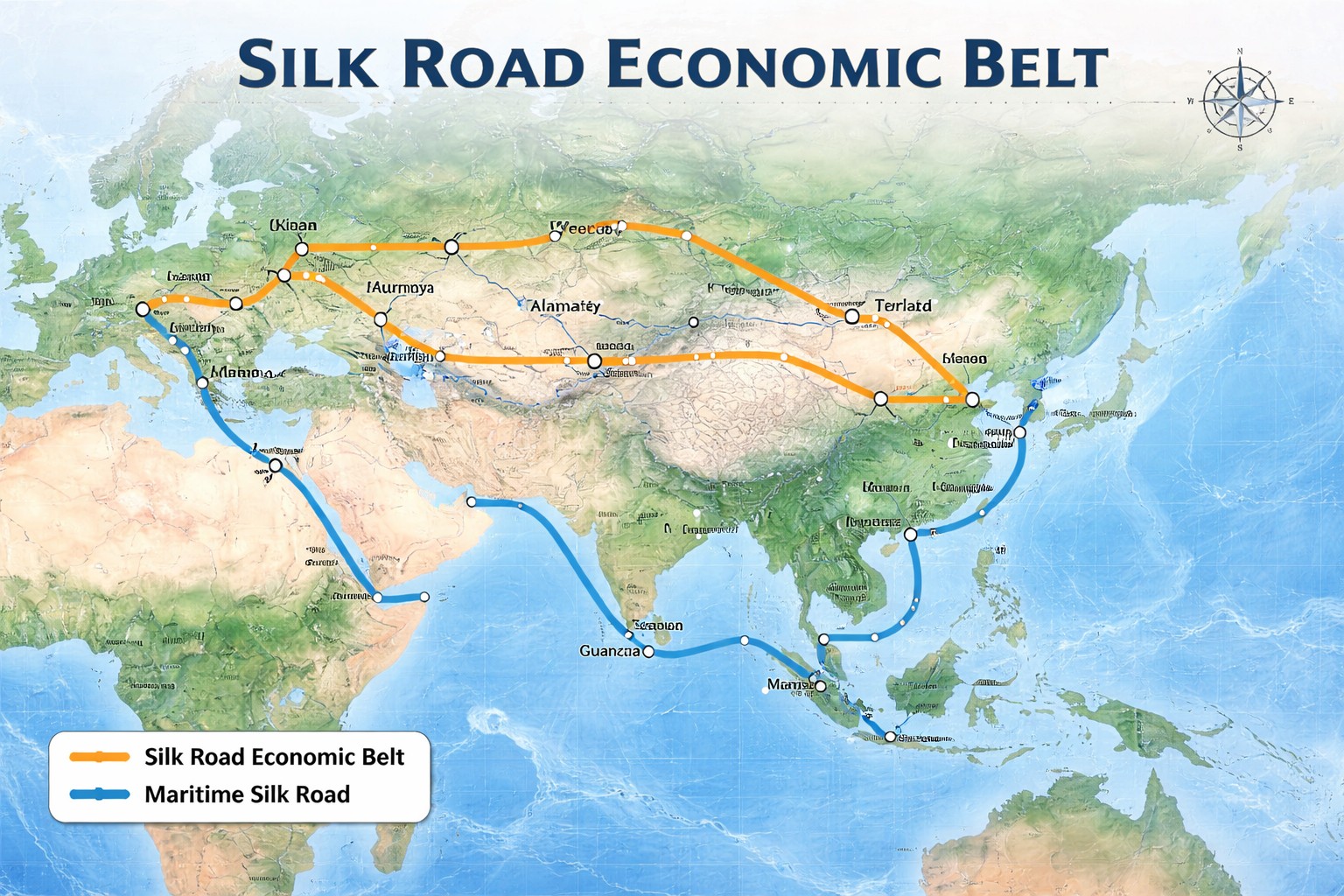
Map overview of Eurasian corridors and trade routes.
Recommended Resources
This page may contain affiliate links. If you buy through these links, we may earn a commission at no extra cost to you.
Logistics & Supply Chain Book
Useful background reading for transport corridors, trade routes, and supply chains.
View ResourceTrade Data Platform
A platform for researching trade flows, customs data, and freight trends.
Open PlatformBusiness Travel Insurance
Optional partner offer for readers traveling across Eurasia for business.
Check Offer