
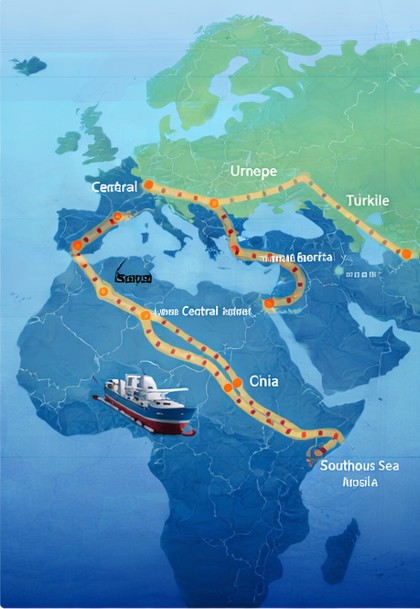





Introduction to the Middle Corridor
The Middle Corridor, also known as the Trans-Caspian International Transport Route, represents a strategic trade route that connects Asia and Europe via Central Asia. This corridor is gaining attention for its potential to facilitate trade and investment, thereby contributing to economic growth and poverty reduction in the region. With infrastructure improvements and increased logistics capabilities, the Middle Corridor aims to enhance connectivity among various nations, including Kazakhstan, Azerbaijan, and Turkey, fostering regional cooperation.
Infrastructure Development and Trade Opportunities
As countries along the Middle Corridor invest in infrastructure, the prospects for trade are becoming increasingly promising. The development of railways, highways, and ports is crucial for streamlining logistics and reducing transportation costs. For instance, the modernization of ports in Azerbaijan is expected to boost cargo handling capacity, enabling faster transit times for goods moving between Europe and Asia.
Efforts to enhance railway connectivity are also underway. The Baku-Tbilisi-Kars railway, a key segment of the Middle Corridor, links Azerbaijan with Georgia and Turkey, providing an essential link to the European market. This railway is designed to accommodate increased freight volumes, particularly as global trade dynamics shift.
In addition to traditional transport methods, digital infrastructure is also being prioritized. E-commerce platforms and digital customs processes are being developed to facilitate trade, making it easier for businesses in Central Asia to access international markets. Such enhancements are vital for reducing the trade barriers that have historically hindered economic growth in the region.
The Role of Trade in Poverty Alleviation
Trade has the potential to be a powerful tool for poverty reduction in Central Asia. By facilitating access to larger markets, the Middle Corridor can help local businesses expand their reach and increase their revenues. This, in turn, can lead to job creation and improved living standards for communities that have been affected by economic challenges.
However, the direct impact of trade on poverty alleviation is complex and multifaceted. While increased trade can provide opportunities for economic growth, it is essential to ensure that the benefits are equitably distributed. Policymakers need to address potential disparities, ensuring that vulnerable populations are not left behind in the pursuit of economic development.
Investments in education and skills training are critical components of this process. By equipping the workforce with the necessary skills to thrive in a trade-oriented economy, governments can enhance the overall effectiveness of poverty reduction strategies. Additionally, fostering an environment conducive to small and medium-sized enterprises (SMEs) can empower local entrepreneurs and promote sustainable economic growth.
Conclusion
The Middle Corridor presents a significant opportunity for enhancing trade and investment in Central Asia, with the potential to alleviate poverty in the region. While infrastructure development and logistical improvements are crucial, it is equally important to prioritize inclusive economic policies that ensure the fair distribution of trade benefits. As Central Asia continues to navigate its path toward economic integration, the focus on sustainable development and social equity will be vital for achieving long-term prosperity.
Silk Road Economic Belt Map

Map overview of Eurasian corridors and trade routes.
Recommended Resources
This page may contain affiliate links. If you buy through these links, we may earn a commission at no extra cost to you.
Logistics & Supply Chain Book
Useful background reading for transport corridors, trade routes, and supply chains.
View ResourceTrade Data Platform
A platform for researching trade flows, customs data, and freight trends.
Open PlatformBusiness Travel Insurance
Optional partner offer for readers traveling across Eurasia for business.
Check Offer