
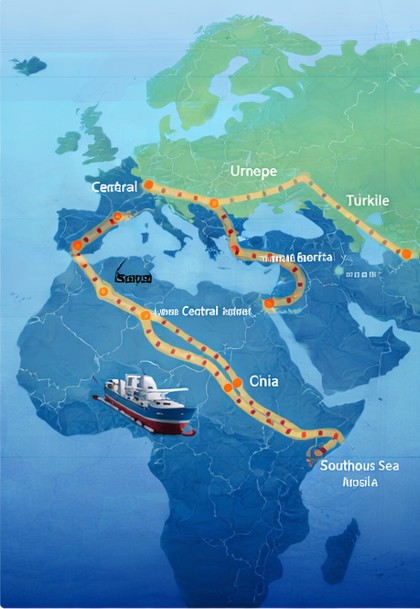





Introduction to the Middle Corridor
The Middle Corridor, a vital component of the Belt and Road Initiative, presents a unique opportunity for Kazakhstan to enhance its trade and industrial framework. As countries along this route seek to bolster economic ties, Kazakhstan stands at the crossroads, equipped with strategic assets that could elevate its role in Eurasia's logistics and trade networks.
The International Institute for Middle East and Balkan Studies (IFIMES) has underscored the potential benefits that this corridor could bring to Kazakhstan. Their analysis reveals that improved infrastructure and enhanced logistics could significantly impact the nation’s economic landscape, particularly in its trade relations with neighboring countries and beyond.
Infrastructure Development and Logistics
Kazakhstan's geographical position serves as a natural bridge between Europe and Asia. The Middle Corridor connects the Caspian Sea with the Black Sea, facilitating the transit of goods from China to Europe. This route not only shortens shipping times but also reduces costs, making it an attractive option for businesses looking to expand their reach.
Investment in infrastructure is critical for the success of this corridor. Recent initiatives have focused on modernizing railways, highways, and port facilities. These improvements aim to streamline logistics and ensure that Kazakhstan can effectively handle increased trade volumes. The development of the Khorgos Gateway, a dry port on the border with China, exemplifies this commitment. The facility is designed to become a key logistics hub, allowing for efficient transshipment and distribution of goods.
Moreover, the integration of digital technologies in logistics is gaining momentum. Efforts to digitize customs processes and improve supply chain transparency are expected to enhance operational efficiency and attract more investors. As Kazakhstan continues to invest in its infrastructure, the potential for increased trade flows grows significantly.
Trade Opportunities and Economic Impact
Kazakhstan's participation in the Middle Corridor could lead to diversified trade opportunities. By connecting with various markets in Europe, Asia, and the Middle East, the country can expand its export base, particularly in sectors such as energy, agriculture, and manufacturing. These sectors are integral to Kazakhstan's economy, which has historically relied on oil and gas exports.
The diversification of trade routes also holds promise for enhancing bilateral relations with countries along the Middle Corridor. As trade partnerships strengthen, Kazakhstan could see an influx of foreign direct investment, further stimulating economic growth. This investment could also foster the development of local industries, creating jobs and contributing to overall economic stability.
Furthermore, the Middle Corridor aligns with Kazakhstan’s long-term vision of becoming a regional hub for trade and logistics. By capitalizing on its strategic location and enhancing its infrastructure, the country is poised to attract businesses looking for efficient transit routes.
Challenges and Considerations
While the prospects of the Middle Corridor are promising, challenges remain. The successful implementation of infrastructure projects requires significant financial investment and international cooperation. Political stability and regulatory frameworks will also play crucial roles in determining the corridor's effectiveness.
Additionally, competition from alternative trade routes, such as the Northern Sea Route and other established corridors, poses a challenge for Kazakhstan. To remain competitive, the country must continue to innovate and adapt its logistics and trade strategies.
Collaboration with neighboring countries, particularly those involved in the Belt and Road Initiative, will be essential. By fostering partnerships and engaging in dialogue, Kazakhstan can address potential challenges and leverage the full potential of the Middle Corridor.
Conclusion
The Middle Corridor represents a significant opportunity for Kazakhstan to enhance its trade and industrial capabilities. With strategic investments in infrastructure and a focus on logistics, the country can position itself as a key player in Eurasia's trade networks. While challenges persist, the potential economic benefits underscore the importance of sustained efforts to develop this vital corridor. As Kazakhstan navigates this transformative phase, collaboration and innovation will be essential to unlocking its full potential in the global marketplace.
Silk Road Economic Belt Map

Map overview of Eurasian corridors and trade routes.
Recommended Resources
This page may contain affiliate links. If you buy through these links, we may earn a commission at no extra cost to you.
Logistics & Supply Chain Book
Useful background reading for transport corridors, trade routes, and supply chains.
View ResourceTrade Data Platform
A platform for researching trade flows, customs data, and freight trends.
Open PlatformBusiness Travel Insurance
Optional partner offer for readers traveling across Eurasia for business.
Check Offer