





---
Kazakhstan is increasingly positioning itself as a vital hub in the Middle Corridor trade route, especially as ongoing conflicts disrupt traditional maritime pathways. This strategic shift presents both opportunities and challenges for the landlocked nation, which must navigate complex relationships with its powerful neighbors, Russia and China.
The Middle Corridor: An Alternative Trade Route
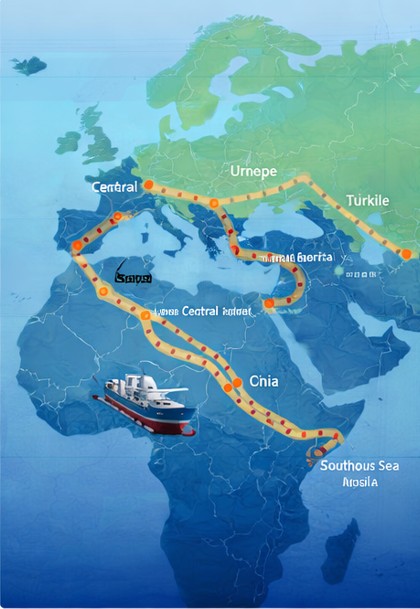
The Middle Corridor, also known as the Trans-Caspian International Transport Route, connects China to Europe through Central Asia, the Caucasus, and Turkey. This route is gaining traction as an alternative to maritime shipping, particularly in light of geopolitical tensions that have affected the stability of sea routes.
Kazakhstan, with its extensive rail networks and infrastructure investments, is well-positioned to play a key role in this corridor. The country has been actively enhancing its logistics capabilities, including the modernization of railways and the expansion of border facilities. These improvements are designed to facilitate the increased flow of goods between Asia and Europe.
Recent conflicts have highlighted the vulnerabilities of maritime trade, prompting many businesses to seek alternatives to ensure supply chain resilience. Kazakhstan's strategic location offers a land-based solution that could alleviate some of these pressures, providing a reliable passage for goods moving westward from Asia.
Balancing Relationships with Neighbors
Kazakhstan's positioning in the Middle Corridor necessitates a careful balancing act between its two major neighbors, Russia and China. Both nations are influential players in the region, and their interests can sometimes conflict.
Historically, Kazakhstan has maintained strong ties with Russia, which remains its largest trading partner. However, China's growing economic influence in the region cannot be overlooked. The Belt and Road Initiative (BRI) has significantly increased Chinese investments in Kazakhstan, particularly in infrastructure and energy projects.
Kazakhstan's government faces the challenge of leveraging these relationships to maximize its economic benefits while maintaining its sovereignty. The nation must ensure that its partnerships do not lead to over-dependence on either neighbor, which could compromise its political and economic interests.
Infrastructure Investments and Future Prospects
To capitalize on the opportunities presented by the Middle Corridor, Kazakhstan is investing heavily in infrastructure. Recent projects include the expansion of the Khorgos Gateway, a key logistics hub on the border with China, and enhancements to the country’s rail network. These investments are aimed at increasing cargo capacity and reducing transit times for goods traveling between Europe and Asia.
Additionally, the government is exploring partnerships with international logistics companies to further improve its trade capabilities. By fostering a favorable investment climate, Kazakhstan hopes to attract foreign capital that can help develop its infrastructure further.
Despite the promising prospects, challenges remain. The rapid pace of geopolitical change can create uncertainty in trade dynamics. Kazakhstan must remain adaptable to shifts in the global marketplace, especially as it seeks to solidify its role in Eurasian trade.
In conclusion, Kazakhstan's emergence as a central player in the Middle Corridor reflects its strategic importance in the evolving landscape of global trade. By balancing its relationships with Russia and China and continuing to invest in infrastructure, the nation is poised to enhance its position as a key transit hub in Eurasia, even as it navigates the complexities of regional geopolitics.
Silk Road Economic Belt Map
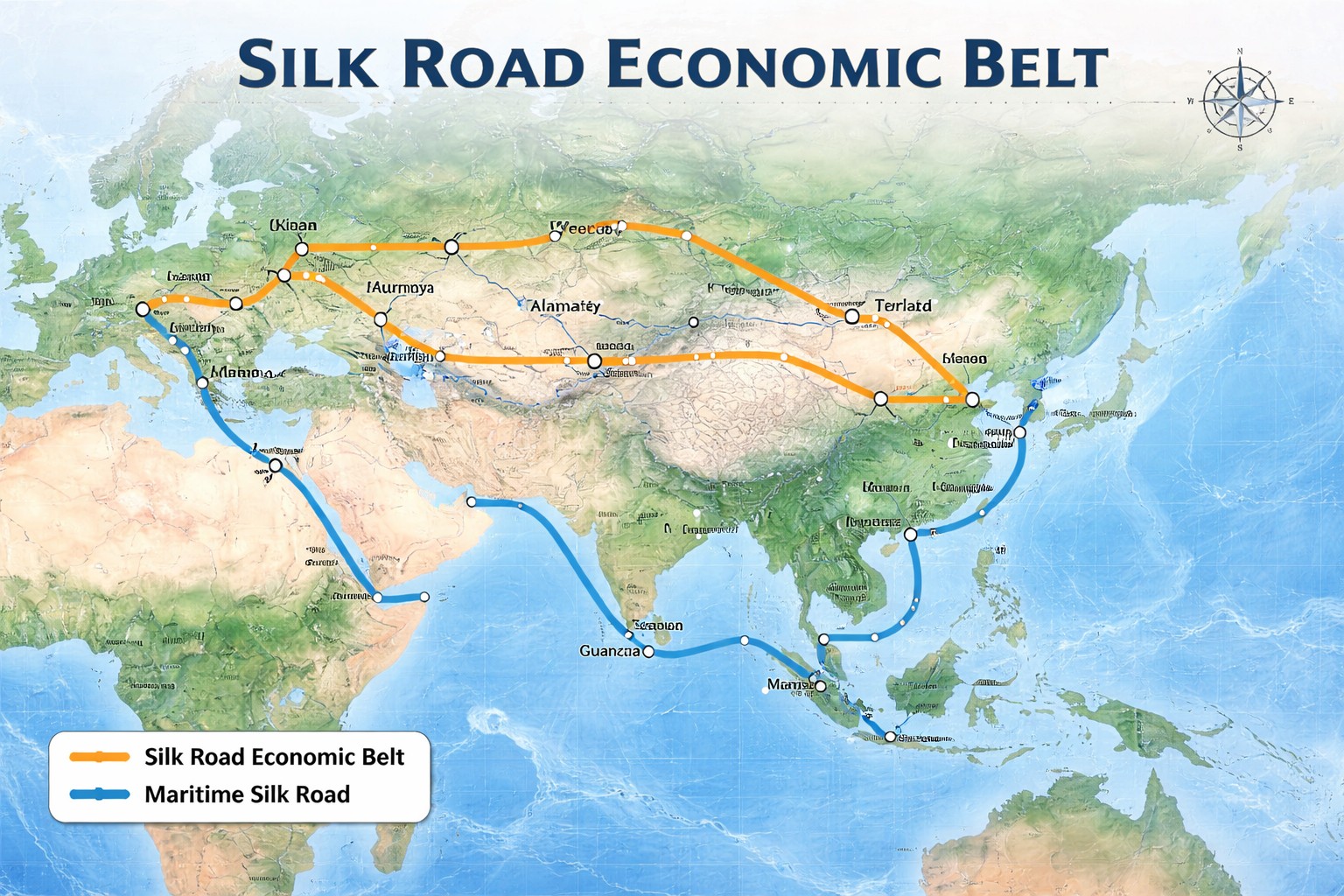
Map overview of Eurasian corridors and trade routes.
Recommended Resources
This page may contain affiliate links. If you buy through these links, we may earn a commission at no extra cost to you.
Logistics & Supply Chain Book
Useful background reading for transport corridors, trade routes, and supply chains.
View ResourceTrade Data Platform
A platform for researching trade flows, customs data, and freight trends.
Open PlatformBusiness Travel Insurance
Optional partner offer for readers traveling across Eurasia for business.
Check Offer