





---
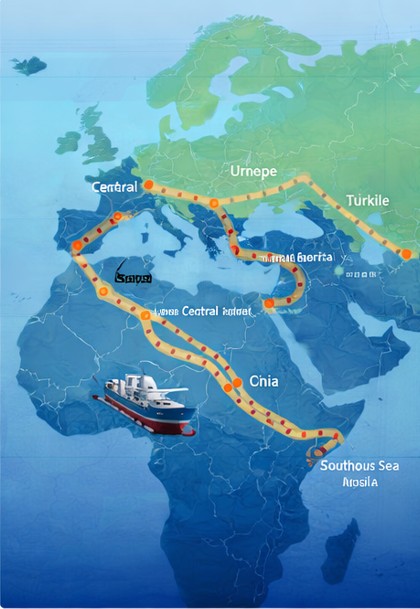
Kazakhstan and China are intensifying their cooperation to enhance trade along the Middle Corridor, a crucial component of the broader Belt and Road Initiative (BRI). This strategic partnership aims to facilitate the movement of goods between Asia and Europe, capitalizing on Kazakhstan’s geographical position as a transit hub.
Infrastructure Development Initiatives
A series of infrastructure projects are currently underway to support this ambitious initiative. The governments of Kazakhstan and China are focusing on upgrading rail lines, expanding port facilities, and improving road networks. These enhancements are expected to reduce transportation times and costs, making the Middle Corridor a more attractive option for international trade.
Kazakhstan’s extensive rail network, which connects to China’s logistics systems, plays a vital role in this endeavor. Recent reports indicate that both nations are investing in modernizing existing rail infrastructure to accommodate larger freight volumes and to enhance service efficiency. The goal is to create a seamless link that will facilitate the swift movement of goods across borders.
Moreover, the development of the Caspian Sea ports is also critical. Initiatives to expand these facilities aim to boost shipping capacity and streamline cargo handling processes. Such improvements are anticipated to allow for quicker turnaround times for vessels, thus enhancing overall trade efficiency.
Logistics and Trade Facilitation
As part of the collaborative efforts, Kazakhstan and China are also exploring various logistics solutions to optimize trade routes. This includes the implementation of digital platforms for tracking shipments and improving customs procedures. Enhanced logistics capabilities are expected to address some of the bottlenecks that have previously hindered trade along the Middle Corridor.
The focus on logistics is crucial, especially given the increasing global demand for efficient supply chains. Both countries are actively seeking to attract investments in logistics services, which will further bolster their trade relations. By simplifying the processes involved in cross-border trade, Kazakhstan and China aim to position the Middle Corridor as a competitive alternative to existing shipping routes.
Additionally, joint training programs for logistics personnel are being discussed to improve workforce capabilities. This investment in human capital is seen as a necessary step to support the technological advancements in logistics and ensure that the region is equipped to handle the anticipated trade growth.
Economic Implications and Future Prospects
The enhancement of the Middle Corridor is expected to have significant economic implications for both Kazakhstan and China. By facilitating trade, both nations stand to benefit from increased economic activity and investment opportunities. This partnership may also lead to stronger ties with other countries along the corridor, potentially expanding trade networks.
Experts suggest that as infrastructure and logistics improvements are realized, the attractiveness of the Middle Corridor may lead to a shift in trade patterns, with more goods being transported through this route instead of alternative paths. This could also help diversify Kazakhstan’s economy and reduce its reliance on traditional sectors.
However, challenges remain. The successful implementation of these initiatives will depend on a variety of factors, including geopolitical stability and continued investment from both governments and private sector stakeholders.
In conclusion, the Kazakhstan-China partnership aimed at enhancing Middle Corridor trade reflects a strategic response to the evolving landscape of global commerce. As infrastructure and logistics continue to improve, the region may witness a significant transformation in its trade dynamics, positioning it as a key player in Eurasian trade routes.
Silk Road Economic Belt Map
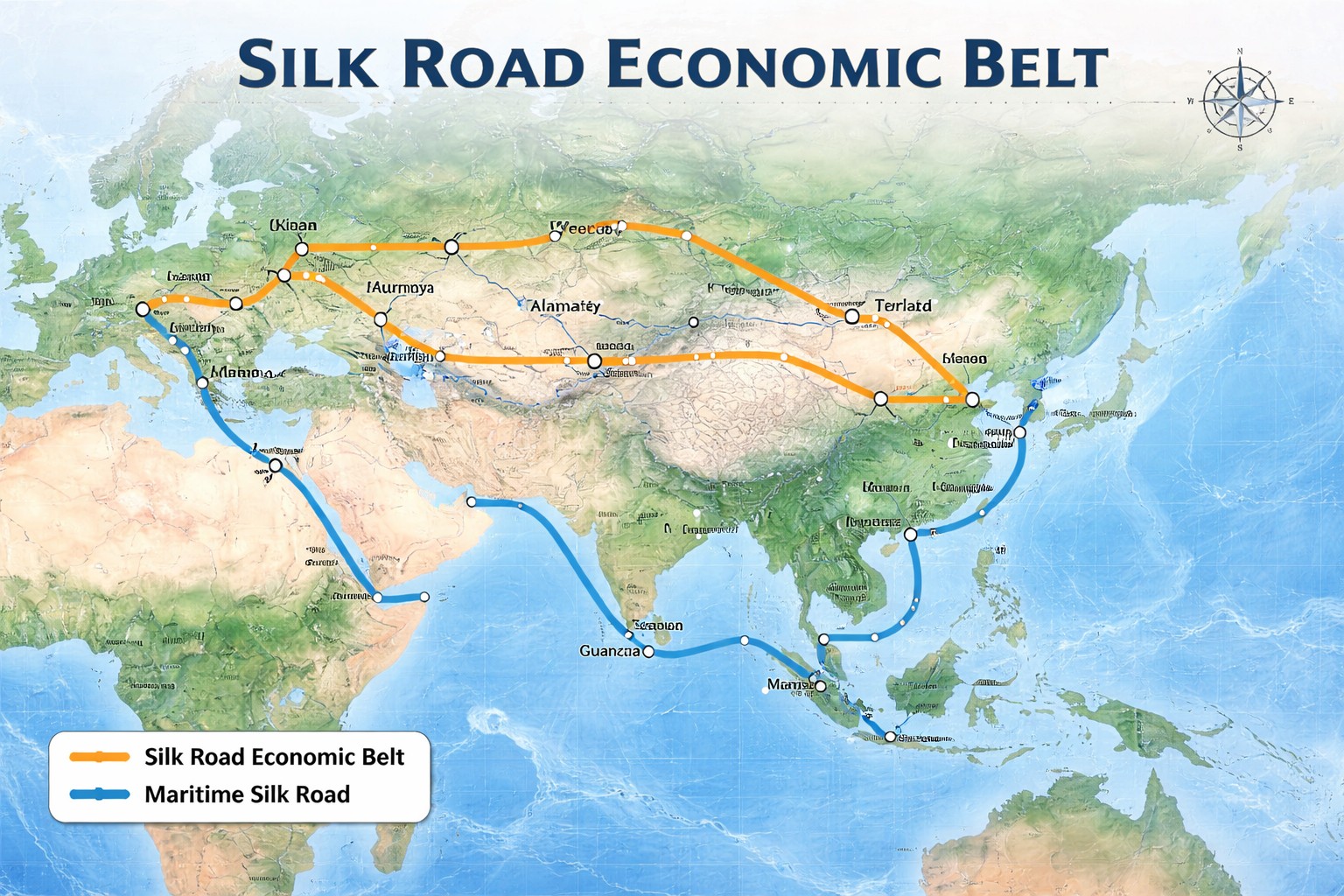
Map overview of Eurasian corridors and trade routes.
Recommended Resources
This page may contain affiliate links. If you buy through these links, we may earn a commission at no extra cost to you.
Logistics & Supply Chain Book
Useful background reading for transport corridors, trade routes, and supply chains.
View ResourceTrade Data Platform
A platform for researching trade flows, customs data, and freight trends.
Open PlatformBusiness Travel Insurance
Optional partner offer for readers traveling across Eurasia for business.
Check Offer