
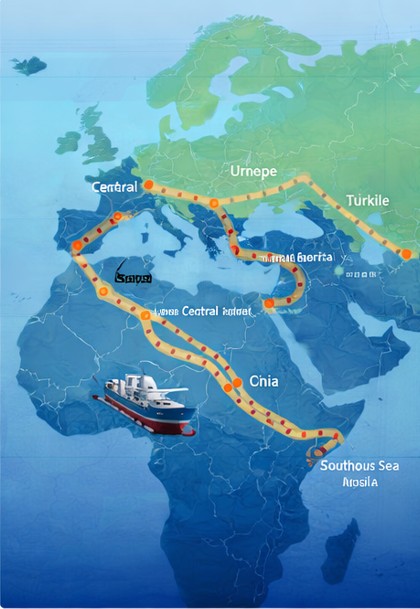





Kazakhstan has taken a significant step alongside the European Union (EU) in Brussels to revitalize the historic Silk Road Corridor. This initiative aims to improve transport and travel connectivity across Central Asia, marking a renewed focus on infrastructure and logistics that is expected to bolster trade and investment in the region.
Strengthening Economic Ties
The collaboration between Kazakhstan and the EU is designed to enhance economic ties and facilitate smoother transit routes across Eurasia. Central Asia has long been recognized as a crucial junction for trade, linking Europe with Asia. By reviving the Silk Road Corridor, stakeholders aim to create an integrated transport network that supports both regional and international trade.
Kazakhstan's strategic location makes it an essential player in this endeavor. As a landlocked nation, the country relies on well-developed transport infrastructure to connect its markets with those in Europe and beyond. The partnership with the EU is seen as an opportunity to leverage Kazakhstan's geographic advantages while simultaneously promoting economic growth.
Infrastructure Development Initiatives
Key to this initiative is the development of infrastructure that will support increased logistics and transport capabilities. Recent discussions in Brussels have highlighted the need for modernized railways, highways, and border facilities to facilitate smoother and more efficient trade routes.
Kazakhstan has been actively investing in its infrastructure over the past few years, with projects aimed at modernizing transport networks and enhancing connectivity with neighboring countries. These investments are crucial for ensuring that the Silk Road Corridor can accommodate the rising volume of goods and services moving between Europe and Asia.
The EU's Global Gateway strategy also aligns with these infrastructure development goals, as it seeks to improve global connectivity through investments in sustainable and resilient transport systems. By working together, Kazakhstan and the EU are poised to create synergies that could lead to significant improvements in trade logistics across Central Asia.
Promoting Trade and Investment
The revival of the Silk Road Corridor is expected to promote trade and investment opportunities not only for Kazakhstan but for the entire region. Enhanced connectivity could open new markets for businesses, allowing for greater access to European consumers and facilitating the flow of goods from Asia.
Moreover, the partnership is likely to attract foreign direct investment, as improved infrastructure and connectivity can lead to a more attractive business environment. Investors are often drawn to regions where efficient transport networks exist, enabling them to move products quickly and cost-effectively.
Kazakhstan's commitment to this initiative has been underscored by its willingness to adapt its policies to create a conducive environment for trade. This includes regulatory reforms aimed at simplifying customs procedures and reducing bureaucratic hurdles, which can often hinder the flow of goods across borders.
As discussions progress and plans materialize, the emphasis remains on creating a collaborative framework that benefits all parties involved. Both Kazakhstan and the EU recognize the importance of a coordinated approach to ensure the success of this ambitious project.
In conclusion, Kazakhstan's partnership with the EU in revitalizing the Silk Road Corridor represents a critical development in enhancing trade and investment across Central Asia. By focusing on infrastructure improvements and streamlined logistics, both parties aim to create a more connected and prosperous region that can facilitate robust economic growth.
Silk Road Economic Belt Map
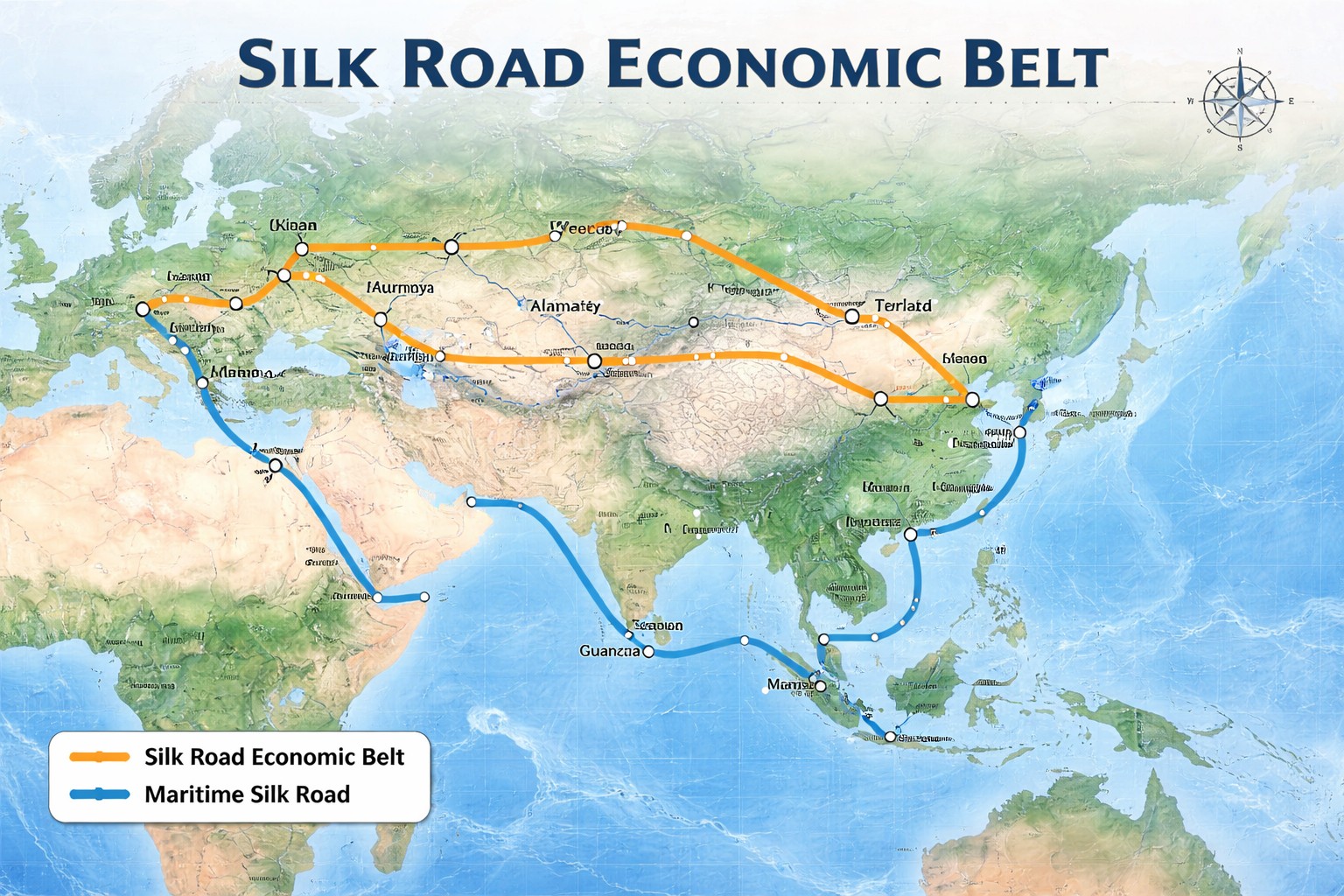
Map overview of Eurasian corridors and trade routes.
Recommended Resources
This page may contain affiliate links. If you buy through these links, we may earn a commission at no extra cost to you.
Logistics & Supply Chain Book
Useful background reading for transport corridors, trade routes, and supply chains.
View ResourceTrade Data Platform
A platform for researching trade flows, customs data, and freight trends.
Open PlatformBusiness Travel Insurance
Optional partner offer for readers traveling across Eurasia for business.
Check Offer