
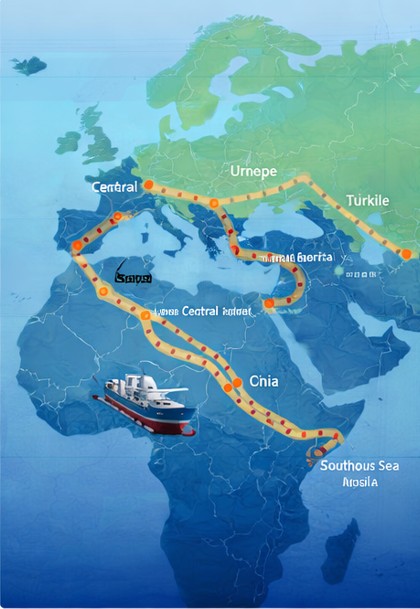





Kazakhstan and Georgia have recently reaffirmed their commitment to the Trans-Caspian Corridor, a vital trade route that connects Europe and Asia through the Caspian Sea. This announcement comes at a time when global trade routes are undergoing significant shifts due to geopolitical tensions and changing economic conditions.
Strengthening Bilateral Ties
During a recent meeting, officials from both countries emphasized the strategic importance of the Trans-Caspian Corridor. The corridor serves as a crucial link for transporting goods between Europe and Asia, offering an alternative route that bypasses traditional shipping lanes.
Kazakhstan's Minister of Trade and Integration, Serik Zhumangarin, highlighted the role of the corridor in enhancing regional connectivity. He stated that the partnership with Georgia is essential for diversifying trade routes and ensuring stability in supply chains. This collaboration is particularly important as countries seek to mitigate risks associated with reliance on single trade pathways.
Georgia, positioned at the crossroads of Europe and Asia, has expressed its commitment to facilitating trade through the corridor. The country’s Minister of Economy and Sustainable Development, Levan Davitashvili, reaffirmed that Georgia’s infrastructure and logistical capabilities are well-suited to support the increased flow of goods along this route.
Infrastructure Investments
The Trans-Caspian Corridor relies heavily on robust infrastructure to function effectively. Both Kazakhstan and Georgia have been investing in their respective transport networks to enhance the corridor's capacity.
In Kazakhstan, the government has allocated significant resources to upgrade rail and road networks, which are crucial for the seamless movement of goods. The modernization of the Aktau Port, a key terminal on the Caspian Sea, is one such initiative aimed at increasing cargo handling capacities.
Meanwhile, Georgia has been working on improving its railways and highways to ensure efficient connections with its neighbors. The development of logistics hubs and the expansion of the Batumi and Poti ports are also part of the country’s strategic plan to facilitate trade through the corridor.
These infrastructure investments are expected to attract more international trade and create opportunities for businesses in both countries. By enhancing the corridor's capacity, Kazakhstan and Georgia hope to position themselves as essential players in the global trade landscape.
Navigating Global Trade Changes
The reaffirmation of the Trans-Caspian Corridor comes at a time when global trade dynamics are in flux. Factors such as geopolitical tensions, new trade agreements, and shifts in supply chain strategies are prompting countries to explore alternative routes.
Kazakhstan and Georgia are keenly aware of these changing dynamics and are positioning the Trans-Caspian Corridor as a viable option for countries looking to diversify their trade routes. The corridor not only offers a shorter transit time but also provides a reliable alternative amid uncertainties in other regions.
Both nations have expressed their intention to engage with stakeholders from various countries to promote the corridor as a key logistical route. This outreach includes discussions with potential investors and trade partners, aiming to boost economic cooperation and trade volumes.
As the global landscape continues to evolve, the commitment of Kazakhstan and Georgia to the Trans-Caspian Corridor underscores the importance of collaboration in enhancing trade infrastructure and logistics. Their efforts reflect a broader trend among nations to adapt to shifting trade patterns and to explore new avenues for economic growth.
In conclusion, the reaffirmation of the Trans-Caspian Corridor by Kazakhstan and Georgia signals a strategic move to strengthen trade connections in Eurasia. Through infrastructure investments and enhanced cooperation, both countries are positioning themselves as pivotal links in the global supply chain.
Silk Road Economic Belt Map
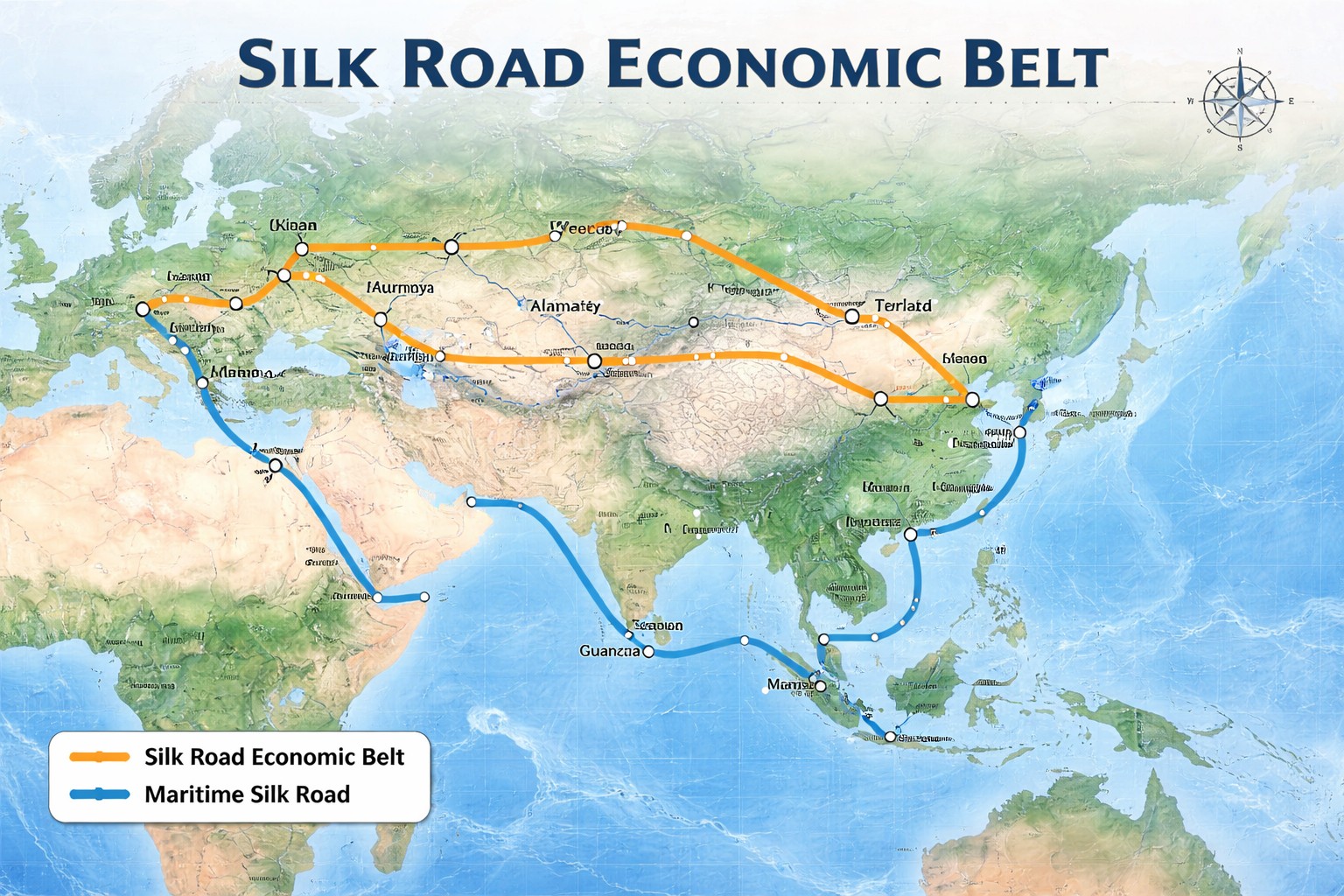
Map overview of Eurasian corridors and trade routes.
Recommended Resources
This page may contain affiliate links. If you buy through these links, we may earn a commission at no extra cost to you.
Logistics & Supply Chain Book
Useful background reading for transport corridors, trade routes, and supply chains.
View ResourceTrade Data Platform
A platform for researching trade flows, customs data, and freight trends.
Open PlatformBusiness Travel Insurance
Optional partner offer for readers traveling across Eurasia for business.
Check Offer