
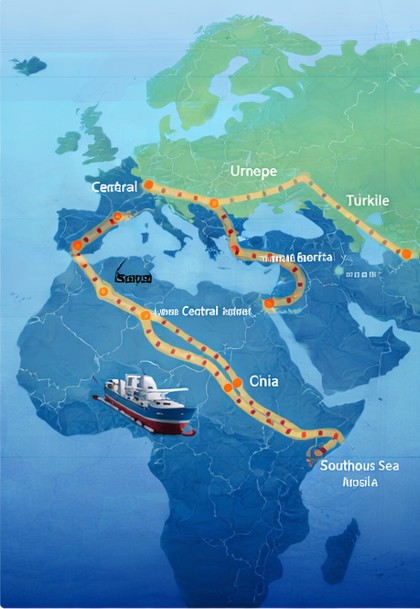





Kazakhstan's geographical location at the crossroads of Europe and Asia positions it as a pivotal player in global trade, particularly through the development of the Middle Corridor. This land route, part of the broader Belt and Road Initiative (BRI), facilitates connectivity between China, Europe, and beyond. As global trade patterns evolve, Kazakhstan is increasingly recognized for its logistical and infrastructural contributions.
Strategic Infrastructure Development
In recent years, Kazakhstan has invested heavily in modernizing its transport infrastructure. This includes the expansion of railways, highways, and logistics centers aimed at enhancing connectivity with neighboring countries. The most significant development is the Trans-Caspian International Transport Route, often referred to as the Middle Corridor.
The Middle Corridor connects China's Xinjiang region to Europe via Kazakhstan, the Caspian Sea, and the South Caucasus. This route is gaining traction as an alternative to the traditional Northern Corridor, which passes through Russia. The shift is partly due to geopolitical tensions and the desire for diversification in trade routes.
Kazakhstan's government is actively promoting this corridor as a reliable and efficient alternative. Investments in major projects, such as the Khorgos Gateway, have transformed this border crossing into a key logistics hub. The facility is designed to handle significant freight volumes, facilitating faster transit times for goods moving between Asia and Europe.
Enhancing Trade Efficiency
The Middle Corridor is not just about infrastructure; it also aims to enhance trade efficiency. The streamlined customs procedures and improved logistics services are essential elements that contribute to reduced shipping times and costs.
Kazakhstan's strategic partnerships with various countries along the corridor are crucial. Agreements with Azerbaijan, Georgia, and Turkey are fostering interoperability and coordination among transport and logistics services. These collaborations are essential for ensuring seamless transit, which is vital for attracting international businesses looking to capitalize on lower transportation costs.
Moreover, the development of logistics centers in Kazakhstan is an integral part of the strategy to boost trade. These centers act as critical nodes for warehousing, distribution, and value-added services, enabling businesses to operate more efficiently. The emphasis on digitalization in logistics is also noteworthy, as it allows for real-time tracking and management of goods, further enhancing the appeal of the Middle Corridor.
Impacts on Regional and Global Trade
The implications of the Middle Corridor extend beyond Kazakhstan's borders. For Central Asia, the corridor provides an opportunity to enhance economic cooperation and integration. Countries in the region stand to benefit from increased trade flows and investment opportunities facilitated by this new route.
On a global scale, the Middle Corridor offers an alternative to traditional maritime shipping routes, which are often subject to congestion and delays. As global supply chains become more complex, the need for reliable and efficient transport options is paramount. The Middle Corridor is positioned to address these needs, particularly for sectors that require faster turnaround times.
Furthermore, Kazakhstan's role as a transit country can bolster its economy. Increased freight traffic through its territory can lead to higher revenues from transport and logistics services. This economic boost can support Kazakhstan's broader development goals, including diversification away from reliance on natural resources.
Conclusion
Kazakhstan's strategic investments in infrastructure and its promotion of the Middle Corridor are reshaping its role in global trade. By enhancing connectivity and trade efficiency, the Middle Corridor stands to benefit not only Kazakhstan but also the broader Eurasian region. As global trade dynamics continue to evolve, the significance of this route is likely to grow, positioning Kazakhstan as a crucial player in the future of international commerce.
Silk Road Economic Belt Map

Map overview of Eurasian corridors and trade routes.
Recommended Resources
This page may contain affiliate links. If you buy through these links, we may earn a commission at no extra cost to you.
Logistics & Supply Chain Book
Useful background reading for transport corridors, trade routes, and supply chains.
View ResourceTrade Data Platform
A platform for researching trade flows, customs data, and freight trends.
Open PlatformBusiness Travel Insurance
Optional partner offer for readers traveling across Eurasia for business.
Check Offer