
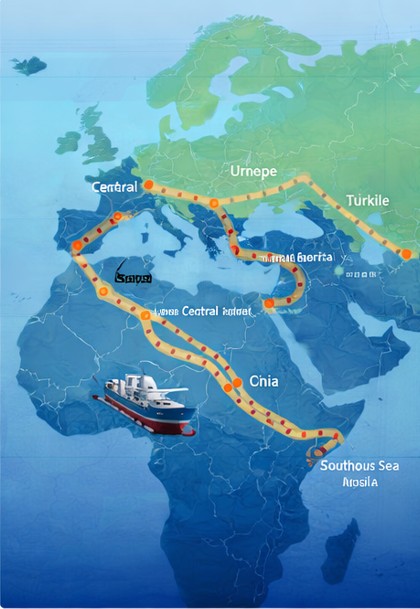





Kazakhstan and Georgia have recently reiterated their commitment to the Trans-Caspian Corridor, a crucial infrastructure project designed to enhance connectivity and trade between Europe and Asia. This reaffirmation comes at a time when global trade routes are undergoing significant shifts, prompting nations to explore alternative pathways for the movement of goods.
A Strategic Partnership
During a recent meeting, officials from Kazakhstan and Georgia discussed the importance of the Trans-Caspian Corridor as a vital link in the broader Silk Road Economic Belt. This corridor not only connects the Caspian Sea to Europe through Georgia but also serves as a critical route for transporting goods from Central Asia to European markets.
Kazakhstan's Minister of Foreign Affairs, Mukhtar Tleuberdi, emphasized the strategic importance of this corridor in enhancing regional trade and economic cooperation. He underscored that the partnership between Kazakhstan and Georgia is essential for attracting investments and improving logistics in the region.
Georgia's Deputy Minister of Economy and Sustainable Development, Genadi Arveladze, echoed these sentiments, asserting that the Trans-Caspian Corridor is pivotal for diversifying trade routes. Both countries see the corridor as a means to boost economic growth and ensure a more resilient supply chain.
Infrastructure Development and Investment
The Trans-Caspian Corridor has seen significant infrastructure development in recent years. Projects aimed at enhancing rail and maritime connectivity are underway, with both countries working together to improve logistics capabilities.
Kazakhstan has invested heavily in its rail infrastructure, creating a network that facilitates the efficient movement of goods from its borders to the Caspian Sea ports. Simultaneously, Georgia is upgrading its port facilities and railway connections to ensure seamless transit of goods to Europe.
These investments are not only aimed at improving transportation efficiency but also at attracting foreign direct investment. By showcasing their commitment to developing the corridor, Kazakhstan and Georgia hope to entice international companies to utilize this route for their logistics needs.
Navigating Global Trade Challenges
The reaffirmation of the Trans-Caspian Corridor comes at a time when global trade dynamics are in flux. The COVID-19 pandemic, geopolitical tensions, and disruptions in traditional trade routes have prompted countries to reconsider their logistics strategies.
Kazakhstan and Georgia are keenly aware of these challenges. By strengthening their partnership and promoting the Trans-Caspian Corridor, they aim to position themselves as reliable trade partners in an evolving global landscape. The corridor offers an alternative route for goods, potentially alleviating pressures on overburdened supply chains.
Both nations are also exploring opportunities for collaboration with other countries along the corridor, aiming to create a comprehensive network that enhances trade and economic ties across the region.
In conclusion, the reaffirmation of the Trans-Caspian Corridor by Kazakhstan and Georgia highlights the importance of enhanced connectivity and cooperation in the face of changing global trade dynamics. As both countries invest in infrastructure and seek to attract international partners, the corridor stands as a promising avenue for bolstering trade links between Europe and Asia.
Silk Road Economic Belt Map
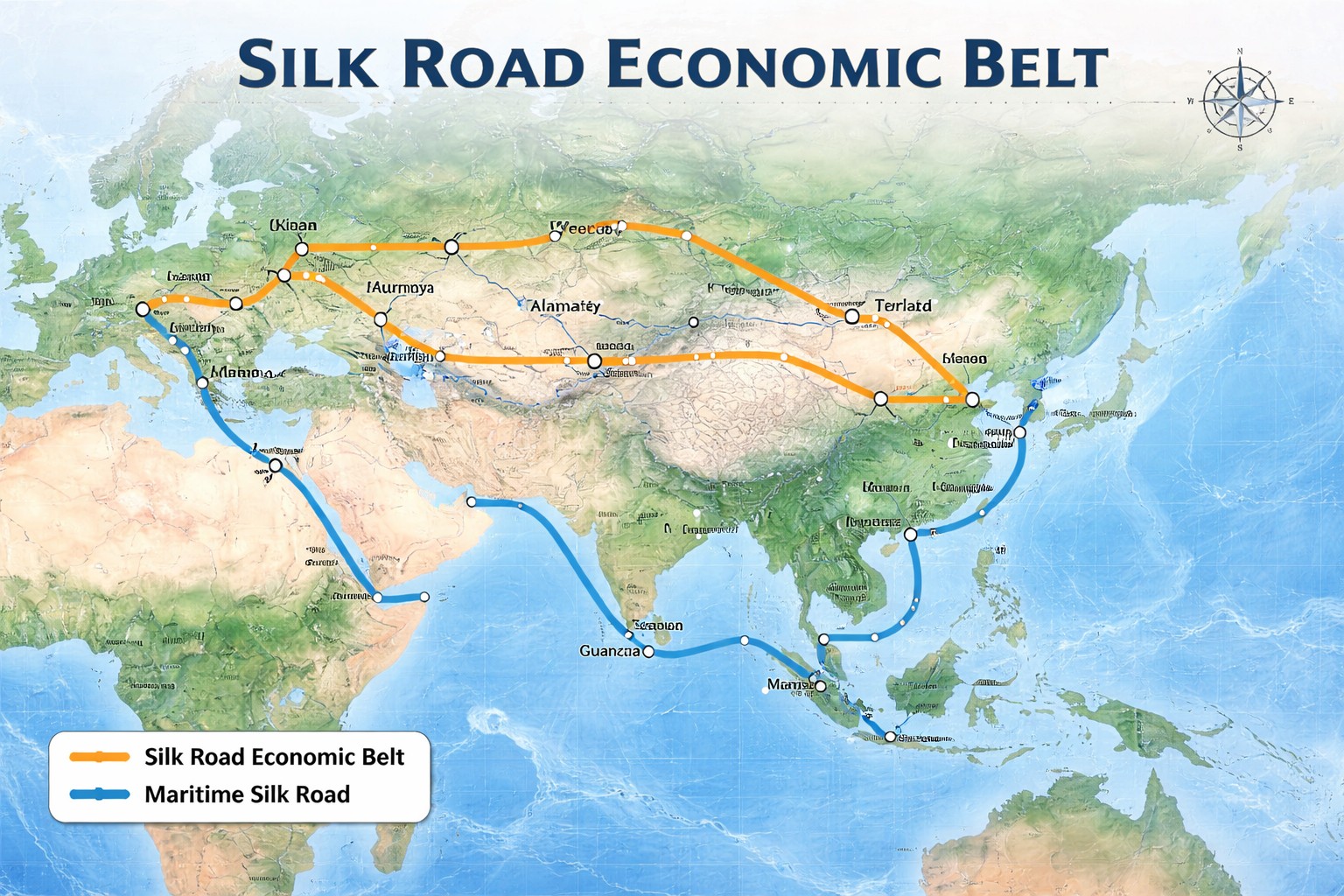
Map overview of Eurasian corridors and trade routes.
Recommended Resources
This page may contain affiliate links. If you buy through these links, we may earn a commission at no extra cost to you.
Logistics & Supply Chain Book
Useful background reading for transport corridors, trade routes, and supply chains.
View ResourceTrade Data Platform
A platform for researching trade flows, customs data, and freight trends.
Open PlatformBusiness Travel Insurance
Optional partner offer for readers traveling across Eurasia for business.
Check Offer