
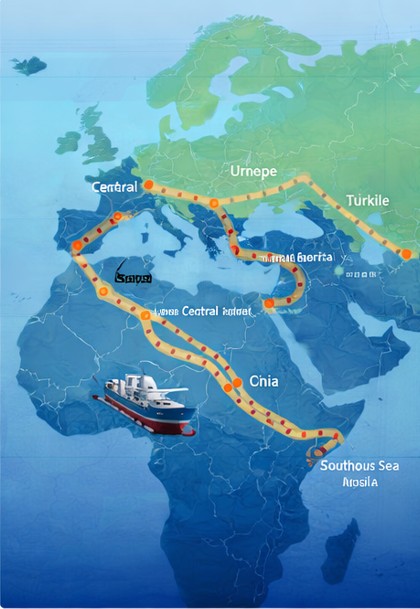





Kazakhstan and the European Union (EU) have recently formalized agreements to advance the development of the Middle Corridor trade route. This strategic initiative seeks to enhance connectivity between Europe and Asia, thereby facilitating trade across the region. The agreements were signed during discussions focused on strengthening logistical networks and improving infrastructure.
A Strategic Partnership
The Middle Corridor, part of the broader Belt and Road Initiative, is a pivotal route that links Central Asia with Europe via the Caspian Sea and Azerbaijan. This trade corridor is increasingly seen as an alternative to traditional routes, particularly in light of geopolitical shifts and supply chain disruptions.
Kazakhstan, positioned at the heart of Eurasia, plays a crucial role in this initiative. The agreements with the EU underscore Kazakhstan's commitment to enhancing its logistical capabilities and fostering international trade partnerships. The EU, in turn, views the development of the Middle Corridor as essential to diversifying its trade routes and ensuring economic resilience.
Infrastructure Development Initiatives
The signed agreements include plans for significant investments in infrastructure improvements along the Middle Corridor. These enhancements are expected to include upgrades to rail and road networks, as well as modernizing port facilities on the Caspian Sea.
Investment in infrastructure is vital for facilitating smoother and faster transit of goods between the regions. The upgrades aim to reduce transport times and costs, making the Middle Corridor a more competitive option for businesses looking to trade between Europe and Asia.
Collaboration between Kazakhstan and EU nations will also focus on establishing efficient customs procedures and regulatory frameworks. Streamlining these processes is essential for reducing bottlenecks and ensuring that goods can move freely across borders.
Trade Opportunities Ahead
The agreements are anticipated to open up new trade opportunities for both Kazakhstan and EU member states. By improving the Middle Corridor, Kazakhstan hopes to attract more European businesses looking to access Central Asian markets and beyond.
Moreover, this development aligns with Kazakhstan's broader economic strategy to enhance its role as a key transit hub in Eurasia. The government has been actively pursuing partnerships that not only boost infrastructure but also promote economic diversification and sustainable development.
The potential for increased trade is significant, especially in sectors such as agriculture, energy, and technology. As the Middle Corridor becomes a more viable trade route, it is expected to facilitate greater economic exchanges and foster long-term partnerships between Kazakhstan and European nations.
The agreements signify a commitment to collaboration and mutual benefit, laying the groundwork for future economic ties. Both parties have expressed optimism about the prospects of enhanced trade relations, recognizing the importance of a robust logistics network in achieving these goals.
In conclusion, the recent agreements between Kazakhstan and the EU mark a significant step towards the development of the Middle Corridor trade route. By focusing on infrastructure, logistics, and trade facilitation, both parties aim to strengthen their economic ties and enhance regional connectivity. The successful implementation of these initiatives could pave the way for increased trade and investment opportunities across the Eurasian landscape.
Silk Road Economic Belt Map
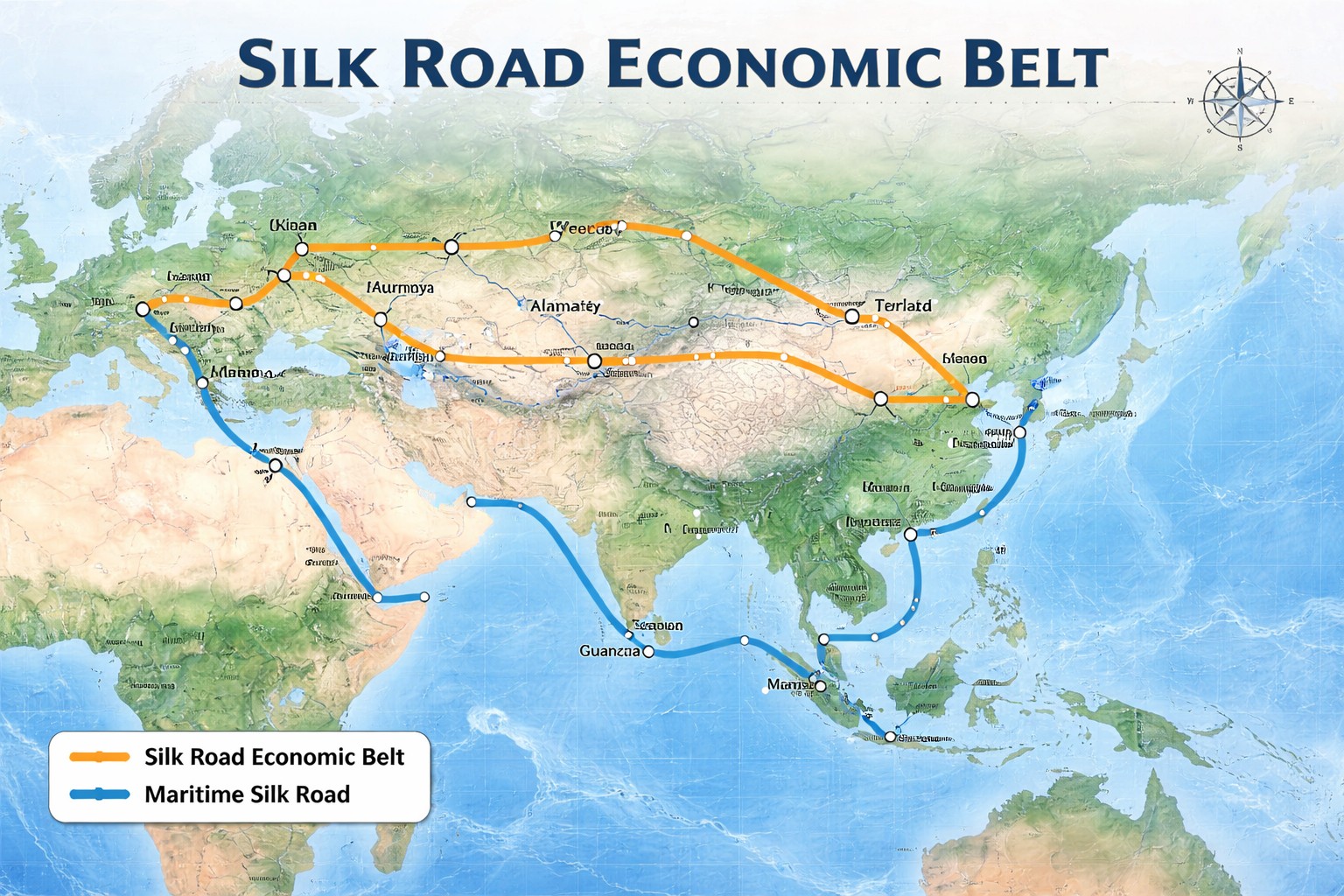
Map overview of Eurasian corridors and trade routes.
Recommended Resources
This page may contain affiliate links. If you buy through these links, we may earn a commission at no extra cost to you.
Logistics & Supply Chain Book
Useful background reading for transport corridors, trade routes, and supply chains.
View ResourceTrade Data Platform
A platform for researching trade flows, customs data, and freight trends.
Open PlatformBusiness Travel Insurance
Optional partner offer for readers traveling across Eurasia for business.
Check Offer