





---
Iran and Kazakhstan are making significant strides in transforming their transport corridors into operational trade routes, focusing on enhancing economic collaboration between the two nations. This initiative is part of a broader strategy to strengthen trade links across the Eurasian region, particularly as both countries seek to leverage their geographical positions.
Development of Transport Corridors
The enhancement of transport corridors is crucial for facilitating trade and logistics between Iran and Kazakhstan. Both nations are strategically located along key trade routes that connect Europe and Asia. The development of these routes will not only improve bilateral trade but also promote regional connectivity, which is a priority for both governments.
Kazakhstan's geographical advantage as a landlocked country necessitates reliable transport corridors to access international markets. Meanwhile, Iran's extensive coastline and ports provide a vital link to the Persian Gulf and beyond. The collaboration aims to create a seamless transport network that reduces transit times and costs, thus attracting more trade flows.
Recent discussions between officials from both countries have centered on integrating their transport infrastructures. This includes the optimization of rail and road networks that connect major economic hubs. By streamlining logistics operations, Iran and Kazakhstan hope to facilitate smoother trade exchanges and enhance their competitiveness in regional markets.
Investment in Infrastructure
Investment in infrastructure is a critical component of the initiative. Both countries are exploring ways to enhance their transport facilities, including the construction of new rail lines and the improvement of existing roadways. The aim is to create a more efficient logistics framework that supports increased trade volumes.
Kazakhstan has been proactive in investing in its transport infrastructure in recent years. The government has allocated substantial resources to upgrade rail networks and develop logistics centers. Iran, too, is focusing on modernizing its transport facilities, particularly in its port cities, to better accommodate international trade.
Collaboration in infrastructure development is expected to attract foreign investment, which is essential for the sustainability of these projects. By creating a more reliable transport network, both Iran and Kazakhstan can position themselves as attractive destinations for international businesses looking to expand their reach in Eurasia.
Enhancing Trade Relations
The push to turn transport corridors into operational trade routes reflects a broader intention to enhance trade relations between Iran and Kazakhstan. Both countries recognize the potential for economic growth through increased cooperation, particularly in sectors such as energy, agriculture, and manufacturing.
The recent agreements between the two nations highlight a commitment to reducing trade barriers and enhancing customs procedures. This is aimed at facilitating quicker and more efficient trade flows, which are vital for businesses operating in both markets.
Moreover, both countries are considering joint ventures and collaborative projects that could further deepen their economic ties. By working together, Iran and Kazakhstan can leverage their respective strengths to create a more robust trade environment that benefits both nations.
As the Silk Road Economic Belt continues to evolve, initiatives like the one between Iran and Kazakhstan are crucial for fostering regional integration. By developing effective transport corridors, both countries aim to contribute to the broader goal of enhancing trade connectivity across Eurasia.
In conclusion, the collaborative efforts between Iran and Kazakhstan to enhance transport corridors into operational trade routes represent a significant step towards strengthening their economic ties. Through infrastructure investment and improved logistics, both nations are positioning themselves to capitalize on the growing trade opportunities in the region.
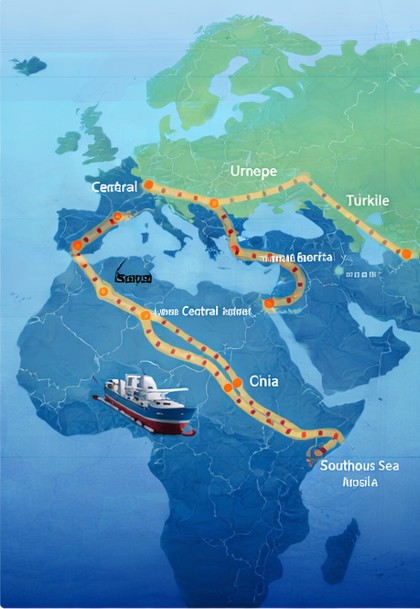
Silk Road Economic Belt Map

Map overview of Eurasian corridors and trade routes.
Recommended Resources
This page may contain affiliate links. If you buy through these links, we may earn a commission at no extra cost to you.
Logistics & Supply Chain Book
Useful background reading for transport corridors, trade routes, and supply chains.
View ResourceTrade Data Platform
A platform for researching trade flows, customs data, and freight trends.
Open PlatformBusiness Travel Insurance
Optional partner offer for readers traveling across Eurasia for business.
Check Offer