





---
Georgia has unveiled an ambitious investment plan totaling $7 billion, aimed at enhancing the Middle Corridor's role in global trade. This initiative is part of a broader strategy to strengthen the country's infrastructure and logistics capabilities, positioning Georgia as a critical hub in the Eurasian supply chain.
Enhancing Infrastructure for Trade
The Middle Corridor, which connects Asia to Europe through the Caspian Sea and the Caucasus region, is gaining traction as an alternative trade route. This investment will focus on upgrading rail, road, and port facilities to improve connectivity and efficiency.
Georgian officials have indicated that the funds will be allocated to various infrastructure projects, including the expansion of the Poti Port, which is crucial for maritime trade. Enhancements to railway networks linking Georgia with Azerbaijan and Turkey are also on the agenda, aiming to facilitate smoother transit of goods.
The government’s commitment to infrastructure development is expected to attract additional foreign investment, further integrating Georgia into the international logistics network. As global supply chains evolve, Georgia aims to leverage its geographic position to become a key player in the transport of goods between Asia and Europe.
Strengthening Regional Cooperation
This investment aligns with the government's broader strategy to foster regional cooperation among neighboring countries. By enhancing the Middle Corridor, Georgia hopes to strengthen ties with Azerbaijan, Turkey, and other countries along the route.
The integration of logistics systems across these nations is seen as vital for improving trade efficiency. Recent discussions among regional leaders have emphasized the need for collaborative efforts to maximize the potential of the Middle Corridor.
Georgia’s investment plan is expected to bolster these initiatives, promoting joint projects that enhance customs cooperation, streamline border processes, and reduce transit times for cargo. This collaborative approach is essential for positioning the Middle Corridor as a competitive alternative to other major trade routes.
Economic Implications and Future Prospects
The $7 billion investment is anticipated to have significant economic implications for Georgia and the surrounding region. Improved infrastructure is likely to lead to increased trade volumes, job creation, and overall economic growth.
Additionally, the project aims to promote Georgia as a logistics hub in Eurasia, potentially attracting businesses looking for efficient transit routes. As global trade dynamics shift, the Middle Corridor may become increasingly relevant, and Georgia's proactive measures could enhance its prominence.
While the specifics of the investment projects are still being finalized, government officials have expressed optimism about the positive impact on Georgia's economy. The focus on infrastructure and logistics is expected to foster a more resilient economic environment, better equipped to navigate global challenges.
### Conclusion
Georgia's $7 billion investment plan represents a significant step towards enhancing the Middle Corridor's role in global trade. By focusing on infrastructure improvements and regional cooperation, Georgia aims to solidify its position as a vital logistics hub in Eurasia. As the projects unfold, they will likely play a crucial role in shaping the future of trade connections between Asia and Europe.
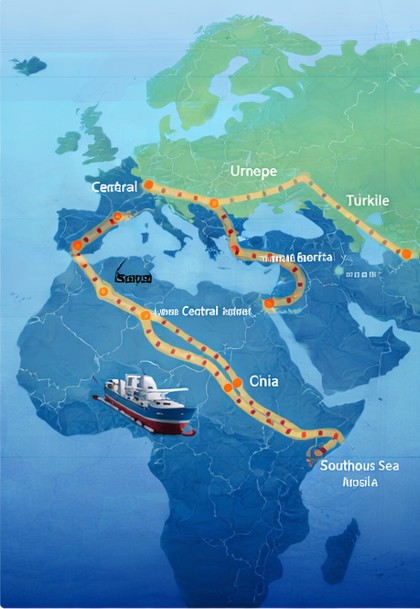
Silk Road Economic Belt Map

Map overview of Eurasian corridors and trade routes.
Recommended Resources
This page may contain affiliate links. If you buy through these links, we may earn a commission at no extra cost to you.
Logistics & Supply Chain Book
Useful background reading for transport corridors, trade routes, and supply chains.
View ResourceTrade Data Platform
A platform for researching trade flows, customs data, and freight trends.
Open PlatformBusiness Travel Insurance
Optional partner offer for readers traveling across Eurasia for business.
Check Offer