
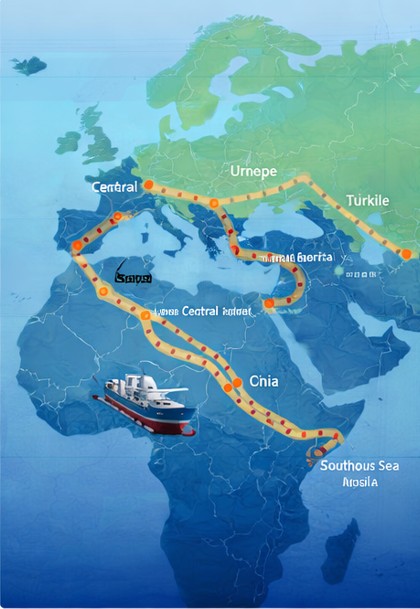





The European Union (EU) has officially committed to enhancing connectivity in Kazakhstan, Kyrgyzstan, and Uzbekistan, as part of its broader efforts to develop the Trans-Caspian Transport Corridor. This initiative aims to improve trade routes and logistics within Central Asia, facilitating greater economic cooperation among the nations involved.
Infrastructure Investment for Enhanced Connectivity
The EU's investment focuses on upgrading infrastructure, which includes roads, railways, and logistics facilities. By improving these transport links, the EU seeks to streamline the movement of goods between Europe and Asia, thus reducing transit times and costs for businesses operating in the region.
Kazakhstan, which serves as a crucial transit hub, is expected to benefit significantly from these improvements. The country has long been a key player in regional logistics, providing vital connections between Europe and Asia. The EU’s commitment aligns with Kazakhstan’s own development goals, which prioritize infrastructure modernization and economic diversification.
Kyrgyzstan and Uzbekistan, likewise, stand to gain from enhanced transport corridors that connect them to global markets. Improved connectivity can facilitate increased trade opportunities, which is vital for the economic growth of these landlocked nations. The investment also seeks to support sustainable transport solutions, addressing environmental concerns while promoting economic development.
Strengthening Trade Relationships
The EU's initiative is part of a broader strategy to strengthen economic ties with Central Asian countries. By investing in transport infrastructure, the EU aims to foster deeper trade relationships that could lead to increased exports and imports among the nations involved.
This move is particularly important in light of recent global shifts in trade patterns. As businesses seek alternative supply routes and markets, the importance of efficient logistics becomes paramount. The Trans-Caspian Transport Corridor offers a viable solution, providing a direct route for goods traveling between Europe and Asia, and positioning Central Asia as a strategic transit region.
Moreover, the EU's involvement signals a commitment to regional stability and economic cooperation. By facilitating trade across borders, the EU hopes to create a more integrated market in Central Asia, ultimately benefiting the economies of Kazakhstan, Kyrgyzstan, and Uzbekistan.
Future Prospects and Challenges
While the EU's support for the Trans-Caspian Transport Corridor presents numerous opportunities, several challenges remain. Infrastructure development can be complex, often requiring significant coordination among multiple stakeholders, including government agencies, private sector investors, and international organizations.
Additionally, political and economic stability in the region is crucial for the successful implementation of these projects. Ongoing geopolitical tensions and varying levels of economic development among the Central Asian nations could pose potential hurdles.
Despite these challenges, the EU's commitment to improving connectivity in Kazakhstan, Kyrgyzstan, and Uzbekistan is a positive step towards enhancing trade and investment in the region. As the projects move forward, close attention will be required to ensure that they are executed effectively and equitably.
In conclusion, the EU's investment in the Trans-Caspian Transport Corridor represents a significant effort to strengthen economic ties and improve infrastructure in Central Asia. By enhancing connectivity, the EU aims to facilitate trade and promote sustainable economic growth in Kazakhstan, Kyrgyzstan, and Uzbekistan, while navigating the complexities of regional dynamics.
Silk Road Economic Belt Map
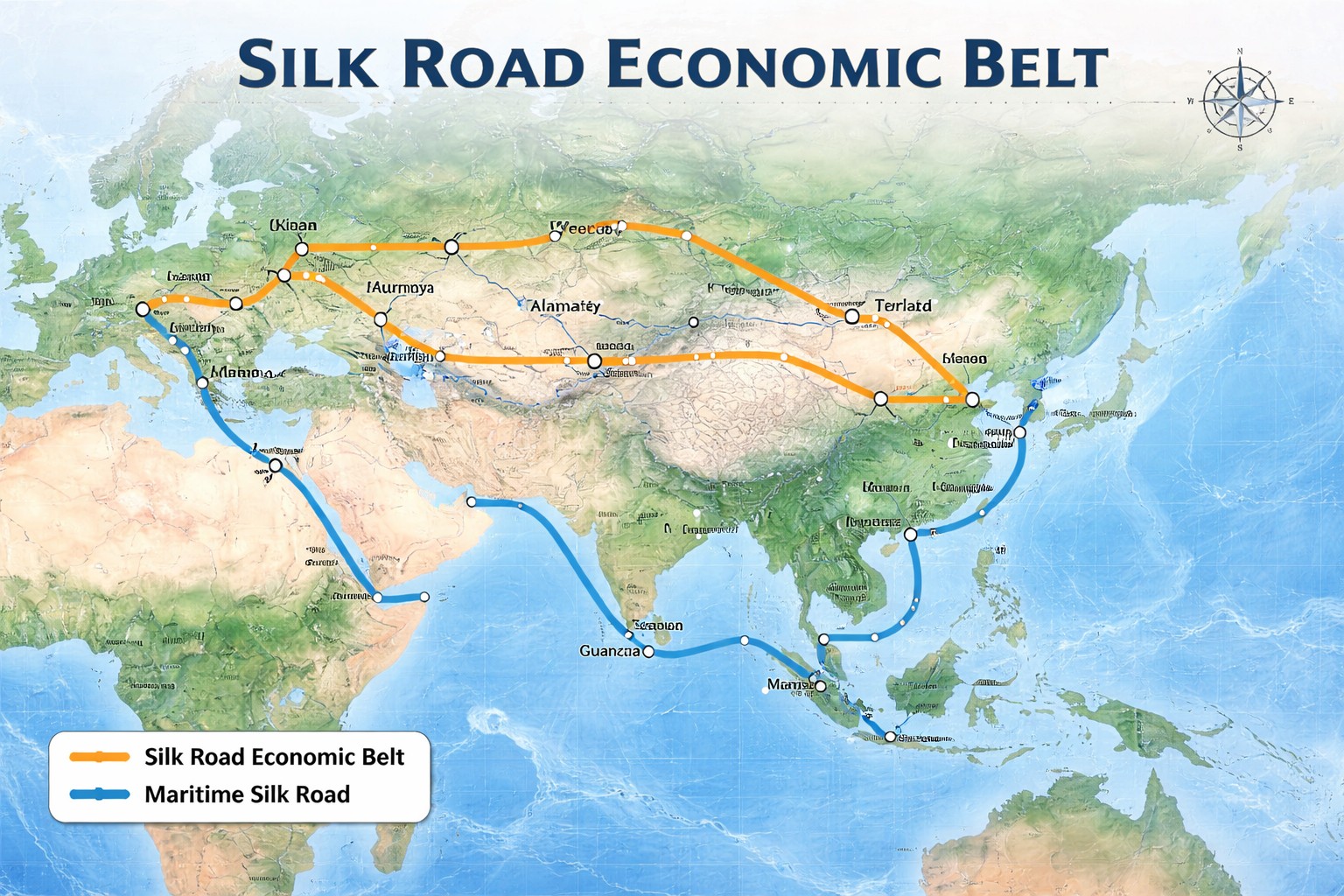
Map overview of Eurasian corridors and trade routes.
Recommended Resources
This page may contain affiliate links. If you buy through these links, we may earn a commission at no extra cost to you.
Logistics & Supply Chain Book
Useful background reading for transport corridors, trade routes, and supply chains.
View ResourceTrade Data Platform
A platform for researching trade flows, customs data, and freight trends.
Open PlatformBusiness Travel Insurance
Optional partner offer for readers traveling across Eurasia for business.
Check Offer