
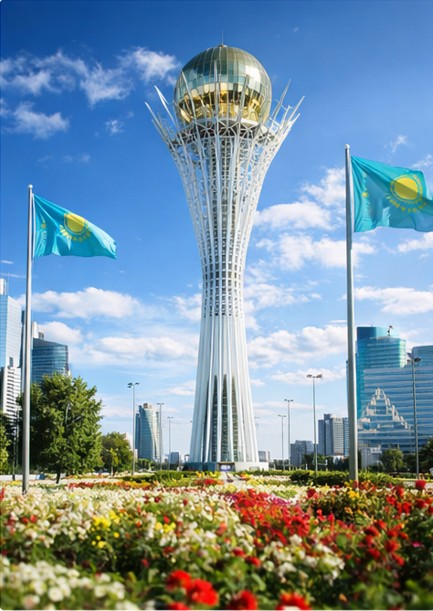





EDB's Strategic Focus on Central Asia
The Eurasian Development Bank (EDB) has announced its commitment to enhancing warehouse infrastructure across Central Asia, with particular emphasis on Uzbekistan and Kazakhstan. This initiative aims to support regional trade and logistics, thereby facilitating economic growth in these strategically important countries.
The EDB's focus on warehouse infrastructure stems from a broader vision of strengthening trade links within the Eurasian Economic Union (EAEU) and with neighboring regions. As trade volumes increase, efficient logistics and storage solutions become vital for sustaining economic momentum. The EDB recognizes that improved warehouse capabilities are essential for fostering a conducive business environment, particularly as Central Asia continues to emerge as a significant trade corridor.
Opportunities in Uzbekistan and Kazakhstan
Uzbekistan and Kazakhstan are seen as key markets for this infrastructure development, given their strategic locations and growing economies. Both countries have been making concerted efforts to improve their logistics frameworks, which presents a ripe opportunity for investment.
Uzbekistan, with its rich natural resources and expanding manufacturing sector, has been actively reforming its economy to attract foreign investments. The government’s commitment to infrastructure development aligns closely with the EDB's goals, making it an appealing destination for warehouse projects.
Kazakhstan, on the other hand, serves as a critical transit hub linking Europe and Asia. The country’s extensive rail network and proximity to major trade routes enhance its potential as a logistics center. The EDB's focus on Kazakhstan reflects an understanding of the country’s pivotal role in facilitating trade through its well-developed transport infrastructure.
Enhancing Regional Trade Dynamics
The expansion of warehouse infrastructure is anticipated to play a crucial role in enhancing the overall trade dynamics of the region. By improving storage capabilities, the EDB aims to streamline supply chains, reduce transportation costs, and ultimately increase the efficiency of goods movement.
Additionally, this initiative is expected to foster greater cooperation among EAEU member states. As trade barriers decrease and logistics networks become more integrated, the potential for inter-country commerce will significantly improve. The EDB's investment in warehouse infrastructure could thus serve as a catalyst for deeper economic collaboration across Central Asia.
Furthermore, the emphasis on modernizing warehouse facilities is also expected to attract foreign investments into the region. International investors are increasingly looking for stable and efficient logistics options, and the EDB's initiatives could position Uzbekistan and Kazakhstan as favorable destinations.
Conclusion
The EDB's strategy to expand warehouse infrastructure in Central Asia, particularly in Uzbekistan and Kazakhstan, reflects its commitment to fostering regional trade and economic development. By enhancing logistics capabilities, the EDB aims to create a more efficient business environment that can support the growing demands of trade in the region. As these initiatives unfold, they have the potential to reshape the economic landscape, fostering closer ties among nations and paving the way for sustainable growth in Central Asia.
Recommended Resources
This page may contain affiliate links. If you buy through these links, we may earn a commission at no extra cost to you.
Logistics & Supply Chain Book
Useful background reading for transport corridors, trade routes, and supply chains.
View ResourceTrade Data Platform
A platform for researching trade flows, customs data, and freight trends.
Open PlatformBusiness Travel Insurance
Optional partner offer for readers traveling across Eurasia for business.
Check Offer