
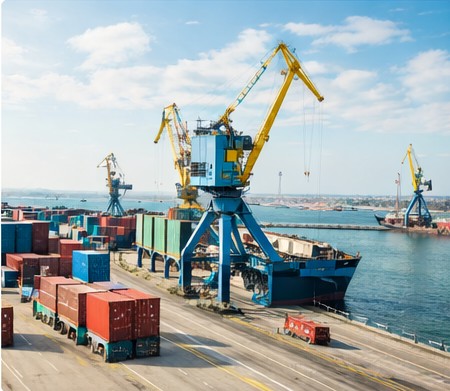





China has announced that its westernmost border port, located in Xinjiang province, will now operate 24 hours a day, seven days a week. This strategic move is intended to facilitate increased trade with Central Asian countries, aligning with China's broader goals to enhance regional economic connectivity.
Enhancing Logistics Capabilities
The decision to extend operational hours at the border port reflects China's commitment to improving its logistics capabilities in the region. The port serves as a critical entry point for goods flowing between China and Central Asia, and the new schedule is expected to streamline customs processes and reduce waiting times for trucks.
By operating continuously, the port aims to accommodate the growing volume of trade that has been observed in recent years. Officials have indicated that this change will not only benefit import and export activities but also enhance the overall efficiency of supply chains traversing Eurasia.
Strengthening Trade Ties with Central Asia
Central Asia is an increasingly vital partner for China, particularly under the framework of the Belt and Road Initiative (BRI). The region's geographical proximity makes it an attractive market for Chinese goods, as well as a strategic conduit for energy and raw materials.
The 24/7 operation of the Xinjiang border port is expected to bolster trade relations further by facilitating smoother cross-border transactions. This development comes at a time when regional economies are looking to rebound from the effects of the COVID-19 pandemic and seek new avenues for growth through increased trade collaboration.
Chinese officials have expressed optimism that the continuous functioning of the port will attract more businesses and investments. Enhanced trade logistics can lead to a more integrated regional economy, which is essential for long-term stability and prosperity in Central Asia.
Investment in Infrastructure Development
To support the new operational model, significant investments in infrastructure have been made at the border port. Upgrades include the expansion of customs facilities, improvements to transportation networks, and the integration of digital technologies for tracking and managing shipments.
These infrastructural investments are part of a broader strategy to enhance trade efficiency and competitiveness. By modernizing its logistics framework, China aims to position itself as a leading trade partner in the region.
The Xinjiang border port’s transition to 24/7 operations is a key component of this strategy, reflecting the Chinese government’s focus on leveraging infrastructure development to foster economic growth. Enhanced connectivity not only benefits trade but also promotes the exchange of ideas and culture among nations.
In conclusion, the shift to round-the-clock operations at China's westernmost border port marks a significant step in strengthening trade links with Central Asia. By enhancing logistics capabilities and investing in infrastructure, China is positioning itself as a crucial player in the economic landscape of Eurasia. This initiative is expected to foster greater regional integration and facilitate the flow of goods across borders, contributing to the ongoing development of trade networks in Central Asia.
Recommended Resources
This page may contain affiliate links. If you buy through these links, we may earn a commission at no extra cost to you.
Logistics & Supply Chain Book
Useful background reading for transport corridors, trade routes, and supply chains.
View ResourceTrade Data Platform
A platform for researching trade flows, customs data, and freight trends.
Open PlatformBusiness Travel Insurance
Optional partner offer for readers traveling across Eurasia for business.
Check Offer