
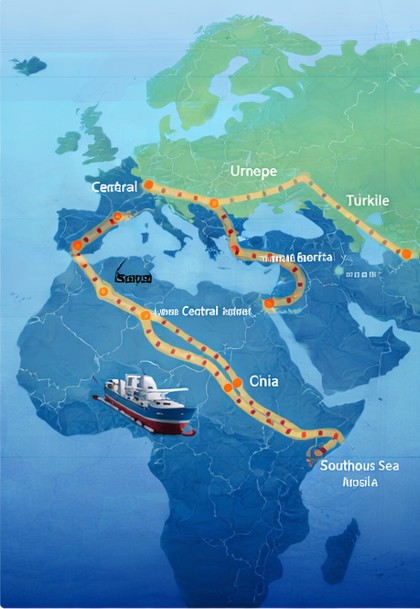





Overview of the Middle Corridor Initiative
China's Middle Corridor initiative represents a strategic effort to enhance connectivity across Eurasia, linking various regions through a network of infrastructure projects. This initiative is part of China's broader Belt and Road Initiative (BRI), which aims to promote trade and economic growth by improving logistics and transport networks.
The Middle Corridor primarily focuses on facilitating trade between China and Europe, passing through Central Asia and the Caucasus. This corridor connects major Chinese cities with key locations in Kazakhstan, Azerbaijan, and beyond, ultimately reaching the European markets. By investing in railways, highways, and logistics hubs, China seeks to create a more efficient trade route that can withstand geopolitical uncertainties and reduce reliance on traditional maritime routes.
Infrastructure Development and Logistics
The backbone of the Middle Corridor is its extensive infrastructure development. Projects such as the China-Kazakhstan Logistics Cooperation Base and the Trans-Caspian International Transport Route (TITR) are vital in enhancing the flow of goods. These developments not only improve transportation but also stimulate local economies by creating jobs and attracting foreign investment.
Rail connections play a crucial role in this initiative. The establishment of direct rail links between China and Europe has the potential to significantly reduce transit times for goods. For instance, the journey from China to Europe via the rail route can take as little as 12 days, compared to several weeks by sea. This expedited service is particularly appealing to businesses looking to reduce lead times and enhance supply chain resilience.
In addition to railways, investments in ports and logistics centers are also crucial. The development of ports in Azerbaijan and Kazakhstan facilitates smoother transshipment processes, allowing for seamless transfers between different modes of transport. These logistics hubs are designed to handle increased cargo volumes, supporting the anticipated growth in trade along the Middle Corridor.
Trade Dynamics and Economic Implications
The trade dynamics resulting from the Middle Corridor initiative could have significant implications for the economies involved. By enhancing connectivity, China aims to strengthen trade ties not only with Central Asian countries but also with European nations. This interconnectedness may lead to increased trade volumes and economic collaboration, fostering a more integrated Eurasian market.
However, the success of the Middle Corridor relies on cooperation from various stakeholders, including local governments and businesses. Each participant must be willing to invest in the necessary infrastructure and embrace regulatory harmonization to facilitate smoother trade. Challenges such as differing customs procedures and regulatory standards can hinder the efficiency of logistics and trade operations.
Moreover, while the Middle Corridor opens new avenues for trade, it also presents challenges, particularly in terms of geopolitical dynamics. The relationships between China and neighboring countries are complex and can be influenced by regional tensions. As such, the sustainability of the Middle Corridor is contingent upon stable diplomatic relations and collaborative efforts among the participating countries.
In summary, while the Middle Corridor has the potential to enhance East-West connectivity and stimulate economic growth, the realization of its benefits will depend on successful collaboration among involved parties. The initiative represents a significant step toward greater integration in Eurasia, but its long-term success will require ongoing commitment and adaptability to address emerging challenges.
In conclusion, China's Middle Corridor initiative is a pivotal component of its strategy to enhance trade and connectivity across Eurasia. Through substantial investments in infrastructure and logistics, this initiative could reshape the trade landscape, fostering economic ties between regions. However, careful management of geopolitical relationships and collaborative efforts will be essential to ensure its success.
Silk Road Economic Belt Map

Map overview of Eurasian corridors and trade routes.
Recommended Resources
This page may contain affiliate links. If you buy through these links, we may earn a commission at no extra cost to you.
Logistics & Supply Chain Book
Useful background reading for transport corridors, trade routes, and supply chains.
View ResourceTrade Data Platform
A platform for researching trade flows, customs data, and freight trends.
Open PlatformBusiness Travel Insurance
Optional partner offer for readers traveling across Eurasia for business.
Check Offer