
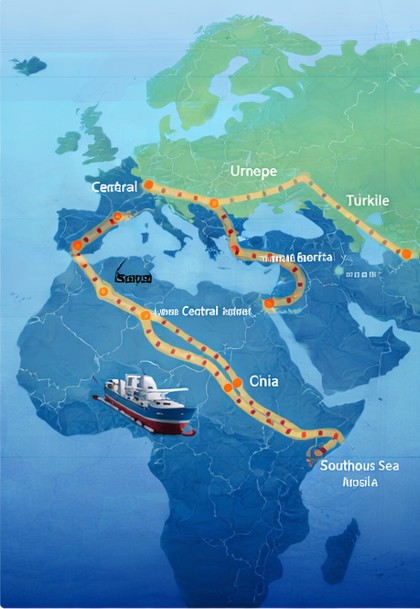





Introduction to the Middle Corridor
China is increasingly focusing on a new trade route known as the 'Middle Corridor' as part of its broader strategy to enhance connectivity across Eurasia. This corridor, which stretches from China through Central Asia to Europe, aims to provide an alternative to the traditional maritime routes, particularly as geopolitical tensions affect global trade dynamics.
Beijing's shift toward the Middle Corridor reflects its desire to enhance trade efficiency and expand its influence in regions that are crucial for its economic ambitions. The initiative aligns with China’s Belt and Road Initiative (BRI), which seeks to connect various countries through improved infrastructure and economic cooperation.
Infrastructure Development and Logistics
Investments in infrastructure are central to the success of the Middle Corridor. China has committed significant resources to develop railways, roads, and logistics hubs that facilitate smoother transit for goods. A key feature of this corridor is the railway network linking China to Kazakhstan, Azerbaijan, and further into Europe.
Recent reports indicate that China has been working closely with Central Asian countries to upgrade existing rail networks and construct new routes. By improving logistics capabilities, Beijing aims to reduce shipping times and costs, making trade more competitive. The Middle Corridor is expected to provide an efficient overland route for goods, particularly in light of recent disruptions in maritime trade linked to global events.
Additionally, the development of dry ports and logistics centers along the corridor is seen as critical. These facilities can handle customs clearance and storage, thus streamlining the overall supply chain. The involvement of local governments and private sector investments also highlights a collaborative approach to infrastructure development, essential for the corridor's long-term viability.
Trade Implications and Regional Cooperation
The Middle Corridor is anticipated to enhance trade not only between China and Europe but also among Central Asian countries. As nations along the route strengthen their economic ties, there are opportunities for increased trade in various sectors, including energy, agriculture, and consumer goods.
China's investment in this corridor could stimulate economic growth in participating countries, fostering a more interconnected regional economy. This aligns with the interests of Central Asian states that seek to diversify their trade partnerships and reduce reliance on traditional routes, such as those passing through Russia.
However, the success of the Middle Corridor depends on the stability of the regions it traverses. Political tensions and varying levels of infrastructure readiness could impact the corridor's effectiveness. Countries involved will need to navigate complex geopolitical landscapes while working collaboratively to ensure mutual benefits.
Conclusion
China's focus on the Middle Corridor as a new trade route signifies a strategic shift in its approach to international trade and investment. By investing in infrastructure and fostering regional cooperation, Beijing aims to enhance connectivity across Eurasia. While the potential benefits are significant, careful attention to geopolitical dynamics and local development will be crucial for the corridor's long-term success. The Middle Corridor represents a new chapter in China's trade strategy, one that could reshape economic interactions across the region.
Silk Road Economic Belt Map

Map overview of Eurasian corridors and trade routes.
Recommended Resources
This page may contain affiliate links. If you buy through these links, we may earn a commission at no extra cost to you.
Logistics & Supply Chain Book
Useful background reading for transport corridors, trade routes, and supply chains.
View ResourceTrade Data Platform
A platform for researching trade flows, customs data, and freight trends.
Open PlatformBusiness Travel Insurance
Optional partner offer for readers traveling across Eurasia for business.
Check Offer