
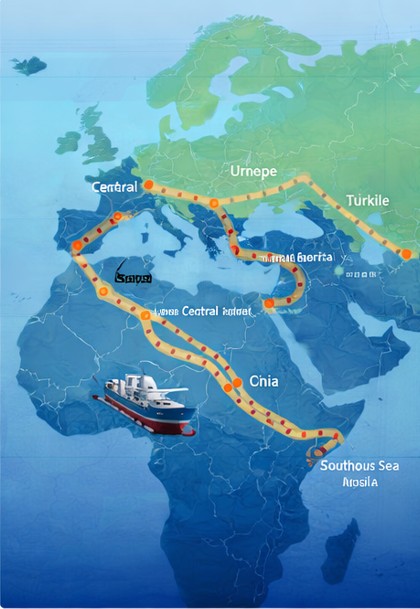





In recent years, China has been actively promoting the development of the 'Middle Corridor', a trade route intended to diversify its logistics network and boost economic ties with Central Asia, the Caucasus, and beyond. This initiative represents a crucial part of Beijing's broader strategy to enhance regional connectivity and trade efficiency.
Understanding the 'Middle Corridor'
The 'Middle Corridor' primarily connects China to Europe through the Caspian Sea, traversing countries such as Kazakhstan, Azerbaijan, and Turkey. This route is viewed as a vital alternative to the more established maritime routes that are often congested and subject to geopolitical tensions.
The corridor aims to facilitate the movement of goods and services, thereby reducing transit times and costs. With this initiative, China is not only looking to enhance its own trade capabilities but also to assist the economies of the participating countries by providing infrastructure investments and logistical support.
Investments in Infrastructure
China's commitment to the 'Middle Corridor' is evident through substantial investments in infrastructure projects. These include railways, highways, and logistics centers that are crucial for facilitating trade along the route.
For instance, the completion of the Trans-Caspian International Transport Route, which links China with Europe via the Caspian Sea, is a significant development. The route aims to provide a faster alternative to the traditional maritime routes, which often face delays due to bottlenecks at ports.
Furthermore, investments in rail and road networks in Central Asia have the potential to enhance trade opportunities significantly. By modernizing infrastructure, Beijing hopes to create a more seamless logistics landscape that benefits all participants.
Enhancing Trade Dynamics
The 'Middle Corridor' is not solely about infrastructure; it also represents a shift in trade dynamics within Eurasia. By promoting this route, China is positioning itself as a central player in the region's economic landscape, fostering closer ties with countries that may have previously relied on different trade routes.
This new corridor could facilitate not only the exchange of goods but also the sharing of technologies and expertise among the countries involved. The potential for collaborative projects and investment opportunities in various sectors, including energy and agriculture, is substantial.
Moreover, as global supply chains become more complex, the importance of alternative trade routes is increasing. The 'Middle Corridor' offers a new pathway that could help alleviate some of the challenges associated with existing routes, making it an appealing option for traders and businesses.
In conclusion, China's 'Middle Corridor' initiative is a significant development in the realm of international trade and infrastructure. By investing in this strategic route, Beijing aims to enhance connectivity across Eurasia, fostering economic growth and collaboration among participating nations. As this project progresses, its impact on trade dynamics and regional relationships will continue to be closely monitored.
Silk Road Economic Belt Map
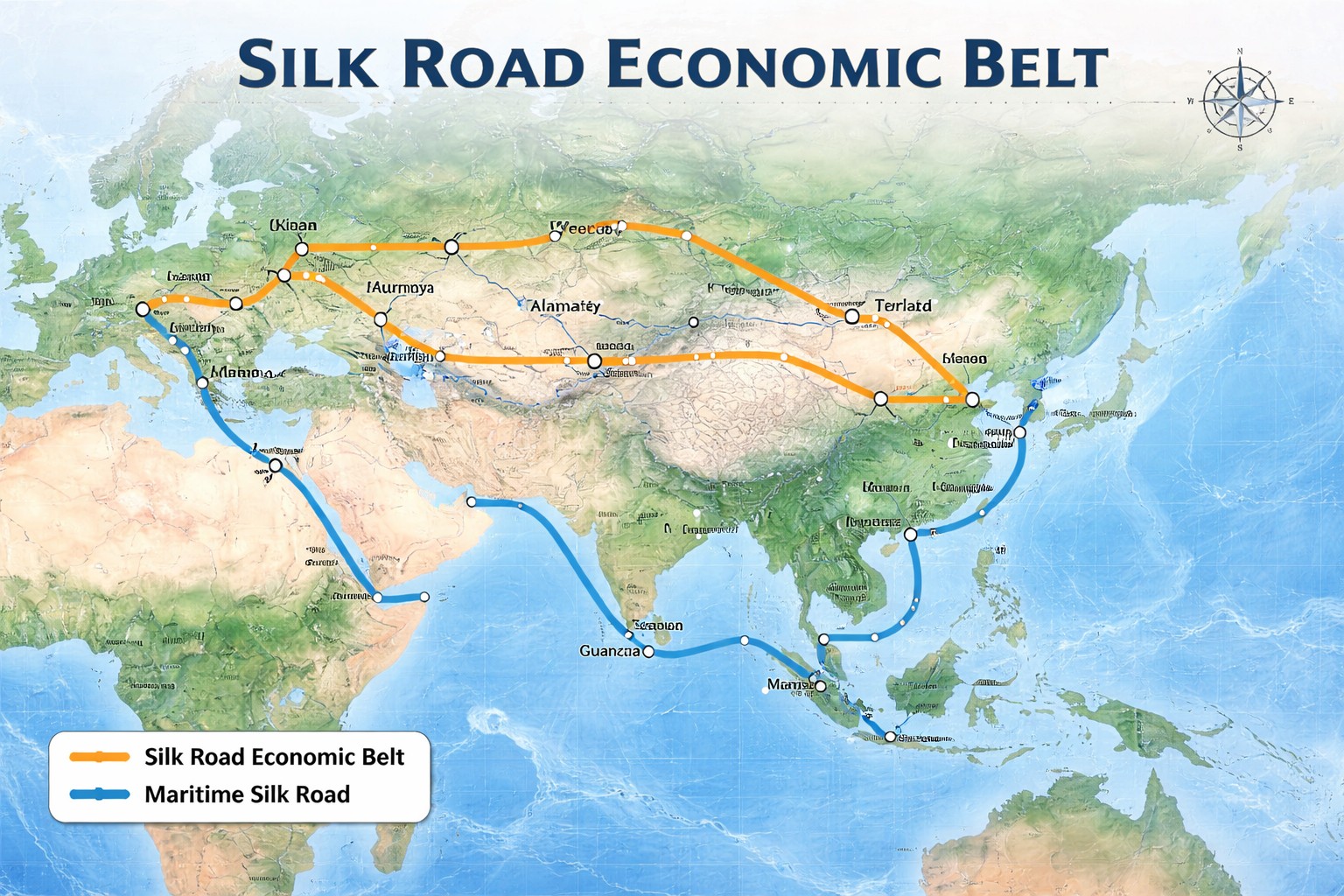
Map overview of Eurasian corridors and trade routes.
Recommended Resources
This page may contain affiliate links. If you buy through these links, we may earn a commission at no extra cost to you.
Logistics & Supply Chain Book
Useful background reading for transport corridors, trade routes, and supply chains.
View ResourceTrade Data Platform
A platform for researching trade flows, customs data, and freight trends.
Open PlatformBusiness Travel Insurance
Optional partner offer for readers traveling across Eurasia for business.
Check Offer