
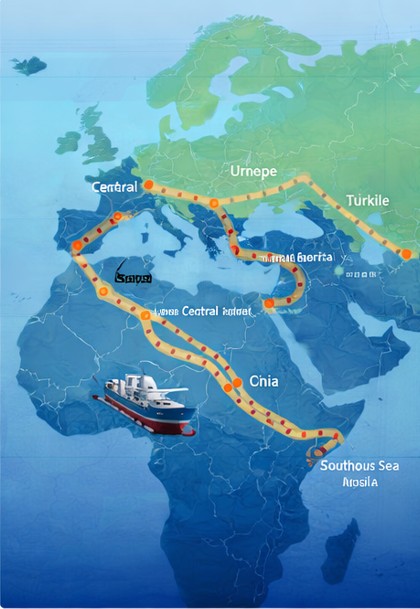





Record Cargo Volume Achieved
In a significant milestone for global trade, China's primary trade corridor has recorded its highest cargo volume to date in 2025. This achievement underscores the growing importance of the corridor in facilitating trade between China and its Eurasian partners.
The corridor, part of China's ambitious Belt and Road Initiative (BRI), has seen a continuous increase in freight activity over the past few years. In 2025, the volume of goods transported through this route reached unprecedented levels, demonstrating not only the effectiveness of the infrastructure but also the rising demand for trade within the region.
Infrastructure Developments Driving Growth
Key to this record-breaking volume are the ongoing investments in infrastructure aimed at enhancing logistics capabilities. Significant upgrades to rail networks, highways, and port facilities have been undertaken to improve efficiency and reduce transit times. These enhancements are critical as they facilitate smoother trade flows, enabling businesses to better meet consumer demands.
Moreover, the government has implemented various policies to encourage trade, including tax incentives and simplified customs procedures. These measures have made it easier for companies to engage in cross-border trade, further contributing to the corridor's growth.
Expanding Trade Relations
The surge in cargo volume is indicative of strengthened trade relations between China and its neighboring countries. As part of the BRI, the trade corridor connects various regions, promoting economic ties and cultural exchanges. Countries such as Kazakhstan, Uzbekistan, and Russia have reported increased trade activities, benefiting from the improved logistics networks.
This expanding trade relationship not only supports local economies but also enhances regional connectivity. The collaboration among nations along the corridor is crucial for fostering mutual economic growth and stability.
In conclusion, the record cargo volume achieved by China's trade corridor in 2025 reflects a combination of strategic infrastructure investments and enhanced trade relations across Eurasia. As these developments continue to unfold, the corridor is poised to play an even more significant role in shaping the future of international trade in the region.
Silk Road Economic Belt Map
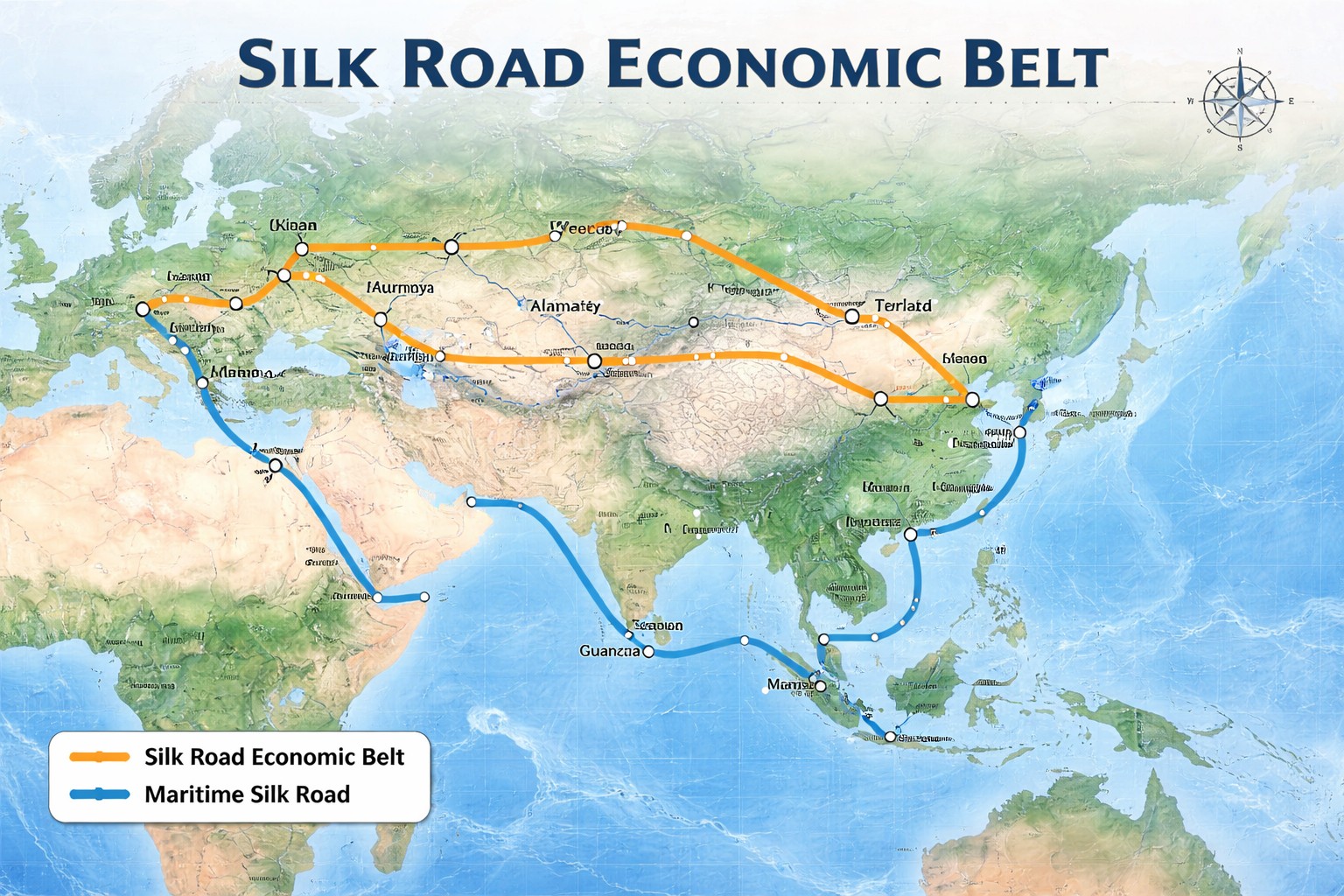
Map overview of Eurasian corridors and trade routes.
Recommended Resources
This page may contain affiliate links. If you buy through these links, we may earn a commission at no extra cost to you.
Logistics & Supply Chain Book
Useful background reading for transport corridors, trade routes, and supply chains.
View ResourceTrade Data Platform
A platform for researching trade flows, customs data, and freight trends.
Open PlatformBusiness Travel Insurance
Optional partner offer for readers traveling across Eurasia for business.
Check Offer