





---
China is making significant strides toward the completion of the new international land-sea trade corridor aimed at boosting trade in its western regions. This ambitious infrastructure project is set to be largely completed by 2025, providing a vital link between land and maritime transport networks.
Enhancing Connectivity
The land-sea trade corridor is designed to integrate logistics between inland areas and coastal ports, facilitating smoother and more efficient movement of goods. This initiative is part of China's broader strategy to enhance connectivity across its western provinces, which have historically faced challenges in accessing global markets.
By connecting western regions to key maritime routes, the corridor aims to reduce transportation time and costs for goods. This is particularly crucial for provinces such as Xinjiang and Guangxi, which are pivotal in China's efforts to enhance trade flows with neighboring countries.
The project is expected to significantly bolster regional trade, enabling local producers to access international markets more easily. Enhanced connectivity could also encourage foreign investment, as investors often seek regions with robust logistics networks.
Strategic Importance
The construction of the land-sea trade corridor aligns with China's Belt and Road Initiative (BRI), which focuses on enhancing infrastructure and trade links across Eurasia. By establishing this corridor, China aims to reinforce its position as a central hub in regional trade.
The corridor will not only facilitate trade with Southeast Asian countries but also enhance connections with Central Asia and beyond. This strategic maneuver is poised to play a critical role in fostering economic growth in less developed areas, thus aligning with China's goals of balanced regional development.
Government officials have indicated that the new trade route will incorporate railways, highways, and maritime transport systems, making it a comprehensive network designed to meet the needs of modern trade. This integration is seen as a vital step in promoting economic synergy across the regions involved.
Future Prospects
As the project progresses, the focus will remain on ensuring that the infrastructure is not only completed on time but also meets the evolving demands of global trade. Continuous investment in technology and operational efficiency will be necessary to keep pace with international standards.
While the completion of the land-sea trade corridor is an encouraging development, challenges remain. These include managing cross-border logistics, ensuring the sustainability of the infrastructure, and addressing potential geopolitical tensions in the region.
To mitigate these challenges, collaboration among local governments, businesses, and international partners will be essential. Stakeholders will need to engage in strategic planning to ensure that the corridor operates effectively and benefits all parties involved.
In conclusion, the impending completion of the international land-sea trade corridor by 2025 marks a significant step in enhancing trade logistics in China's western regions. By improving connectivity and fostering regional trade, this initiative has the potential to reshape the economic landscape of Eurasia and strengthen China's position in global trade networks.
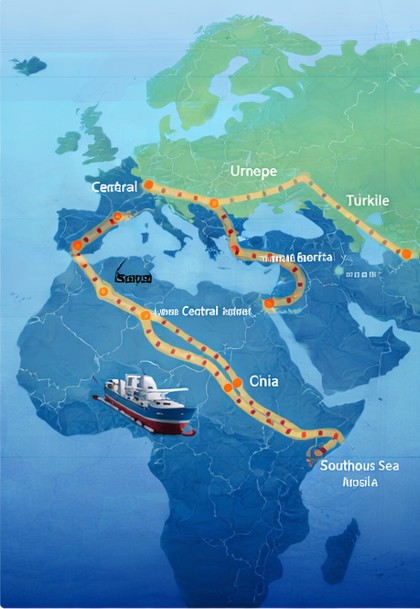
Silk Road Economic Belt Map

Map overview of Eurasian corridors and trade routes.
Recommended Resources
This page may contain affiliate links. If you buy through these links, we may earn a commission at no extra cost to you.
Logistics & Supply Chain Book
Useful background reading for transport corridors, trade routes, and supply chains.
View ResourceTrade Data Platform
A platform for researching trade flows, customs data, and freight trends.
Open PlatformBusiness Travel Insurance
Optional partner offer for readers traveling across Eurasia for business.
Check Offer