





---
The recent expansion of the Middle Corridor is poised to significantly enhance trade routes connecting China and Central Asia. This development reflects ongoing efforts to improve infrastructure and logistics within the region, which is vital for economic integration and cooperation among countries along the Silk Road Economic Belt.
Enhancing Infrastructure Connectivity
The Middle Corridor, which runs from China through Kazakhstan, Azerbaijan, and Turkey to Europe, has seen substantial upgrades aimed at increasing its capacity and efficiency. With investments in rail and road networks, the corridor now offers a more reliable and faster route for goods moving between Asia and Europe.
The expansion includes the construction of new railway segments and the enhancement of existing ones, facilitating smoother transportation of goods. This infrastructure development is crucial not only for China but also for Central Asian nations, which are looking to boost their trade capacities and attract foreign investments.
Logistics and Trade Facilitation
In addition to infrastructure improvements, the expansion of the Middle Corridor includes enhancements in logistics operations. These developments are expected to streamline customs procedures and reduce transit times, making the route more competitive compared to alternative trade routes.
Countries along the corridor are also collaborating to establish logistics centers that will serve as hubs for trade. These centers aim to facilitate the storage and distribution of goods, making it easier for businesses to engage in cross-border trade. Enhanced logistics capabilities are likely to encourage more companies to utilize this trade route, thereby increasing overall trade volumes.
Economic Implications for Central Asia
The economic implications of the Middle Corridor’s expansion for Central Asia are substantial. As trade routes become more efficient, Central Asian countries stand to benefit from increased access to international markets. This could lead to an uptick in exports, particularly for goods such as minerals, textiles, and agricultural products.
Moreover, improved connectivity may attract foreign direct investment into the region. Investors are generally more inclined to commit resources to areas with robust infrastructure and efficient logistics systems. Therefore, the enhancements to the Middle Corridor could serve as a catalyst for economic growth in Central Asia.
### Conclusion
The expansion of the Middle Corridor represents a significant step forward in strengthening trade connections between China and Central Asia. By enhancing infrastructure, improving logistics operations, and facilitating trade, this initiative is expected to foster greater economic cooperation in the region. As the corridor continues to develop, its impact on trade dynamics and investment opportunities will likely become more pronounced, benefiting all nations involved.
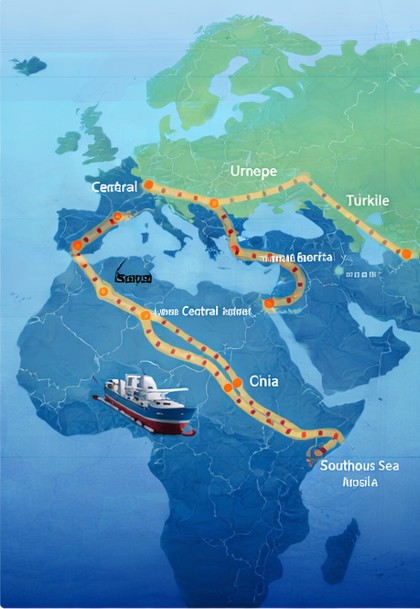
Silk Road Economic Belt Map

Map overview of Eurasian corridors and trade routes.
Recommended Resources
This page may contain affiliate links. If you buy through these links, we may earn a commission at no extra cost to you.
Logistics & Supply Chain Book
Useful background reading for transport corridors, trade routes, and supply chains.
View ResourceTrade Data Platform
A platform for researching trade flows, customs data, and freight trends.
Open PlatformBusiness Travel Insurance
Optional partner offer for readers traveling across Eurasia for business.
Check Offer