






Central Asia is witnessing a notable increase in tourism revenues, a trend that can be largely attributed to the expansion of China's Belt and Road Initiative (BRI). The region, rich in cultural heritage and natural beauty, is becoming an attractive destination for international travelers, thanks in part to enhanced infrastructure and logistical improvements facilitated by Chinese investments.
Infrastructure Development
Infrastructure development is a cornerstone of the Belt and Road Initiative, which aims to improve connectivity between China and numerous countries across Asia, Europe, and beyond. In Central Asia, this has resulted in significant investments in roads, railways, and airports. These developments not only enhance transportation efficiency but also create a more appealing environment for tourists.
For instance, the construction of new highways and rail links has reduced travel times between major cities and popular tourist sites. Improved connectivity allows travelers to explore the diverse landscapes and cultural landmarks of Kazakhstan, Kyrgyzstan, Tajikistan, Turkmenistan, and Uzbekistan more conveniently. As a result, an increasing number of tourists are drawn to the region, positively impacting local economies.
Economic Impact on Local Communities
The surge in tourism revenue is having a cascading effect on local communities in Central Asia. As more visitors arrive, local businesses are experiencing growth, from hotels and restaurants to souvenir shops and guided tours. This influx of tourists is providing much-needed jobs and income for many families, contributing to overall economic development.
Governments in the region are also recognizing the potential of tourism as a driver of economic growth. In light of this, they are working to promote their cultural heritage and natural attractions more effectively. Events, festivals, and marketing campaigns are being organized to showcase the unique experiences that Central Asia has to offer.
Moreover, the increase in tourism revenues is encouraging further investment in infrastructure and services, creating a positive feedback loop that benefits both visitors and residents alike.
Challenges and Considerations
Despite the positive trends, challenges remain for the tourism sector in Central Asia. The region's countries face the task of balancing development with the preservation of their cultural and natural resources. Sustainable tourism practices are essential to ensure that the influx of visitors does not lead to environmental degradation or the loss of cultural identity.
Additionally, the varying levels of infrastructure development among Central Asian countries present obstacles. While some nations have made significant strides, others may lag behind, potentially hindering cross-border tourism. Addressing these disparities is crucial for maximizing the potential of the tourism sector across the entire region.
Moreover, the ongoing geopolitical dynamics in Eurasia could influence travel patterns and investment flows. Economic stability, security, and international relations will play pivotal roles in shaping the future of tourism in Central Asia.
In conclusion, the growth of tourism revenue in Central Asia signifies the positive impact of China's Belt and Road investments. Enhanced infrastructure and improved connectivity are attracting international travelers, providing economic opportunities for local communities. However, it is essential for stakeholders to navigate the challenges and ensure sustainable development to harness the full potential of this burgeoning sector.
Silk Road Economic Belt Map
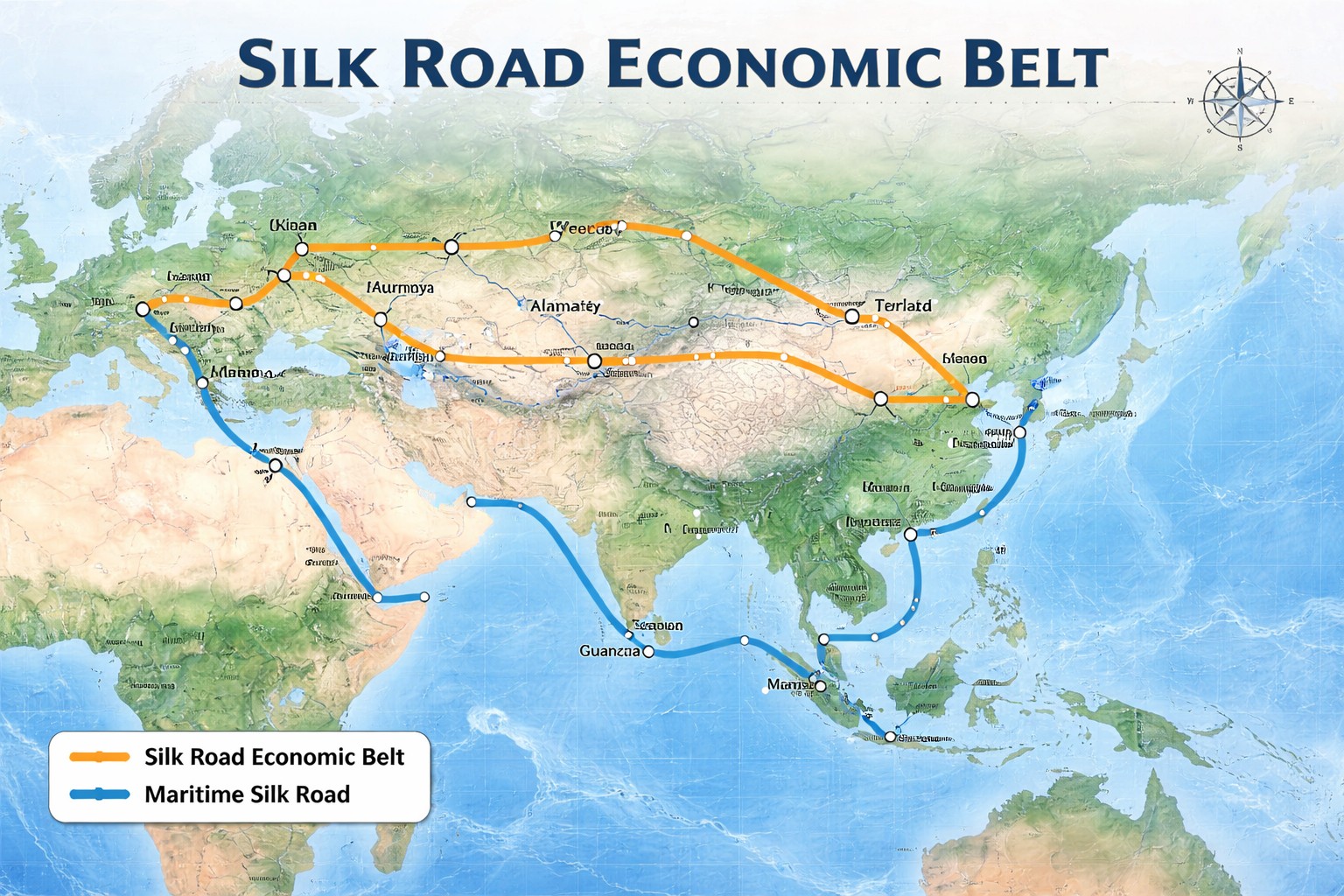
Map overview of Eurasian corridors and trade routes.
Recommended Resources
This page may contain affiliate links. If you buy through these links, we may earn a commission at no extra cost to you.
Logistics & Supply Chain Book
Useful background reading for transport corridors, trade routes, and supply chains.
View ResourceTrade Data Platform
A platform for researching trade flows, customs data, and freight trends.
Open PlatformBusiness Travel Insurance
Optional partner offer for readers traveling across Eurasia for business.
Check Offer