
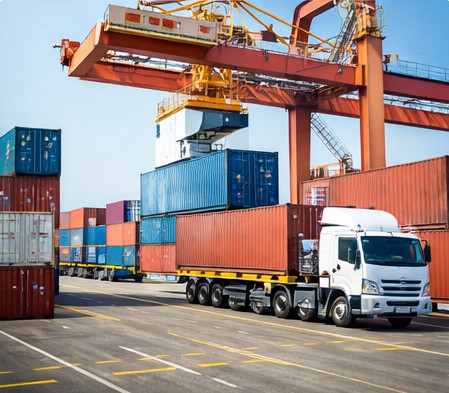





Overview of Central Asia's Logistics Landscape
Central Asia has emerged as a focal point for logistics and trade, primarily due to its strategic location bridging Europe and Asia. At the heart of this landscape are Kazakhstan and Uzbekistan, two nations vying to establish themselves as the leading logistics hub in the region.
Kazakhstan has long held a dominant position, bolstered by its extensive railway network and proximity to major trade routes. The country is a key player in the Belt and Road Initiative (BRI), which has significantly enhanced its infrastructure and connectivity. However, Uzbekistan is making substantial strides to enhance its logistics capabilities, prompting discussions about whether it can usurp Kazakhstan's status.
Infrastructure Developments in Uzbekistan
Uzbekistan is investing heavily in its infrastructure to improve logistics and trade efficacy. The government has recognized the importance of a robust logistics framework to facilitate economic growth and regional competitiveness. Significant projects include the modernization of road networks, expansion of rail systems, and the construction of new logistics centers.
The country is also focusing on enhancing its connectivity with neighboring nations. Initiatives such as the development of the Trans-Afghan Railway and improved border crossing facilities aim to streamline trade processes. These developments could position Uzbekistan as a more attractive option for businesses looking to navigate the Central Asian market efficiently.
Additionally, Uzbekistan's strategic location allows it to serve as a conduit for trade between China and Europe. The recent establishment of various free economic zones is designed to attract foreign investment and boost trade, further solidifying its logistics potential.
Kazakhstan's Established Logistics Network
Kazakhstan's logistics infrastructure is well-established, largely due to its extensive investment in transportation networks. The country boasts a vast railway system, which is integral to freight movement throughout Central Asia and beyond. Its participation in the BRI has led to significant upgrades in infrastructure, enhancing its role as a critical transit point for goods flowing between Asia and Europe.
Furthermore, Kazakhstan's ports, particularly those along the Caspian Sea, play an essential role in maritime logistics. The development of the Aktau Port has made it a key hub for cargo shipments, linking Kazakhstan to international markets. This established network provides Kazakhstan with a competitive edge in the logistics sector.
Kazakhstan's government has also prioritized the development of logistics centers, which serve as critical nodes for the storage and distribution of goods. These centers facilitate efficient supply chain operations and are integral to maintaining Kazakhstan's logistics leadership.
The Competitive Landscape Ahead
While Kazakhstan currently leads in logistics, Uzbekistan's rapid advancements are noteworthy. The country's government is keen to attract foreign investment and enhance its trade position, which could shift the competitive dynamics in Central Asia. However, several factors will influence the outcome of this rivalry.
Uzbekistan must continue to prioritize infrastructure development and streamline regulatory processes to create a conducive environment for logistics operations. Additionally, building strong partnerships with regional neighbors will be crucial to bolstering its position as a logistics hub.
Kazakhstan, on the other hand, will need to maintain its momentum in infrastructure improvements and adapt to the evolving demands of global trade. The emergence of new trade routes and changing market dynamics necessitate flexibility and innovation in logistics strategies.
In conclusion, while Kazakhstan remains the leading logistics hub in Central Asia, Uzbekistan's proactive approach to infrastructure development and trade facilitation could challenge this status. The competitive landscape is evolving, and both nations will play pivotal roles in shaping the future of logistics in the region.
Recommended Resources
This page may contain affiliate links. If you buy through these links, we may earn a commission at no extra cost to you.
Logistics & Supply Chain Book
Useful background reading for transport corridors, trade routes, and supply chains.
View ResourceTrade Data Platform
A platform for researching trade flows, customs data, and freight trends.
Open PlatformBusiness Travel Insurance
Optional partner offer for readers traveling across Eurasia for business.
Check Offer